

Personalization is essential in B2B marketing, but it must align with growing privacy concerns and regulations like GDPR and CCPA. Here’s how marketers can balance these priorities effectively:
- Why It Matters: Personalization builds trust and engagement, with 91% of consumers preferring relevant experiences. But 83% of decision-makers expect responsible data use.
- Privacy Risks: Mishandling data can lead to regulatory fines, breaches, and lost customer trust (72% stop buying after a breach).
- How to Balance:
- Use aggregated or anonymized data for personalization.
- Be transparent with clear, simple privacy policies.
- Leverage AI tools for compliance and tailored experiences.
- Tools to Consider: AI systems for anonymization, secure CRM platforms, and managed services like ChatMetrics.com for real-time, privacy-focused engagement.
The key takeaway? Personalization and privacy can coexist. By combining secure data practices with advanced tools, B2B marketers can meet customer expectations while staying compliant.
How Personalization and Privacy Work Together
The Role of Data in Personalization
Data plays a key role in creating personalized experiences in B2B marketing. Companies use information like behavioral patterns, purchase histories, and interaction data to deliver tailored content and services. This approach allows for precise customer segmentation and more relevant messaging.
| Data Type | Personalization Use | Privacy Consideration |
|---|---|---|
| Behavioral Data | Mapping customer journeys | Focus on aggregated insights |
| Purchase History | Recommending products | Minimize data usage |
| Interaction Data | Customizing content | Use anonymous tracking |
Top-performing B2B companies focus on aggregated insights instead of tracking individuals. This ensures they respect customer privacy while still providing personalized interactions. Striking the right balance between data use and privacy safeguards is essential for maintaining trust.
Privacy Concerns in Data-Driven Marketing
Using customer data responsibly is critical for earning and keeping trust. Issues like collecting too much data or unclear privacy policies can harm relationships with customers. To address these, businesses can focus on collecting only necessary data, being transparent about how it’s used, and strengthening security.
One effective approach is adopting privacy-first strategies, such as leveraging AI to anonymize data while still delivering tailored content. By prioritizing both personalization and privacy, companies can build long-lasting relationships based on trust and mutual value.
Many leading B2B organizations now use AI tools to analyze customer behavior while automatically anonymizing sensitive details. This method allows them to provide personalized experiences without risking individual privacy, resulting in higher engagement and trust [2].
To succeed, businesses should look into tools and methods that combine personalization with strong privacy measures. This ensures they meet customer expectations without compromising privacy.
Ways to Balance Personalization and Privacy
Balancing personalization with privacy is a key challenge for businesses aiming to build customer trust while staying compliant with regulations. Here’s how companies can navigate this effectively:
Be Transparent About Data Use
Clear communication about how data is collected and used helps build trust and allows for meaningful personalization. Companies should ensure their privacy policies are easy to understand and accessible.
| Privacy Element | How to Implement | Benefits |
|---|---|---|
| Data Collection | Use consent forms that specify data usage | Builds trust and ensures compliance |
| Usage Terms | Provide straightforward, jargon-free explanations | Improves customer understanding |
| Access Rights | Offer self-service privacy tools | Boosts customer confidence |
Use Privacy-Focused Tools
“Privacy must be part of the MarTech stack, not an afterthought” [2].
Incorporating tools that prioritize privacy can make a big difference. Look for features like:
- Data anonymization to protect identities
- Secure storage to safeguard information
- Automated compliance checks for legal alignment
- Real-time consent management to ensure transparency
Integrate Privacy into Marketing Processes
Research indicates that 71% of B2C and 86% of B2B customers expect companies to handle their personal data responsibly during interactions [3]. To meet these expectations, businesses should:
- Establish a Privacy Team: A dedicated team ensures consistent and efficient oversight of privacy practices.
- Conduct Regular Audits: Frequent evaluations can uncover potential issues and maintain compliance.
- Create Clear Guidelines: Standardized procedures for managing customer data help ensure consistency across campaigns.
These steps lay the groundwork for adopting advanced technologies, like AI, to strike the right balance between personalization and privacy.
How AI Can Help Balance Personalization and Privacy
AI has become a game-changer for B2B marketers aiming to provide personalized experiences while adhering to strict privacy regulations. It brings advanced tools that make managing this tricky balance more achievable.
Using AI to Improve Personalization
AI systems process customer data faster and more accurately than traditional methods, reducing the need for manual intervention. These systems are great at spotting patterns and preferences, enabling highly specific marketing strategies.
| AI Capability | Personalization Benefit | Privacy Advantage |
|---|---|---|
| Pattern and Behavior Analysis | Identifies preferences and segments audiences | Reduces exposure to sensitive personal data |
| Automated Decision-Making | Provides real-time tailored content | Limits human access to private information |
Privacy Protection with AI Tools
Modern AI tools come equipped with advanced features to secure data and ensure compliance. They help B2B companies implement privacy measures such as:
- AI-powered pseudonymization for safer personalization
- Automated compliance checks
- Smart access controls
- Data encryption
These features allow businesses to safeguard privacy while still enabling personalized, real-time interactions.
Real-Time Engagement Through AI
AI supports instant personalization without compromising privacy by using sophisticated tools for customer engagement.
| Engagement Type | Privacy Feature | Business Impact |
|---|---|---|
| Real-Time Tools (e.g., Live Chat, Analytics) | Automated masking and privacy-compliant tracking | Better lead qualification and higher conversions |
| Intelligent Routing | Secure data handling | Faster response times |
For instance, B2B SaaS companies leverage AI to customize onboarding experiences while anonymizing user data to maintain compliance.
“The answer to balancing privacy and personalization is to reduce our reliance on data – not eliminate it altogether – and focus on creating experiences which are meaningful and relevant to our customers” – Etail East, WB Research [3]
These tools highlight how AI can offer personalized experiences while prioritizing data privacy, addressing the key challenges in modern B2B marketing.
sbb-itb-50a8823
Managed Services for Personalization and Privacy: ChatMetrics.com
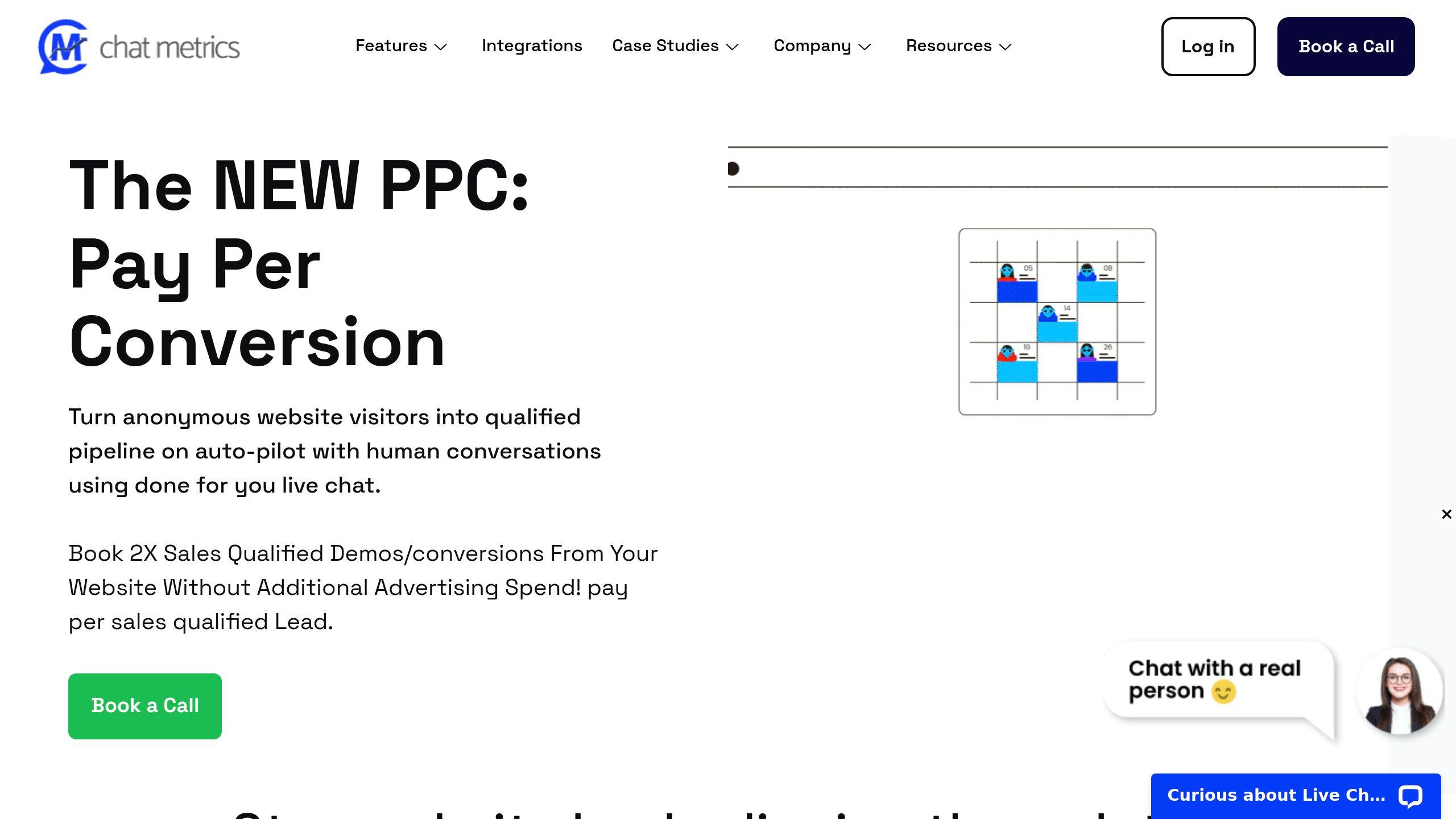
AI has become a game-changer for balancing personalization and privacy, but managed services like ChatMetrics.com take it a step further by offering a hands-on approach. This service demonstrates how businesses can achieve both personalization and privacy while delivering measurable outcomes.
How Live Chat Enhances Personalization
ChatMetrics.com boosts personalization by offering round-the-clock human support, tailored scripts that reflect a brand’s voice, and context-aware interactions designed to improve lead quality. Research from Accenture highlights that 91% of consumers prefer brands offering relevant, personalized experiences [2].
| Personalization Feature | Impact on Business |
|---|---|
| 24/7 Human Support | Ensures quick responses, no matter the time zone |
| Customized Scripts | Maintains consistent, brand-specific messaging |
| Context-Aware Engagement | Improves the quality of leads |
| Real-Time Interaction | Speeds up the sales process |
Privacy-Focused Features of ChatMetrics.com
When it comes to privacy, ChatMetrics.com emphasizes data security with tools like smart access controls, secure CRM integration, and controlled chat archives. It also supports segregated data management for businesses operating across multiple websites. These features address the unique challenges of real-time engagement while staying compliant with privacy regulations.
Benefits for B2B Marketing Teams
For B2B marketing teams, managed chat services simplify lead qualification while respecting user privacy. With a pay-per-performance model, marketing budgets are used more efficiently. ChatMetrics.com’s privacy-focused approach strengthens trust with potential clients, ensuring compliance and fostering long-term relationships.
Conclusion: Finding the Right Balance
Balancing personalization with privacy remains a key challenge for B2B marketers. It requires a deep understanding of customer expectations, compliance with regulations, and practical, actionable strategies.
Key Tips for B2B Marketers
To strike this balance, successful companies focus on strategies that prioritize both personalization and data security. Here are some examples:
| Strategy | Implementation | Impact |
|---|---|---|
| Clear Transparency Tools | Adopt clear data practices and AI-driven privacy features | Builds trust while enabling secure personalization |
| Managed Services | Provide round-the-clock engagement with privacy controls | Enhances lead generation without compromising data security |
These approaches serve as a guide, but the ultimate goal is to build trust by aligning tailored experiences with strong privacy protections.
Building Trust Through Balance
In B2B relationships, trust is everything. Privacy shouldn’t be seen as a roadblock to personalization – it can actually enhance it. Achieving this requires:
- Smart Technology Use: Implementing secure tools that support tailored experiences without violating privacy
- Open Communication: Clearly explaining how data is collected and used
- Ongoing Updates: Regularly reviewing and improving privacy measures alongside personalization efforts
The future of B2B marketing depends on delivering personalized experiences while safeguarding privacy. Platforms like ChatMetrics.com demonstrate how combining secure CRM integration with smart privacy controls can meet regulatory standards like GDPR and foster long-term business growth.
FAQs
What is the difference between privacy and personalization?
Personalization focuses on creating tailored experiences using customer data, while privacy is about safeguarding sensitive information and ensuring security. Both are essential in modern B2B marketing and require a thoughtful approach.
| Aspect | Personalization | Privacy |
|---|---|---|
| Primary Goal | Enhance user experience | Protect sensitive information |
| Implementation | Leverages data for targeted content | Establishes security measures |
| Business Impact | Boosts engagement and conversions | Builds trust and ensures compliance |
Over half of customers are open to sharing personal information if they perceive clear benefits [1]. However, this hinges on companies showing they can handle data responsibly and securely.
For instance, some businesses effectively balance these priorities by centralizing data management and embedding privacy controls into their operations. This allows them to deliver tailored experiences while maintaining strong data protection.
Grasping the difference between personalization and privacy is crucial for crafting strategies that address both. Doing so helps marketers tackle challenges while aligning their efforts to meet these two important objectives in B2B marketing.