

Dynamic segmentation is a way to automatically group B2B leads based on real-time data like website activity, buying stage, or engagement. Unlike static methods, it uses AI to update customer segments as their behavior changes, helping businesses target leads more effectively.
Key Benefits:
- Higher Engagement: Segmented email campaigns see 14.31% higher open rates and 101% higher click-through rates.
- Better ROI: Companies like Showmax reported a 37% ROI increase using dynamic segmentation.
- Improved Lead Qualification: Automates lead scoring and updates, saving time for sales teams.
How It Works:
- Data Collection: Gather explicit (e.g., company size) and implicit (e.g., website visits) data.
- Set Criteria: Use firmographics, behavior, and engagement to define segments.
- Automate Updates: Sync CRM data for real-time segment adjustments.
Tools & Examples:
- AI and predictive analytics refine targeting.
- Companies like Thinkific doubled their MQL-to-opportunity conversion rate using these methods.
Dynamic segmentation enables personalized marketing, real-time updates, and smarter lead targeting, making it essential for modern B2B strategies.
Steps to Implement Dynamic Segmentation
Collecting and Analyzing Customer Data
To get started with dynamic segmentation, you need to gather both explicit data (like company size and location) and implicit data (such as website activity, content engagement, and purchase history). Use tracking tools across all customer interactions and integrate this data into your CRM. This creates a centralized hub for better decision-making.
“Lead scoring drives revenue growth. By implementing comprehensive data collection and analysis, we were able to triple our monthly revenue through better lead targeting.” – Michael Alexis, CEO of TeamBuilding [1]
Once you’ve built a solid dataset, you can move on to determining the criteria that will shape your segmentation.
Selecting Segmentation Criteria
Pick segmentation criteria that align with your goals and reflect customer behaviors. Focus on attributes that help you distinguish leads and predict their purchasing potential:
| Criteria Type | Key Attributes | Business Impact |
|---|---|---|
| Firmographic | Company size, Industry, Location | Efficient resource allocation |
| Behavioral | Website visits, Content downloads | Indicates intent |
| Technological | Current tech stack, Integration needs | Highlights solution fit |
| Engagement | Response time, Meeting attendance | Shows sales readiness |
David Morneau, CEO of InBeat Agency, cut marketing and acquisition costs by 40% by using these specific segmentation criteria [2].
Automating and Integrating Segmentation
To streamline the process, automate segmentation by syncing CRM data, setting up trigger-based workflows, and updating segments in real-time based on customer activity. According to Aberdeen Group, companies that automate dynamic segmentation are 2.3 times more likely to achieve higher sales quota attainment [3].
Driveline Retail leveraged automation to secure a $1.5M deal by focusing on high-value leads [4]. This shows how automation can directly improve lead targeting and boost conversion rates.
Automation also sets the stage for using advanced tools like AI to refine your segmentation efforts further.
Using AI and Predictive Analytics in Segmentation
How Predictive Analytics Shapes B2B Marketing
Predictive analytics is changing the way B2B companies approach lead generation. By analyzing large sets of historical data and customer behavior, it helps businesses pinpoint high-value prospects with impressive precision. This method allows for dynamic segmentation, offering real-time updates and accurate targeting as customer behaviors shift.
For example, Thinkific achieved a twofold increase in their MQL-to-opportunity conversion rate in just three months by using Breadcrumbs Reveal for acquisition scoring. Christie Horsman, CMO of Thinkific, explained:
“We’re using data in terms of fit and engagement to really understand how to talk to these people and how to prioritize talking to these people, which has had a tremendous impact.”
The results of predictive analytics in B2B marketing are evident in key performance metrics:
| Metric | Impact | Business Advantage |
|---|---|---|
| MQL to SQL Conversion | Up to 50% increase | Streamlined lead qualification |
| Sales Rep Productivity | 30-50% boost | Smarter resource use |
| Lead Scoring Accuracy | 40% higher conversion rates | Better targeting |
Machine Learning for Behavior Prediction and Segment Updates
Machine learning takes segmentation to the next level by continuously analyzing customer interactions across various touchpoints. This allows segmentation models to adapt automatically to real-time data rather than relying on fixed rules.
A great example is GE Capital‘s Lead Triggers system, which uncovered $44 billion in new deal opportunities through automated company data analysis. Similarly, MadKudu uses real-time actions to dynamically score leads, update segments, and trigger personalized marketing strategies.
To make ML-driven segmentation work effectively, focus on these essentials:
- Data Quality: Gather complete and accurate data from all customer interactions.
- Integration: Link machine learning tools with your current CRM and marketing platforms.
- Performance Monitoring: Regularly update algorithms and track their effectiveness to maintain accuracy.
Personalizing Marketing with Dynamic Segments
Creating Custom Content and Messaging
Dynamic segmentation helps organize your audience and lays the groundwork for personalized marketing strategies. Many successful B2B companies analyze customer data to craft content that directly addresses each segment’s specific challenges and needs [3].
To personalize effectively, focus on segment-specific factors like these:
| Segment Factor | Content Consideration | Impact on Messaging |
|---|---|---|
| Business Characteristics | Consider technical language, resource limits, and scale | Shows expertise and addresses budget-related concerns |
| Buying Stage | Focus on decision-making priorities | Matches the current stage of the evaluation process |
Once you’ve tailored your content, the next step is to choose the best channels to ensure it reaches the right audience.
Choosing Effective Channels for Segments
Picking the right communication channels is crucial for connecting with B2B segments. Each audience segment often gravitates toward specific platforms [5].
To get the best results, focus on where your target audience is most active. Different groups respond better to certain communication methods based on their preferences and unique requirements [4].
Additionally, real-time personalization can take your efforts a step further by adapting your messaging as customer behavior evolves.
Using Real-Time Personalization
Real-time personalization is a powerful tool for B2B lead generation. By using dynamic data, businesses can immediately adjust their approach based on how prospects interact and engage [1].
6sense‘s research highlights the benefits of dynamic segmentation, noting that it automates list updates and allows for instant responses to changing customer needs.
“Dynamic segmentation elevates your capabilities by automatically assigning contacts to designated marketing lists.” [1]
One example of real-time personalization in action is integrating live chat services with CRM systems. This setup facilitates instant engagement while capturing valuable lead data [5][6].
To make the most of real-time personalization:
- Track behavior patterns and update messaging based on recent interactions.
- Use AI tools to predict and respond to changing needs.
- Test different personalization strategies to find what resonates with each segment.
sbb-itb-50a8823
Evaluating and Improving Segmentation Performance
Key Performance Indicators for Segmentation
To measure how well your segmentation efforts are working in B2B lead generation, focus on metrics that align with your business goals and provide clear, actionable insights. Here are some key categories and their metrics:
| KPI Category | Metrics and Purpose |
|---|---|
| Lead Quality | Conversion Rate, Sales Qualification Rate (helps assess the value of your leads) |
| Engagement | Email Open Rates, Click-through Rates (shows how relevant your content is) |
| Financial Impact | ROI per Segment, Cost per Qualified Lead (tracks cost-efficiency) |
These KPIs not only help you measure success but also guide you in identifying which strategies deliver the best results for lead generation.
Testing and Refining Segmentation Models
Effective segmentation isn’t a “set it and forget it” process – it requires constant testing and adjustment. A/B testing different segmentation strategies can reveal what resonates most with your target audience.
“Segmentation is not a one-time task; it’s an ongoing process that requires continuous refinement and adjustment to ensure that your marketing efforts are always aligned with your leads’ evolving needs.” – Abstrakt Marketing Group [2]
To improve your segmentation, keep a close eye on customer behavior trends, use CRM tools combined with automation for real-time updates, and address challenges like data quality or misaligned KPIs. Predictive analytics can also help uncover new behavior patterns, improving your targeting efforts.
How ChatMetrics.com Improves Lead Generation
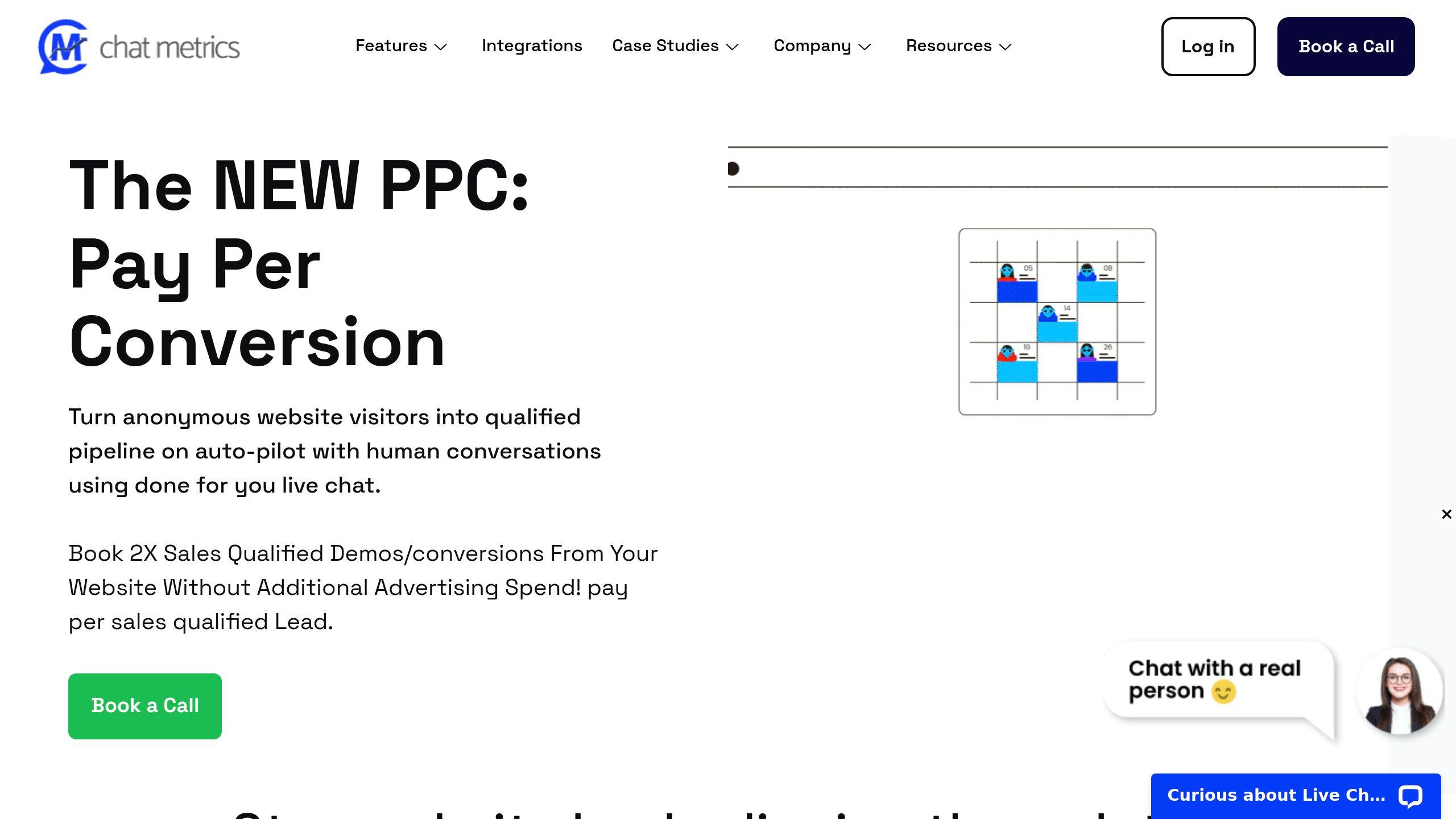
Services Offered by ChatMetrics.com
ChatMetrics.com provides tools like 24/7 live chat, CRM integration, and automated lead qualification to help businesses engage with website visitors in real-time. These features allow companies to analyze visitor interactions and adjust their segmentation strategies on the fly.
| Feature | How It Helps Segmentation | Impact on Lead Generation |
|---|---|---|
| 24/7 Live Chat Support | Enables real-time engagement | Quick responses to potential high-value leads |
| Lead Qualification | Categorizes leads by intent and need | Delivers pre-qualified leads to sales teams |
| CRM Integration | Updates segments automatically | Simplifies scheduling of sales meetings |
Why ChatMetrics.com Stands Out for Segmentation
ChatMetrics.com uses real-time data to fine-tune targeting and improve lead conversion. Research shows that real-time chat engagement can increase conversion rates by up to 25% while cutting down response times for following up with leads.
The platform’s success in improving lead generation comes from two main strengths:
1. Real-Time Lead Qualification and Automation
- Filters leads based on criteria like intent, company size, or industry
- Automatically assigns qualified leads to sales teams and schedules meetings
- Reduces manual tasks, speeding up responses to valuable prospects
2. Smarter Segmentation Through Data Analysis
- Uses chat data to refine targeting strategies
- Continuously improves segmentation based on real visitor behavior
- Lowers acquisition costs by improving targeting accuracy
With its focus on personalized engagement, ChatMetrics.com ensures that visitors get relevant, tailored information. This not only boosts conversions but also keeps your segmentation efforts on track.
AI-Powered Segmentation and Predictive Engagement Scoring Demo
Conclusion: Improving B2B Lead Generation with Dynamic Segmentation
Dynamic segmentation is reshaping how B2B companies approach lead generation by allowing real-time updates and precise targeting. This method keeps marketing efforts aligned with evolving customer behaviors, boosting both relevance and efficiency.
AI and predictive analytics play a key role here. As 6sense Blog highlights:
“Dynamic segmentation elevates your capabilities by automatically assigning contacts to designated marketing lists. This eliminates the manual process of updating lists.” [1]
To make the most of dynamic segmentation, businesses should focus on a few key strategies:
- Use data insights by consistently gathering and analyzing customer interactions.
- Personalize in real time and automate lead qualification to better meet customer needs and streamline the sales process.
- Integrate with CRM tools to simplify lead management and improve workflow.
Take ChatMetrics.com as an example. Their platform demonstrates how dynamic segmentation can deliver real-world benefits, such as increasing conversion rates by up to 25% and reducing client acquisition costs. By engaging leads in real time and automating responses, they show how effective segmentation can drive results.
Automatically adjusting prospects between segments based on factors like buying stage or revenue ensures marketing stays relevant. Businesses that embrace advanced segmentation tools and techniques, like those offered by ChatMetrics.com, can build highly targeted campaigns that deliver tangible results. [1]