

Want to turn more engagement into actual conversions? The engagement-to-conversion ratio measures how well your marketing efforts transform interactions (like clicks or downloads) into meaningful actions (like purchases or demo requests). Here’s why it’s important and how to improve it:
- Why it Matters: It identifies what’s working in your sales funnel and helps optimize ROI.
- Key Insights:
- Average B2B conversion rates are 2-3%, but top performers hit 5% or more.
- Live chat can boost conversion rates by up to 20%.
- Personalization increases email open rates by 22%.
- How to Improve:
- Use engagement scoring to prioritize high-potential leads.
- Integrate CRM systems for seamless lead tracking.
- Leverage real-time tools like live chat for instant responses.
B2B Conversion Rates: 7 Strategies to Boost Conversion with AI
How to Understand and Improve the Engagement-to-Conversion Ratio
Boosting the connection between engagement and conversions is key to thriving in B2B marketing. Here’s how to tackle this important metric effectively.
The Connection Between Engagement and Conversions
When engagement goes up, conversions often follow. Why? Because prospects who interact consistently and meaningfully throughout their buyer journey are more likely to take action. Websites with strong engagement often achieve conversion rates of 5% or more, far above the typical 2-3% industry average [4].
Using Engagement Scoring to Prioritize Leads
Engagement scoring is a handy way for sales teams to focus on leads with the most potential. By tracking activities like website visits, form submissions, email clicks, and content downloads, you can assign higher scores to actions that show stronger intent. This lets your team zero in on the prospects most likely to convert, saving time and effort.
Improving Lead Qualification for Higher Conversions
Live chat tools can be game-changers for qualifying leads in real time. When used during active website engagement, they can increase conversion rates by up to 20% for B2B companies [3]. To make the most of this, connect your CRM system with engagement tools for smooth lead tracking and faster follow-ups.
Ways to Increase Your Engagement-to-Conversion Ratio
Turning visitors into leads requires a personal touch, streamlined systems, and tools that work in real time. Here are some effective strategies to improve your engagement-to-conversion ratio.
Personalized Communication That Delivers
Tailoring your communication to individual users can make a big difference. HubSpot data reveals that emails with personalized content see a 22% higher open rate compared to generic ones [1].
Here’s how to make personalization work:
- Break your audience into segments based on behaviors and past interactions.
- Craft content that speaks directly to specific challenges or needs.
- Use dynamic email features to match user preferences.
- Continuously adjust your approach using engagement data.
Personalization not only grabs attention but also sets the stage for turning interest into action. Pairing these efforts with a CRM system can make the process even smoother.
Simplifying Processes with CRM Integration
A connected CRM system takes the guesswork out of lead management. It can:
- Automatically assign leads to the right sales team members.
- Keep a detailed record of engagement across multiple channels.
- Trigger follow-ups based on user activity.
- Offer real-time analytics to guide decisions.
When your CRM is working efficiently, it lays the groundwork for real-time tools to step in and boost conversions even further.
Real-Time Tools That Keep Visitors Engaged
Real-time engagement tools, like live chat, can make a huge impact. According to Forrester, 44% of online shoppers say that getting their questions answered by a live person is one of the most important website features [4].
Platforms like ChatMetrics.com allow you to connect with visitors instantly. Quick responses matter – a lead contacted within five minutes is 21 times more likely to convert [4]. These tools ensure you’re not just engaging visitors but also moving them closer to becoming customers.
sbb-itb-50a8823
How Live Chat Solutions Improve Engagement-to-Conversion Ratios
Real-time tools like live chat do more than just engage visitors – they provide a direct route to boosting conversion rates. Let’s look at how live chat is reshaping B2B marketing strategies.
Why Live Chat Matters for B2B Lead Generation
Live chat bridges the gap between engaging prospects and converting them into customers by offering instant, tailored interactions. According to Forrester research, “44% of online prospects consider getting immediate answers from a live person crucial during their decision-making process” [4].
Here’s how live chat impacts conversion rates:
- 24/7 Availability with Instant Responses: Engage leads anytime and respond quickly when it matters most.
- Better Lead Qualification: Helps sales teams focus on high-quality leads.
- Lower Acquisition Costs: Cuts client acquisition expenses by up to 30%.
How ChatMetrics.com Drives Higher Conversions
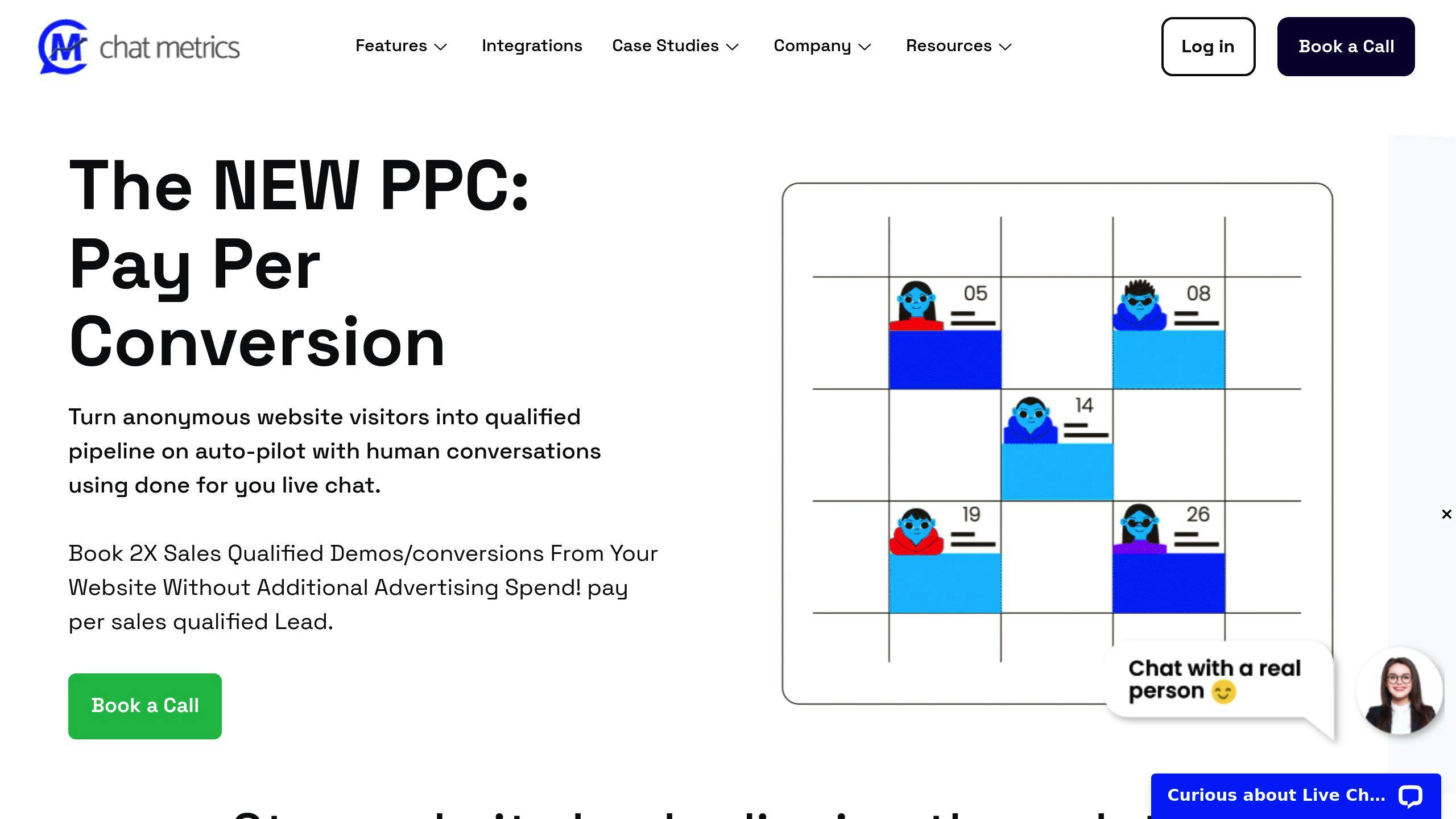
ChatMetrics.com specializes in helping B2B companies achieve conversion rates as high as 25% – a big leap from the industry average of 3% [4]. Their approach focuses on:
- Pre-qualified Lead Generation: Delivers leads that are ready for the next step.
- CRM Integration: Allows instant meeting bookings directly through the chat.
- Pay-per-Qualified-Lead Model: Aligns costs with conversion goals.
For industries like SaaS, where immediate engagement is key, live chat offers a proactive way to boost conversions. Features like round-the-clock availability and smart lead qualification not only improve conversion rates but also cut down on acquisition costs.
Next, we’ll dive into how this approach is shaping the future of B2B marketing.
Conclusion: Focus on Improving Engagement-to-Conversion Ratios
Key Insights to Remember
The engagement-to-conversion ratio is a crucial metric for B2B marketing success. When optimized effectively, it can drive revenue growth, especially when paired with smart engagement tools and refined processes for lead qualification.
Here are some strategies that can help improve this metric:
- Use data-driven engagement scoring to prioritize leads.
- Refine lead qualification with insights from user behavior.
- Take advantage of real-time engagement tools to connect at key moments.
- Implement automated tracking systems for better monitoring.
Looking Ahead in B2B Marketing
As digital marketing continues to evolve, the engagement-to-conversion ratio will play an even bigger role in evaluating and improving B2B marketing efforts.
“Conversion rates act as a compass for continuous improvement. By A/B testing, experimenting with different elements, and adapting strategies based on conversion insights, businesses can refine their approach and remain competitive in an ever-changing digital landscape.” [1]
Emerging technologies will shape the future of B2B marketing by improving how businesses manage this key metric. Expect advancements in:
- Personalization at scale, making interactions more relevant.
- Real-time data analysis to adapt strategies instantly.
- Automated systems that fine-tune performance without manual effort.
- Integrated platforms that unify engagement tools for seamless execution.
To stay ahead, businesses need to adopt tools and strategies that improve engagement-to-conversion ratios while delivering tailored experiences throughout the customer journey. The key will be balancing technology with thoughtful optimization of engagement and conversion workflows.
FAQs
What is the conversion rate for chat?
Live chat has become a powerful tool for boosting engagement and driving conversions. Here’s how it stacks up in terms of results:
Visitors who use live chat are 2.8 times more likely to convert compared to those who don’t. Research highlights that 38% of customers make a purchase after a positive live chat experience [1][2]. While the average e-commerce conversion rate is around 2-3%, businesses using live chat effectively can see rates climb to 5% or more [2][3].
The benefits are even more pronounced in B2B settings, where quick responses and personalized interactions play a big role in decision-making. Companies that connect live chat with their CRM systems can better track and nurture leads, creating a smoother path from initial contact to a qualified opportunity.
To get the most out of live chat, businesses should focus on:
- Fast response times to keep visitors engaged
- Clear lead qualification processes to identify prospects
- CRM integration for streamlined lead management
- Ongoing performance tracking to refine strategies
When these elements come together, live chat becomes a reliable way to engage visitors and turn them into valuable leads, all while maintaining a high level of customer interaction throughout the journey.