


Persuasion techniques can transform live chat into a powerful tool for driving conversions. By applying psychological principles like reciprocity, scarcity, social proof, and authority, businesses can guide customers toward making decisions in real time. Here’s what you need to know:
Why Live Chat Works: 92% of customers prefer live chat for quick and personalized assistance, and 79% make buying decisions based on fast responses.
Key Persuasion Strategies:
- Reciprocity: Offer tailored advice or resources.
- Scarcity: Highlight time-sensitive deals or limited availability.
- Social Proof: Share testimonials and success stories.
- Authority: Use expert knowledge to build trust.
Practical Examples: Emirates Vacations increased engagement by 87% using personalized chat strategies.
How to Improve: Use metrics to track success, refine scripts with feedback, and integrate live chat with CRM systems for seamless lead management.
Key Principles of Persuasion in Live Chat
The Importance of Persuasion in Live Chat
Persuasion plays a major role in turning live chat interactions into conversions. Studies indicate that 79% of consumers make buying decisions based on quick responses provided via live chat [2]. The real-time, personalized nature of live chat makes it a powerful tool for influencing customer decisions.
By building trust, encouraging action, and boosting confidence, persuasive live chat strategies can make a huge difference. In fact, 90% of customers say live chat helps resolve issues efficiently [2].
To use these psychological triggers effectively, it’s crucial to understand how they work in live chat scenarios.
Core Persuasion Techniques Explained
Here’s how some key persuasion principles can be applied during live chat interactions:
| Principle | How to Use It in Live Chat |
|---|---|
| Reciprocity | Offer tailored guidance based on what the visitor is browsing. |
| Scarcity | Mention limited-time offers or exclusive availability. |
| Social Proof | Share customer success stories that relate to their situation. |
| Authority | Use expert language and showcase in-depth product knowledge. |
When used strategically, these techniques can significantly influence customer decisions. For instance, proactive chat messages can speed up decision-making when visitors are highly engaged on specific pages [1].
A great example is Emirates Vacations, which achieved an 87% increase in engagement by timing their chat interventions and personalizing responses with these methods [1].
To make the most of persuasion in live chat, focus on creating trust and offering meaningful value. Here are a few tips:
- Start with small requests before aiming for bigger actions.
- Prioritize solving the customer’s issue over pushing a sale.
- Align responses with your brand’s expertise and tone.
- Trigger these techniques when visitors show signs of high interest.
The key is to keep the conversation natural and helpful, not overly sales-driven. Genuine, value-focused interactions are what truly guide customers toward confident decisions.
Building Effective Chat Scripts with Persuasion
Tailoring Chat Scripts for B2B Audiences
When creating chat scripts for B2B audiences, it’s important to address their specific needs – like handling technical details and navigating longer decision-making processes. B2B visitors often seek detailed information and clear explanations of how your solution fits their business goals.
Here are a couple of examples of how to structure your chat responses:
| Element | Example Response |
|---|---|
| Initial Qualification | “To better understand your needs, could you share your industry sector?” |
| Value Proposition | “Our solution helps reduce customer acquisition costs by automating lead qualification.” |
The goal of a strong B2B chat script is to guide prospects through a structured and professional conversation. Research highlights that 92% of customers feel more satisfied when chat interactions are customized to their specific business needs [2].
Adding Persuasive Language to Chat Scripts
Using persuasive language in chat scripts means focusing on outcomes and making your expertise clear. Instead of listing features, highlight benefits: “Our automated CRM sync can save you 5 hours each week on lead management.”
Here’s how you can make your chat scripts more effective:
- Highlight measurable business outcomes instead of just features.
- Showcase your expertise with solution-oriented responses.
- Include clear next steps, such as: “Let me set up a personalized demo to show you how it works.”
- Provide proof points: “Would you like to see how others in your industry achieved similar results?”
Using Persuasion Techniques in Live Chat
Creating Urgency with Scarcity
Using scarcity in live chat can encourage potential clients to act quickly, but it’s important to keep it honest and meaningful. Highlight actual time-sensitive opportunities that matter.
Here are a few ways to incorporate scarcity into your chats:
| Scarcity Type | Example Chat Script | Why It Works |
|---|---|---|
| Time-Limited Offers | “Sign up today for 10% off our annual plan” | Encourages quick decision-making |
| Limited Availability | “Only 5 client slots remain this quarter” | Makes the offer feel exclusive |
| High-Demand Alert | “Our next availability for onboarding is in 2 weeks” | Adds a sense of value and demand |
Stick to real limitations rather than creating unnecessary pressure. While urgency can push for faster decisions, it’s trust that keeps clients coming back.
Trust is built by presenting proof that resonates with the visitor, but it’s crucial to do this naturally without overwhelming them. The goal is to align trust elements with their specific interests.
Here’s how to weave trust into your chat:
- Reference relevant case studies: “A client in your industry saw a 42% lead increase in one month.”
- Highlight recognition: “We were named a leader in live chat automation by [reputable source].”
- Share clear metrics: “Our clients save 5 hours weekly with our CRM integration.”
“Live chat provides quick, personalized assistance, and customers love the easy, friendly shopping experience this creates.” – J. D. Power study [2]
Specific testimonials, industry recognition, or measurable results can naturally build credibility. When paired with urgency tactics, these trust-building strategies create a seamless, persuasive experience that encourages conversions.
Tracking and Improving Chat Script Performance
Metrics to Measure Chat Success
Keeping track of metrics like conversion rates, engagement levels, and customer satisfaction helps you understand how well your chat scripts are working. Real-time monitoring can reveal which techniques resonate most with users.
| Performance Area | Key Indicators | Target Goals |
|---|---|---|
| Engagement | Chat acceptance rate, Average session duration | 10-50% engagement rate |
| Conversion | Lead qualification rate, Meeting booking rate | Aim to exceed industry benchmarks by 20% |
| Quality | Response time, Customer satisfaction score (CSAT) | Under 30 seconds, 85%+ CSAT |
| Technical | Chat availability, System uptime | 99.9% uptime |
These metrics provide a clear picture of how different strategies – like using urgency or showing social proof – affect user behavior. By analyzing the data, you can determine which tactics drive the best results.
Refining Scripts with Feedback and Data
Improving chat scripts is all about using data and feedback effectively. Combining A/B testing with customer input can help fine-tune your approach for better results. Here’s where to focus during testing:
- Opening messages: Experiment with different greetings to grab attention.
- Value propositions: Test how you present benefits to visitors.
- Call-to-action phrases: Find the wording that drives the most action.
- Trust-building elements: See which elements make visitors feel more comfortable.
Post-chat surveys are a great way to gather feedback. This direct input can show you which techniques resonate most with your audience, allowing for ongoing improvements.
If your chat system integrates with a CRM, you can track the entire customer journey – from the first interaction to the final conversion. This makes it easier to tailor scripts for different types of visitors, whether they’re new or returning, based on their behavior and preferences.
sbb-itb-50a8823
Connecting Chat Scripts with CRM Systems
How CRM Integration Improves Lead Management
Integrating CRM systems with chat scripts automates lead capture, simplifies sales workflows, and removes the need for manual data entry. This ensures a seamless flow of information from the initial chat interaction to the final stages of the sales process.
Here’s a breakdown of how CRM integration improves key aspects of lead management:
| Integration Point | Impact & Outcome |
|---|---|
| Real-time Data Sync | Instantly captures and routes leads, reducing response times by 20%. |
| Automated Qualification | Scores leads with precision, resulting in a 305% ROI on proactive sales efforts. |
| Meeting Scheduling | Syncs calendars to eliminate scheduling delays. |
| Interaction History | Offers full context for personalized follow-ups. |
With detailed customer data at their fingertips, chat agents can better utilize persuasion techniques like personalization and authority. Access to previous interactions, purchase history, and customer preferences allows agents to craft tailored responses that resonate with potential leads.
Integrating CRM systems with live chat doesn’t just make processes smoother – it also enhances personalization and efficiency. These factors are critical for improving conversion rates.
How ChatMetrics.com Supports Better Conversions
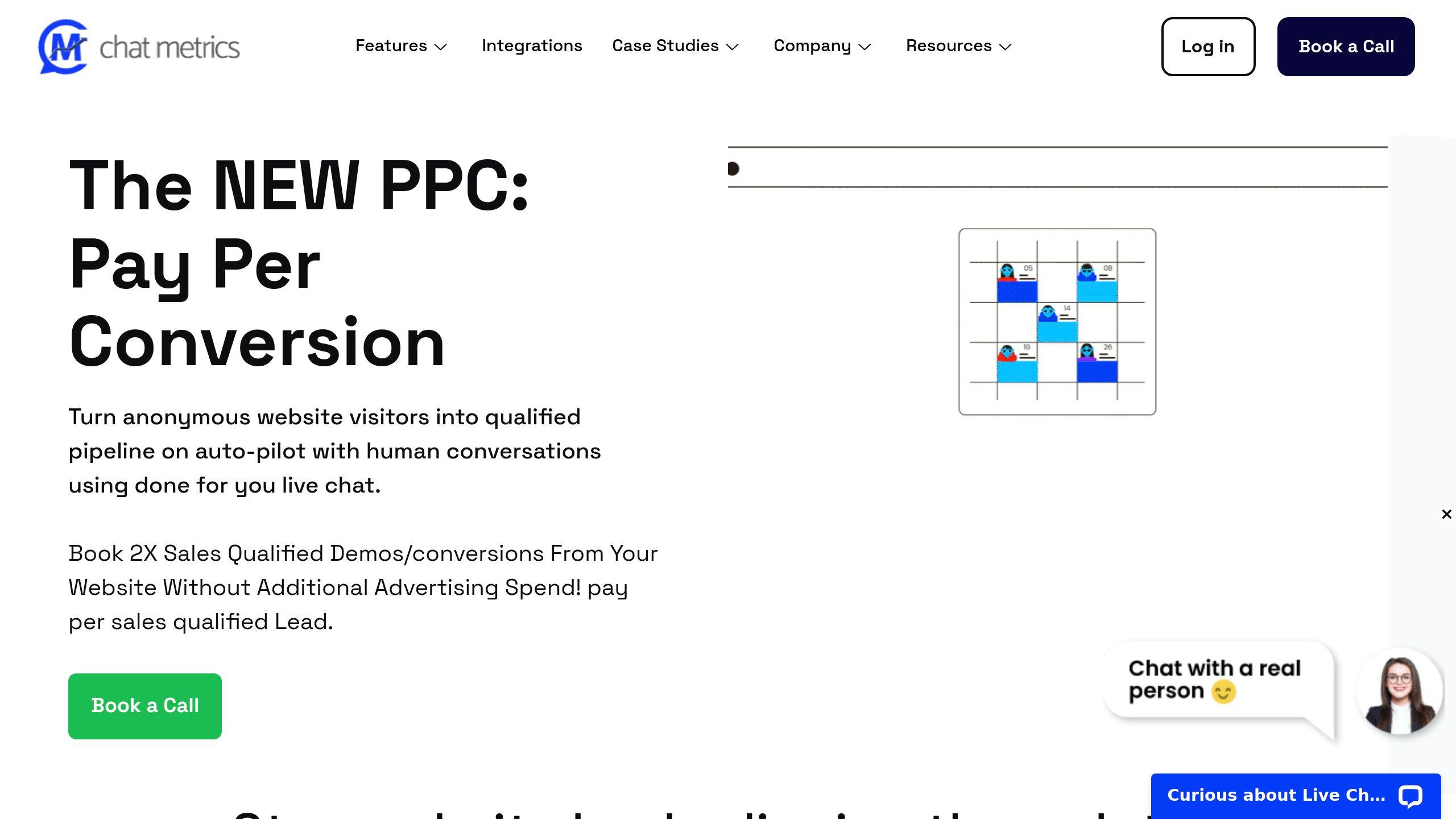
ChatMetrics.com is a great example of how combining live chat with CRM integration can transform lead management. Their platform offers 24/7 live chat services that qualify leads, connect them to the right sales teams, and provide actionable insights in real-time.
Here’s what sets ChatMetrics.com apart:
- Immediate Engagement: Live agents qualify leads as they come in, keeping prospects engaged during their peak interest.
- Smart Routing: Qualified leads are automatically assigned to the right sales team members.
- Data-Driven Insights: Chat transcripts deliver valuable insights for refining sales strategies.
The integration between chat tools and CRMs creates a powerful cycle of improvement. Sales teams can analyze which techniques work best, while chat agents use historical data to personalize their approach. This combination of technology and human effort ensures consistent messaging and drives higher conversion rates.
The Art of Persuasion: Decoding the Psychology of B2B Selling
Conclusion: Using Persuasion to Improve Chat Results
Applying persuasion psychology in live chat can be a game-changer for boosting conversion rates. Persuasive chat scripts help guide potential customers through their decision-making process in real time, leading to higher engagement and conversions.
When paired with strategies tailored to user behavior, persuasion techniques deliver measurable outcomes. For instance, Emirates Vacations achieved higher engagement by aligning their chat approach with user actions [1].
Live chat remains one of the most effective tools for engaging customers and ensuring satisfaction. To fully unlock its potential, businesses should prioritize the following strategies:
| Focus Area | Strategy |
|---|---|
| Script Optimization | Incorporate social proof and scarcity effectively |
| Data Analysis | Use metrics and feedback to refine scripts |
| CRM Integration | Automate lead management for quicker conversions |
These approaches highlight how thoughtful use of persuasion principles can transform live chat into a powerful tool for driving results. Platforms like ChatMetrics.com illustrate this by integrating persuasion tactics with advanced CRM systems. Their 24/7 live chat support, combined with real-time lead qualification, helps businesses streamline sales processes and improve outcomes.
The secret to success is staying genuine while using persuasion techniques. Methods like social proof and scarcity should enhance customer interactions, not feel manipulative. When done right, these strategies not only improve conversion rates but also create a better overall experience for customers.
Persuasion in live chat isn’t about pushing aggressive sales tactics – it’s about building trust and helping customers make confident decisions. By focusing on ethical methods and leveraging data-driven systems, businesses can see lasting improvements in their chat performance.
FAQs
How to use Cialdini‘s 7 principles of persuasion to boost conversions?
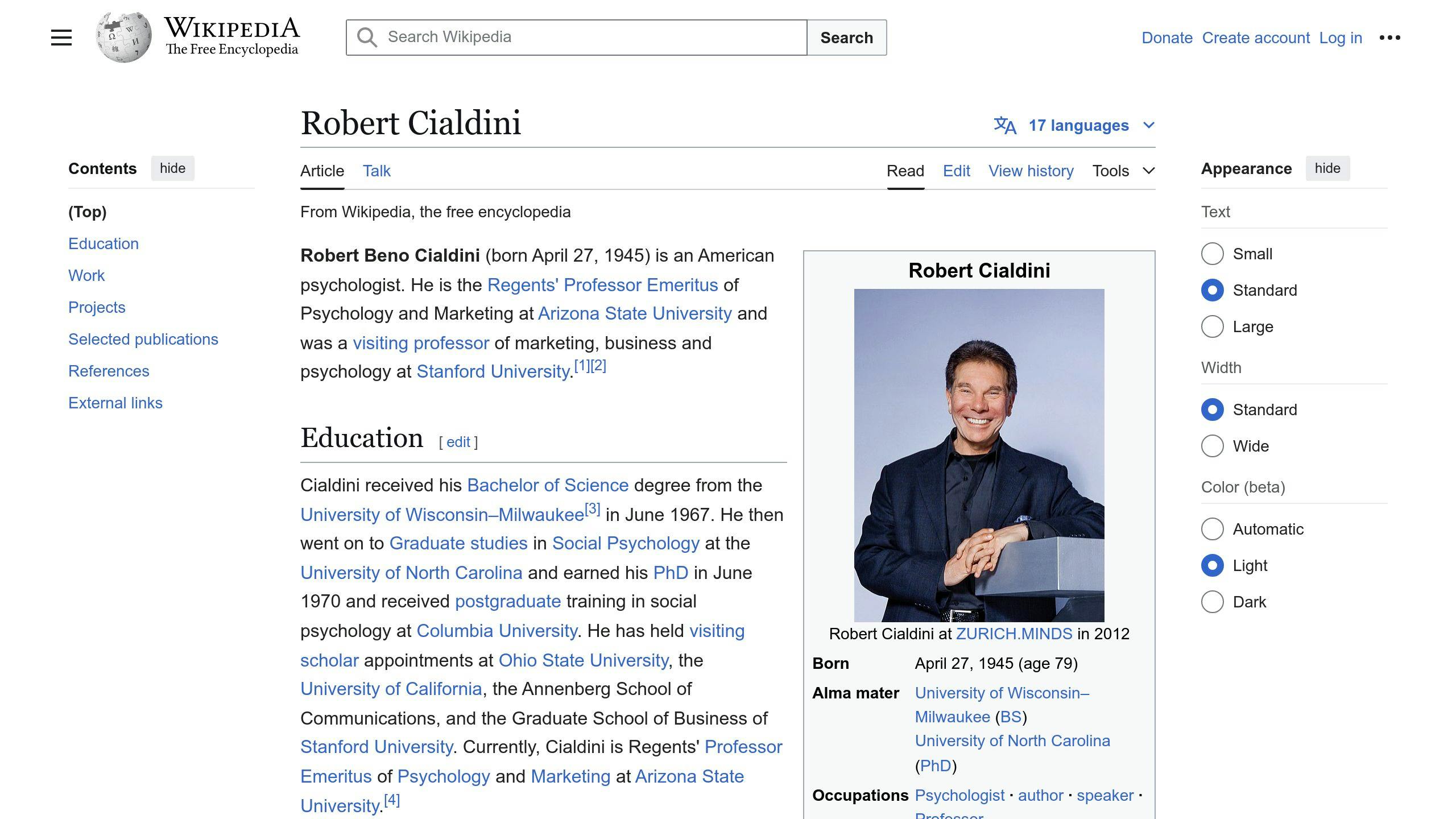
Cialdini’s 7 principles of persuasion can help increase live chat conversions when applied thoughtfully. Here’s how each principle can work in a live chat setting:
| Principle | How to Apply in Live Chat |
|---|---|
| Reciprocity | Offer instant access to helpful resources like reports or guides. |
| Consistency | Refer back to previous interactions or stated preferences. |
| Social Proof | Highlight relevant success stories, reviews, or testimonials. |
| Authority | Showcase agent qualifications or industry certifications. |
| Liking | Use friendly, personalized communication to build rapport. |
| Scarcity | Mention limited-time offers or products with low stock. |
| Unity | Relate to shared industry challenges or common goals. |
These principles work especially well in live chat, where 42% of consumers prefer resolving their questions while shopping online [2]. To make the most of these strategies, businesses should integrate them with CRM systems to track interactions and improve conversion rates.
Platforms like ChatMetrics.com combine persuasive chat methods with automated tools for qualifying leads, making sales processes smoother and boosting ROI. By weaving these principles into chat scripts and CRM workflows, businesses can create more engaging and productive conversations.