

Predictive lead scoring helps B2B sales teams focus on the leads most likely to convert by using machine learning to analyze data like company size, behavior, and technology usage. This method improves efficiency by predicting not just who will buy, but when. Benefits include:
- 700% increase in marketing qualified leads (e.g., Tableau‘s case study).
- 25% faster deal closures and 30% higher conversion rates.
- Automated scoring integrates with CRMs for seamless workflows.
Key Steps:
- Clean and organize data: Ensure accuracy before starting.
- Choose a tool: Look for CRM integration, customization, and security.
- Integrate and automate: Match data fields, set workflows, and monitor performance.
Results:
- Prioritize leads with scores of 81+ for immediate sales action.
- Align sales and marketing with shared metrics and dashboards.
- Regularly update models to maintain accuracy.
Predictive scoring drives 30% more deal closures and 23% higher sales efficiency, making it a game-changer for B2B sales teams.
Setting Up Predictive Lead Scoring Using Machine Learning
Components of Predictive Lead Scoring Models
Predictive lead scoring models use advanced data analysis and machine learning to pinpoint high-potential leads. Here’s a closer look at the key elements that drive their success.
Data Inputs: Demographic, Behavioral, and Firmographic
Predictive scoring relies on three main types of data:
| Data Type | Key Elements | Impact on Scoring |
|---|---|---|
| Demographic | Job Title, Experience, Education | Helps identify decision-makers |
| Behavioral | Website Visits, Content Downloads, Email Engagement | Indicates buying interest |
| Firmographic | Company Size, Industry, Revenue | Assesses organizational compatibility |
These inputs are integrated into machine learning algorithms, which analyze and interpret the data to predict lead quality.
Role of Machine Learning in Predictive Lead Scoring
Machine learning plays a crucial role by uncovering patterns in vast amounts of data. It processes thousands of data points at once, finding connections and trends that might not be obvious to human analysts.
Scoring Criteria and Weighting
The models assign scores based on factors that are proven to influence conversions:
- Fit Criteria: Measures how closely a lead aligns with your ideal customer profile. For example, company size may contribute 10% to the score, while industry alignment might account for 15%.
- Engagement Signals: Tracks behaviors like content downloads and email interactions, which typically make up 45% of the score.
- Intent Signals: Focuses on high-value actions, such as visiting pricing pages or requesting demos, often weighing in at 20-30% of the total score.
These systems continuously adjust the weighting of these criteria, improving their accuracy over time through a feedback loop.
Steps to Implement Predictive Lead Scoring
Implementing predictive lead scoring requires thoughtful planning and execution to ensure it works smoothly within your organization. The process can be broken down into three main phases: preparation, selecting the right tools, and integrating with your existing systems.
Preparing for Predictive Lead Scoring
Preparation is the foundation of a successful rollout. It starts with organizing your data and aligning your teams to ensure everyone is on the same page.
| Phase | Activities | Outcome |
|---|---|---|
| Data Assessment | Review and clean existing data | Reliable and accurate dataset |
| Team Alignment | Set shared goals and success metrics | Unified focus for sales and marketing |
| Resource Planning | Gain executive support and allocate budget | Resources dedicated to implementation |
| Process Mapping | Document current workflows | Clear understanding of integration needs |
Selecting and Setting Up a Predictive Lead Scoring Tool
When choosing a predictive lead scoring tool, it’s crucial to find one that works well with your current platforms and meets your business requirements.
Key features to look for:
- Integration capabilities: Ensure it connects easily with your CRM and marketing tools.
- Customization options: Pick a tool that allows flexible scoring tailored to your business.
- Data security: Confirm it complies with data protection standards relevant to your industry.
- Reporting features: Opt for tools with clear, easy-to-understand analytics and visualizations.
Integrating with CRM and Marketing Automation
Once you’ve chosen your tool, the next step is integrating it with your CRM and marketing automation systems. This ensures a seamless flow of lead scores across your platforms.
Here’s how to approach integration:
1. Align Data Fields
Make sure your data fields match across systems. This alignment is key to keeping lead scores accurate and up-to-date throughout your tech stack.
2. Set Automation Rules
Create workflows triggered by lead scores. For example, high-scoring leads can be automatically routed to sales teams for follow-up.
3. Monitor and Adjust
Use dashboards to track scoring accuracy and system performance. Regular checks help catch and fix any issues before they become major problems.
sbb-itb-50a8823
Using Predictive Scores for Sales and Marketing Alignment
Understanding Predictive Scores
Predictive lead scores are typically measured on a scale from 0 to 100, where higher scores suggest a better chance of conversion. To make the most of these scores, teams need to set clear thresholds based on their business goals and past performance data.
| Score Range | Lead Category | Recommended Action |
|---|---|---|
| 0-20 | Cold Leads | Add to nurture campaigns |
| 21-50 | Warm Leads | Share educational content |
| 51-80 | Hot Leads | Initiate direct sales outreach |
| 81-100 | Priority Leads | Schedule immediate sales contact |
These thresholds become actionable when integrated into a CRM system, as outlined in implementation steps. Businesses adopting predictive scoring often experience a 30% boost in deal closures and a 23% rise in sales efficiency.
Focusing on High-Value Leads
Identifying high-value leads requires analyzing scores and behavioral trends. For example, Snowflake achieved a 172% increase in conversions by targeting leads with scores above 80.
To engage effectively with these high-value leads:
- Respond Quickly: Act fast on high-scoring leads and monitor score changes that might indicate urgency.
- Tailor Strategies: Personalize outreach for different score groups. For instance, leads scoring 71 or higher could be invited to exclusive demos.
- Track Score Movements: Pay attention to sudden score increases, as these often signal strong buying intent.
Aligning Sales and Marketing Teams
For predictive scoring to deliver its full potential, sales and marketing teams must work together seamlessly. Here’s how to achieve alignment:
- Agree on Lead Definitions: Establish shared definitions for Marketing Qualified Leads (MQLs) and Sales Qualified Leads (SQLs) based on scoring criteria.
- Automate Workflows: Set up automated rules to route leads effectively. For example, leads scoring over 75 can go directly to senior sales reps, while those scoring 50-74 stay in nurturing campaigns.
- Share Metrics: Use dashboards that display both sales and marketing performance, enabling teams to track progress and refine strategies together.
Tools like ChatMetrics.com simplify this process by adjusting engagement strategies based on predictive scores, ensuring that both sales and marketing handle leads effectively and efficiently.
Evaluating and Improving Predictive Lead Scoring
Once predictive scoring is in place, regular evaluation is crucial to keep models aligned with shifting market trends and your organization’s goals.
Key Performance Indicators
To gauge how well predictive scoring is working, focus on KPIs that measure conversion rates and revenue outcomes. These metrics help ensure your model meets the objectives set during implementation:
| Metric | Target |
|---|---|
| Lead-to-Customer Rate | 2% to 5% |
| Sales Cycle Length | -20% |
| Win Rate | 25% to 35% |
| Average Deal Size | +15% |
| Prediction Accuracy | +10% quarterly |
Refining Models and Data Quality
The quality of your data plays a huge role in how accurate your scoring is. For example, a B2B software company improved lead quality by 30% when they adjusted their model to focus on new market trends and financial stability metrics.
Here’s how you can keep your data in top shape:
- Use automated validation rules to catch errors early.
- Conduct quarterly audits to clean and update data.
- Leverage AI-powered tools for ongoing data cleansing.
- Update scoring criteria twice a year to stay relevant.
Best Practices for Ongoing Success
A tech company improved data accuracy by 15% through a structured approach to model updates. They followed these three key strategies:
- Cross-functional collaboration: Monthly meetings between sales, marketing, and data science teams ensured everyone was on the same page. This approach boosted scoring system adoption by 25%.
- Continuous model evolution: Self-learning algorithms adjusted scoring weights based on real-world conversion patterns. One B2B company saw a 10% improvement in prediction accuracy each quarter using this method.
- Integration optimization: Sync predictive scoring with tools like CRMs and marketing automation platforms. For instance, platforms like ChatMetrics.com combine real-time engagement data with predictive scoring, leading to 25% higher conversion rates from website visitors.
Conclusion and Final Thoughts
Future of Predictive Lead Scoring in B2B Sales
Predictive scoring is on track to become a standard tool in B2B sales, with new technologies reshaping how it’s applied. By 2026, over 60% of B2B companies are expected to adopt predictive scoring, fueled by advancements in AI, real-time market updates, and tighter integration with account-based marketing (ABM).
Some key trends influencing predictive scoring include:
- Smarter AI tools for more detailed and accurate scoring
- Use of intent data and social signals to refine predictions
- Real-time updates to scoring models based on shifting market dynamics
- A stronger focus on ABM strategies to target high-value accounts
Improving Lead Generation with ChatMetrics.com
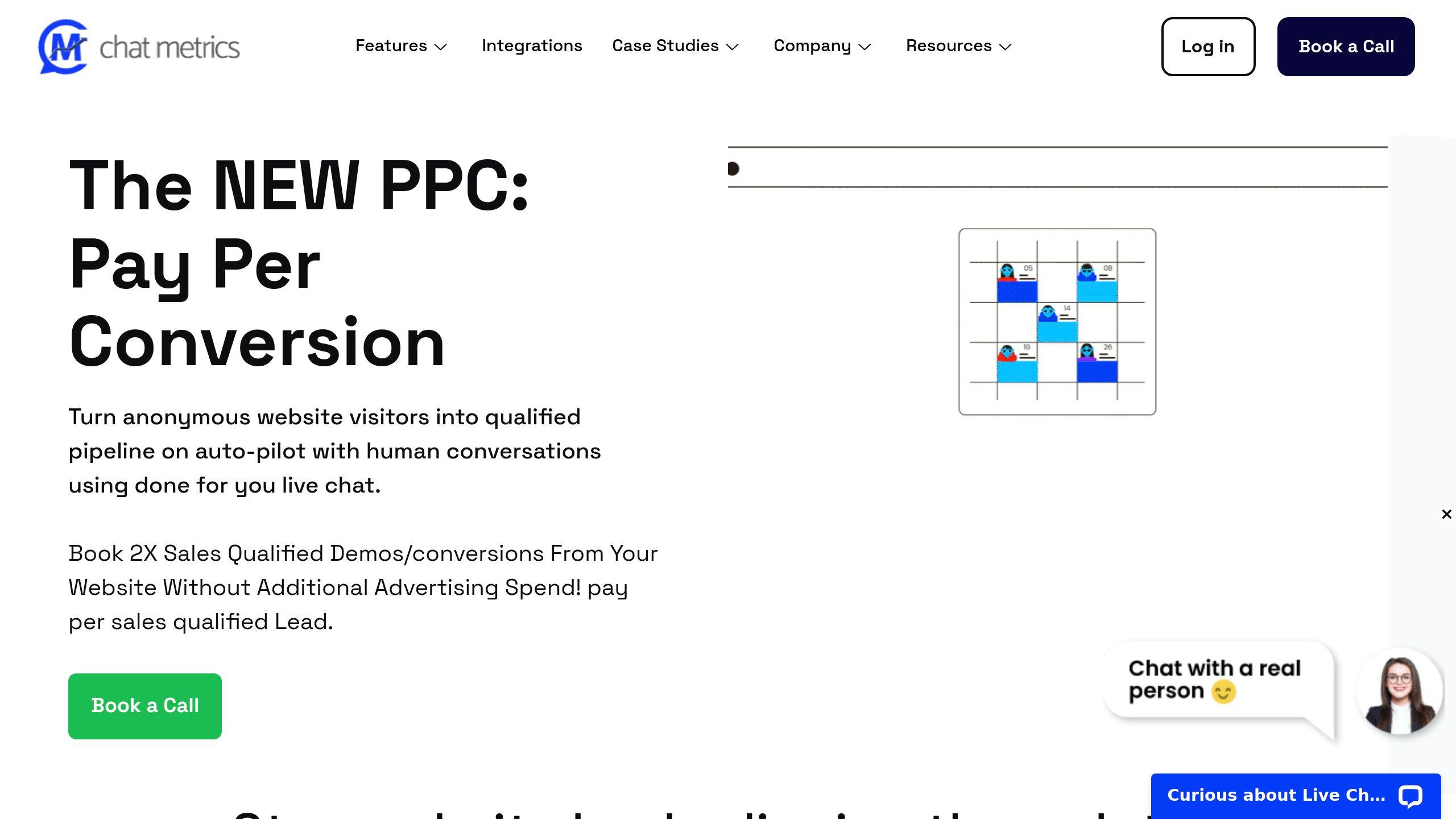
These advancements work seamlessly with platforms like ChatMetrics.com, which enhances predictive scoring by incorporating live chat support powered by real people. This real-time interaction complements the automated workflows often discussed in CRM systems.
For example, one SaaS company that combined ChatMetrics.com with predictive scoring saw a 20% reduction in sales cycle length and a 30% boost in lead quality. By blending human connection with predictive tools, businesses can maintain strong relationships – essential for navigating the complexities of B2B sales.