

Get my ultimate guide to boosting conversions and customer engagement delivered straight to your inbox.
Get my ultimate guide to boosting conversions and customer engagement delivered straight to your inbox.
🎧What to Listen For – Key Moments & Timestamps
[00:00] – Welcome to The Chat!
[01:17] – The Science Behind Predictable Irrationality
[03:49] – The Most Powerful Psychological Triggers in Marketing
[06:30] – The GAPS Model: A New Approach to Business Strategy
[08:49] – The Rise of Fractional Leadership: Why Businesses Are Hiring Part-Time CXOs
[12:22] – Founder-Led Growth: The #1 Challenge in Mid-Sized Businesses
[15:34] – The $10 Trillion Business Exit Crisis
[20:38] – The Remote Work vs. Return-to-Office Debate
[29:08] – The Role of Behavioral Science in Leadership & Culture
[37:14] – The Gen Z Workforce & Remote Work Challenges
[41:43] – Case Study: A Business on the Brink of Collapse Due to RTO Failures
[46:20] – Final Takeaways & Advice from Ellza Malok
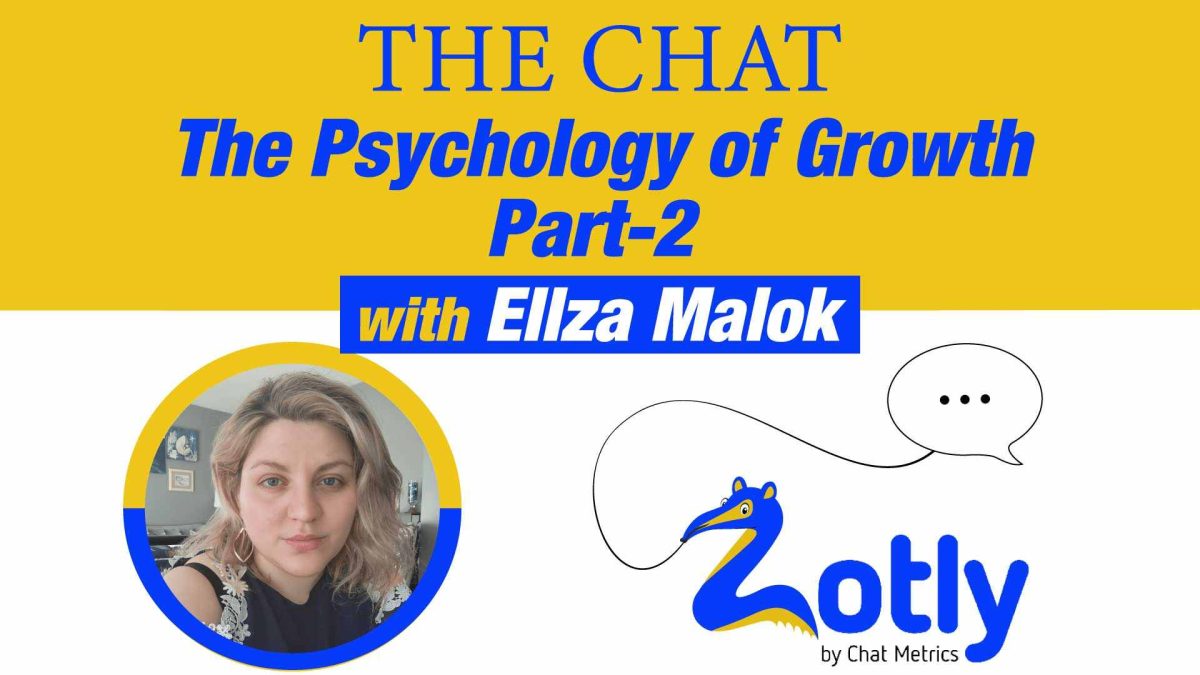
Podcast Notes: The Chat – The Psychology of Marketing Part 2
Episode Title: The Psychology of Growth: Behavioral Science in Business & Marketing
🎙 Host: Terry Wilson
🎙 Guest: Ellza Malok – Behavioral Science & Marketing Expert, Fractional CMO at Exec HQ
📌Episode Summary:
In this episode of The Chat, we continue our deep dive with Ellza Malok on how behavioral science is transforming marketing, leadership, and business strategy. We discuss the predictable irrationality of human behavior, how to apply psychology in business decision-making, and the challenges mid-sized businesses face in profit optimization, succession planning, and return-to-office policies.
From fractional leadership to employee retention strategies, this episode is packed with actionable insights for business leaders looking to drive sustainable growth.
🎯Key Topics Covered:
1️⃣Behavioral Science & Marketing Psychology
2️⃣The Rise of Fractional Leadership & Exec HQ
3️⃣ The Return-to-Office (RTO) Debate
4️⃣ Succession Planning & Business Exits
💡Memorable Quotes:
📢 Ellza Malok:
🗣 “Well, if we’re so predictably irrational, we should be able to somewhat predict it at some point in the future.”
(→ On how businesses can use psychology to forecast customer behavior.)
🗣 “If you remove the existing founder, there will be no growth. That’s the biggest challenge in midsized businesses.”
(→ On the risks of founder-led growth and lack of leadership succession.)
🗣 “If you force people back into the office without a plan, you’ll be met with disgruntled employees, malicious compliance, and lower productivity.”
(→ On why return-to-office mandates often backfire.)
📢 Terry Wilson:
🗣 “First and foremost, we’re in the people business.”
(→ A reminder that business success is built on relationships and human behavior.)
00:00- Terry Wilson:
Welcome to the chat. Come behind the inbound scenes of some of the world’s fastest growing companies. For the past 10 years as Chatmetrics, we’ve had an exclusive inside view of how these industry leaders are revolutionizing inbound marketing and sales. across diverse sectors. Each week we bring you conversations with top minds in marketing and sales who share insider secrets and strategies for driving inbound success.
00:36- Terry Wilson:
Join us on The Chat, your front row seat to the future of inbound.
00:48- Terry Wilson:
Now join us on The Chat as we continue our conversation with Ellza Malok
00:53- Terry Wilson:
the underlying component in nearly all of the things been talking about, it’s been, you know, behavioral science and psychology. It all comes down to the fact that I think as, as human beings, we, as much as we can learn about psychology, I think we’re still only scratching the surface because people are constantly surprising.
01:17- Ellza Malok:
Yeah, there’s this, there’s this concept that, um, I, I’ve kind of stolen from a number of writers, um, specifically around predictable irrationality. Um, and, and as, as emotional and, uh, often not as organized as we potentially would like to be, um, and as sentient as we think humans are, there are, some patterns.
01:44- Ellza Malok:
It’s just a very complex pattern, and I think behavioral science is kind of the window into that. You know, pulling some of that, um, that those nerves and those that that web into something a little bit more legible, um, for it. It’s so interesting to kind of see different elements. And then, because we’re humans and we constantly human, um, There’s elements of cultural changes that, that, that shift that behavior and there’s societal and all these other elements that we have to kind of take into consideration. But my, my whole thought process was, well, if so, we’re so predictably irrational, we should be able to somewhat predict it at some point in the future. Right. Um, you know, to your point, I think we’ve just scratched the surface and there are, there’s some amazing programs out there that are significantly more clinical. That the corporate and commercial environments can definitely take. That’s that’s most of the work I do is I, I take the clinical and I say, that’s interesting. How do we, how do we apply it just to, you know, our corporate initiatives? And I, it’s a great way to kind of put people back in the process. Um, I think we have all these tools and technologies that I absolutely love using. Um. But all of it is to go back to the heart of what we’re trying to accomplish, and especially in the commercial setting around driving growth. So that way we can sustain the existing workforce or grow the existing workforce, uh, pushing innovation and some of the projects. Even on the public sector, that we’re kind of starting to work on creating blue zones, uh, driving preservation, first economic development plan.
03:25- Ellza Malok:
Some of those elements that are just super interesting to kind of say, no, we’re at the end of the day, we’re human. So let’s just figure out how we human.
03:35- Terry Wilson:
Well, look, you are successfully combining psychology and marketing. What would be some of the lesser known psychological triggers that marketers could leverage to create a stronger connection with their audience?
03:49- Ellza Malok:
I think it’s not necessarily the lesser known. That’s more about the trick of when to use what. That’s the biggest lesson learned. I’ve kind of going into, you know, you can use the primacy effect or anchoring where you kind of, um, and lawyers would know the anchoring effect because it’s. You take a particular idea and then you, you build off of that and then you build off of that, and so on. Um, or the, the, uh, first mover advantage or some of these, I think if you pick five or six and, and probably start with something like the levers of influence, that would be a really good one to start off with. And then the trick is figuring out what lever to pull when if you’re dealing with particular personalities that, um, that’s a, that’s another element of behavioral science.
04:35- Ellza Malok:
Sometimes it’s not. It’s not necessarily just the information that you need to push out, it’s the way that that person is going to receive it. And that’s the more important part of this. So you’ve got to kind of work your way backward and say, well, if I do these elements around it, I do a lot of priming and framing. That’s kind of my, my more skilled one and, and transparently one that I, I didn’t realize I was doing until I started learning a lot of these elements to say, uh, which is, which is very common for a CMO, you know, narrative and positioning is, is one of our key, uh, elements. Um, but there’s so many of, of other ones that you can kind of work through and organize. I think the bigger component there is let’s figure out. Which one do we use at what point in time? And it all depends on who your audience is and what do you think they’re going to absorb first and best?
05:30- Terry Wilson:
And so is there a framework that you use when you’re assessing that?
05:35- Ellza Malok:
I do. And it kind of depends on if I’m talking to, um, a business owner or marketing department, um, within my CMO services, I kind of break things out into what I call as gaps. Um, so it’s goals, analytics, psychology, and the story. Um, so psychology is really where we do the investigative process of. What elements do we want to go into, but you can’t get to that until you do the analytics to say, what, how are people currently behaving and why do we think that people are behaving in order to kind of position it? And then once you’ve laid out that model of, all right, these are the effects that I’m going to use, or these are the these are the elements. How am I going to weave that into a story or a narrative is, is where you kind of. You know, put the whole board together. And, um, so I, I very much do a backward to forwards approach to say, where do I want to be?
06:30- Ellza Malok:
And then engineer backward.
06:33- Terry Wilson:
You mentioned about the, um, uh, in the fractional CMO, you’re wearing a couple of hats at the moment. How did you get involved with the Exec HQ?
06:42- Ellza Malok:
So I, uh, am, was in the midst of kind of repositioning our BMG from not necessarily just doing marketing, uh, communications elements, but moving into. Workplace and some of these other elements and really becoming a fully fledged human behavior consulting firm and I realized You know, going back to that gaps model that the story and the, and the narratives no longer fit.
07:09- Ellza Malok:
I can’t be both. I can’t offer only marketing services and then claim that I can offer all. And particularly my CMO services just didn’t resonate as well. So I went out to find an organization cause I didn’t want to build one. Um, that would, that would work. Um, I stumbled upon. Exec HQ in my search, and it’s such a great community to have other C suites that also do consulting and advisory work at the level that they do it in and transparently, um, seeing how other others consult is just a is a really good. Think tank. Um, and there’s even more behavioral science elements, I think, in the consulting world than, than people realize around just how do you get buy in from a buyer in order for you to give them their best recommendation and then for them to take it. Um, you know, those kinds of elements are, are common topics that we, we cover, um, to make sure that we’re leading and guiding, uh, business owners into the right direction. Uh, Because there’s, there’s just so many different types of businesses and frameworks that you can go into, um, that can be very confusing for mid sized businesses, which is what Exec HQ specializes in.
08:28- Terry Wilson:
And mid sized businesses bringing in an outsider at that level can be a very big decision where it’s a big impact from a cost perspective, it’s a big impact from a benefits perspective. What, what is it that in Exec HQ you do in terms of, I guess, getting across that first initial barrier or, or, um, reluctance?
08:49- Terry Wilson:
Mm hmm.
08:51- Ellza Malok:
within exec HQ, um, they originally started, which is how I originally started with them, which is really offering fractional CXO services across different types of functions Um, and in the last two years or so, um, as myself and my colleague, Baron Lucas have, have worked through building other types of elements that kind of show the power of. Of having an advisory level CXO or even an embedded level, which are the two tiers that we can use most often. So often, you know, if you’re a 10 million to, you know, a couple hundred million dollar company, you know, if you’re 10 million and you’re not going to need something major, you’re, you’re going to need something to get you from. Point A to point B, and that’s where a lot of our fractional services come in, but what we’ve done with those is we’ve baked in profit optimization and like very quick turnaround solutions that can get them those shorter wins. Um, and we do that because a lot of our clients come in in a less than desirable state. Um, they, they come with a really big pain point. You know, I’m a 10 million company for some reason I’m losing clients and I don’t really know why, or I’m, uh, we’re generating all this revenue and have no idea why the profit is so low, those kinds of, you know, really existential business problems. And then we go into, well, let’s, let’s analyze why.
10:24- Ellza Malok:
And, and right now I think the statistic was, um, I believe it was, uh, Ernest Young, maybe, um, one of the big major firms kind of released that 50 percent of businesses are holding on to customers that are significantly eating away their profit. Um, in, in large chunks and, um, if you, if you tell that statistic to 5 different C suites at different roles, they have different analytics from it. You know, my Baron, who’s the next CEO and, uh, Has done so much. He’s like, well, that’s because they don’t have processes or haven’t, haven’t done their three, three to five year plan, you know, as a marketer, I’m like, well, that tells me that their customers may not be the ones that they have. Aren’t ideal to their, to their targets.
11:14- Ellza Malok:
And, um, our operations team tells me that maybe they don’t have the same processes for every customer. So you get that wealth of, uh, advantage, like right off the bat. And then you can go straight into inquiry to say. Well, which one of those is it because there’s,
11:28- Ellza Malok: there are only five or six options. It could be, um, and just get back to the answer and then, and then pivot accordingly. In addition to those that, you know, would like to sell off their business. And that’s another element that, um, is, is one of their specialties is in, and we’re entering a period of time where at least in the U S the vast majority of companies, um, in that middle market are owned by a population that is looking to retire.
11:56- Terry Wilson:
Um, um, new, true, very true. And there’s been a lot more focus on that, which I would like to actually cover on in a minute. But in my past corporate career, I always was moved into organizations that were underperforming to turn them around. One of the biggest impediments I found to making the improvements was the, I won’t call it ego, but reluctance to change or concern for change.
12:22- Terry Wilson:
Often, you know, there’ll be, it might be that there’s just a long tail of very unprofitable customers that might only represent five, 10 percent of the overall revenues, and yet they’re accounting for 50 percent of the losses. And, you know, people don’t have a great fear of letting customers go when they’re not a good fit or they’re not, not profitable.
12:41- Terry Wilson:
Um, The reality is that most don’t do the detailed analysis to actually allocate the cost to correct cost to those customers. And they think that they’re still profitable and that it will have a negative impact on the business. The reality is by cutting off that, you know, that long tail. Potentially it is sometimes.
13:00- Terry Wilson:
It’s a, it’s a long tail of very unprofitable customers that only generate a small amount of the revenue. The impact, uh, multiply so quickly in terms of immediate increasing in profitability, but then the amount of resources that it frees up across the business in all aspects, because they’re not dealing with all of the problems that those customers were bringing, whether it’s anything from customer support to very small order size, whatever the case may be.
13:27- Terry Wilson:
It’s, um, so I understand exactly what you’re saying when you bring in programs that have a very quick, immediate, um, you know, immediacy in terms of the results that they, they deliver for those mid sized customers that, uh, uh, companies. It’s, um, it’s, it’s achievable because often from the inside, you can’t see the forest for the trees.
13:48- Ellza Malok:
Exactly. And sometimes you just need that, you know, you currently have your current business at X EBITDA and it could be X. And, and often actually we talk about presentation of how we, how we position. The data and how, how do we talk about it? We talk about going for, for that element of you’re currently at, let’s say, 3.
14:09- Ellza Malok:
you could be at 7. I’m like, well, how do I get there? It’s like, you remove these 6 clients from your clients and you’re done. Um, oh, we can’t do that. Why not? Because especially if you’re private equity owned, which a lot of organizations are today. Even as kind of king in that, in that element, so you might as well go through it, but that’s really how we go about it as we, we identify that this, there’s got to be a balance between the short term gains and those quick wins that those organizations are going to go into how do we guide them and get that buy in.
14:42- Ellza Malok:
So that way that resistance to change is different and, um. That model is just something that’s very, um, aligned to what I do. And that’s one of the key reasons I, I joined, uh, exec HQ and, and, uh, leading kind of their, their 2025 and onward initiatives from that lens has been a delight.
15:06- Terry Wilson:
You mentioned before that in that, uh, mid market area, there’s a lot of organizations who the owners, and I guess we’ll set aside private equity for the, for the moment, but the owners are at the stage where they’re looking to retire a hand over, um, looking to move on and exit the business effectively, whether that’s via a sale or, or, uh, or otherwise, what are some of the challenges you’re seeing there?
15:34- Ellza Malok:
Oh um, I think the most common one is in that mid midsize market, a lot of those, if we’re talking, you know, somewhere between. five and even 20 million. The vast majority of those businesses still have founder led growth. That’s probably that biggest issue is if you, if you remove the existing founder, there will be no growth.
15:58- Ellza Malok:
All the customers will leave. Um, and that’s one entirely different hurdle that we have to kind of guide through and build leadership, self sustaining leadership and word for companies that are, you know, a little bit bigger than that. It’s often this both emotional. and um, monetary discussion to say, what is the amount that you need to leave and what is the, you know, um, emotional time you need to be able to leave. Um, so there’s this concept of, you know. Especially if you’ve had your business for five, 10, 15 years, maybe even longer. There’s a lot of lifestyle businesses that go through, um, this becomes, you know, something very near and dear and a core element of themselves. So we do have, uh, members that actually go through the, the, the coaching and, and, um, some of our team members like to call it counseling, um, to kind of walk them through it and be able to, to let go of that. Um, and, and that’s just kind of part of the process. It takes a very strong amount of empathy to be able to kind of resonate with somebody, uh, and say, this is, you’ve, you’ve done so much for this organization and you employ X amount of people that are, that are your responsibility. And if you want to, if you want those people to continue to do that and to be able to, um, transparently still have employment. You’re going to have to start letting things go because that’s 1 of the things that you take very near and dear to you. Um, so, um, and I don’t remember the numbers outside of the US, but in the US, we are going to go through the largest transfer of wealth within that market.
17:50- Ellza Malok:
So, and and where it goes is kind of in a variety of places. Um, and then there are some that, you know, don’t necessarily want to leave it. They just want to train their next generation to, to host it. That is actually the minority of, uh, um, narratives right now. Um, the next generation is not wanting to take over their parents business or what have you. Um, so it’s, it’s mostly actually a sales process, which would be, you know, if we look back 20, even 30 years ago, that would have been virtually unheard of, Uh, in, in this time,
18:25- Terry Wilson:
Yeah, it’s really interesting. We had a business broker talking about exits and exit strategies of businesses, uh, on the, on the chat here a couple of weeks ago. And he spoke to a very similar issue where it’s, there’s two driving forces usually that cause the, the issues with successful exits and one is that it’s founder led growth.
18:46- Terry Wilson:
Exactly the same as what you’ve mentioned. Um, and one of the other issues is a lack of leadership because the founders expected that the next generation would be coming through and take it over, but they don’t have that info. They don’t have that interest. And there’s this big hole of, of, um, capability in the organization that the founders been holding onto, holding onto with the hope that they would come into the business and show some interest at some point in time.
19:10- Terry Wilson:
They just never eventuated. And so. the challenge is really do you make the decision to try and manage your own way through that and bring, capability into the organization, or do you get help and nine out 10 times they will need help because they just won’t be able to have the capability themselves to be able to build that, um, capa uh, competency within, within the organization.
19:31- Terry Wilson:
One of the
19:31- Ellza Malok:
in that.
19:32- Ellza Malok:
period, exactly in that period of time. And, and, uh, part of this other element is that waiting game, right? That, that, that generation kind of said, Oh, I’ll just, you know, if I, if I wait until, you know, my, my son or daughter turns 35 or goes to this corporate ladder and then wants to go into it, well, you’ve actually lost some really good years to build that leadership. Beforehand. So now, you know, a five to seven year plan has turned into three. Um, so, and you were already hand, uh, holding and those hats of founder CRO customer, uh, care officer. Now, you’ve got to also be self advisor. Um, it, it, it becomes very, very difficult. For, for those types. And, now we have a scrunched period of time.
20:27- Ellza Malok:
Cause I think. Between now and 2030, the largest batch is going to occur. Um, the second is 2030 to 2035. So
20:38- Terry Wilson:
And what are you seeing in Exec HQ in terms of the greatest, um, demand or requirement and need for the services? Where, where is the, you know, who’s raising their hands at the moment?
20:51- Ellza Malok:
I think right now we’re, we’re going through that profit optimization. Um, I think that this entire year of economic uncertainty has put that to the forefront. Um, a lot of leadership development and coaching, um, The, I, I chaired the international group, so this may be biased, but, you know, finding newer markets and newer regions to, to enter into has been a big catalyst and probably the 1 that I, I personally see as a no dub, but it’s just become a, an interesting conversation to have is, um, having. A CEO is not necessarily like having a PMO office or some kind of project management of the business, not necessarily in the business kind of model. And we call that our chief of staff as a service model. And, and I know that on the commercial world that is, that has different meanings. Um, you know, there’s chief of staffs that are now, that were formerly executive assistants that, you know, rightfully need a, a higher title because what they do is not just. The assistant level, there’s those that, you know, maybe run project management offices or some of these other elements. And then there’s the chief of staff that I think the vast majority of businesses transparently need, which is, um, the, the private sector equivalent of the chief of staff that the White House has. Um, that a lot of these, um, large governments have, which is that right hand person to move things forward and go through. Um, I often see two very big narratives when, when you’re in that middle market, either the CEO is the face of the company and is the, the, the founder of, of, and leader of bringing growth, or they are the equivalent to the product or service. officer Because they have been in that world so much that they just know it left, right, and center, but neither of those roles actually know how to know how to do chief of staff without enough training to go into it. Some people get that learning curve. Some don’t. And I think that’s probably the biggest 1 is, um, whichever of those 2 you fall into, you’re still missing this. Kind of guiding person who keeps everybody on the train and, and make sure that we don’t lose people as we’re heading through these tracks kind of model. And, um, that’s a, that’s a really, really, um, big one. Others that, that we’re actually building out right now is a, is a culture and a organizational health arm, uh, from, from one of our team members.
23:33- Ellza Malok:
So that, that’s. That’s another really interesting one. And then, um, our succession planning is, is continuing to, to move forward.
23:44- Terry Wilson:
Okay. Okay. It’s interesting, isn’t it? Almost all of those aspects involve such a heavy underlying component of psychology because, you know, it’s all about getting people to do things, um, you know, getting things done through other people. Effectively, this component of influence and desire and motivation that sits in underneath there and the steps that are required.
24:10- Terry Wilson:
Just jumping back into the marketing side again, how deep, how deep does psychology run in marketing? And so I know you’ve got two components, you’ve got the, the CMO role, but the, the insights that you’re delivering through BMG now, is there anything that’s coming up that’s actually really surprising you in terms of the impact that it will have on an organization?
24:33- Ellza Malok:
I think our, this year has been kind of the return to the office aha moments. Um, that’s where most of them have come in. Uh, and, and I’m a big proponent of, um, you do marketing externally and you do marketing internally, and if you don’t do it internally, then whatever you’re doing externally is, is re reduced in effect by, uh, a, a decent amount of, um, exponent numbers, um, uh, across it. And because your internal team members are those that talk to your customers every single day. They talk to your prospect every single day, and if they are not buying your, your, your story, if they’re not drinking your Kool Aid, so to speak, um, your impact is just much harder. Uh, there was a study done, I think it was by CultureAmp, where they could actually pinpoint their highest, most profitable and most highest growing companies in their customer list without looking at anything but their customer, but their, but their employee experience counts. and what those numbers are showing it’s a really, really important element, especially in the age where there’s so much data, there’s so much conversation around it and technology, um, but technology is literally the science of creation. If you break that down into root words, um, it just means you’re creating things. So, um, And people are the people that are creating things.
25:59- Ellza Malok:
So we’ve, we’ve got to get back to like, who are, who are those that are generating the and doing the work are of our TO programs are going into. Wow, I didn’t realize that I didn’t realize that my employee’s face. A 90-minute commute because they have to drop off their son or daughter to daycare before they, they go.
26:20- Ellza Malok:
I didn’t, um, and sometimes as a, as a
26:24- Ellza Malok:
c-suite and if you’ve been far enough away from that or if you’ve had the benfit having spouses or nannies or addtional support to manage that for you it’s hard to understand that until you do the research
26:36- Ellza Malok:
and for us to, one of the particular programes we did we actually recommended they install a daycare on one of their floors and the property owner loved it so much.
26:49- Ellza Malok:
They gave a whole floor to it to open up to the rest of the tenants because it would increase. Occupancy. Um, so, and, but it came into, we heard something to say, it’s not the commute that’s too long. It’s that I have to make so many stops. thoughout it And I, and then in our head, it was like, wait, why do they, why does this person have to make so many stops?
27:11- Ellza Malok:
And then we heard, we saw that a couple of times, so we went through it. And then we, we actually went back to the survey to say, Hey, cause we, we do it anonymized. So we don’t know who it is, but here are some things that we heard. Please give us more detail as to what you mean. And And in this particular organization, they had a majority of their employees were parents. So, um, specifically parents of those in grade school or under, and we, we did that analysis to say, what do you mean you have so many stops? It’s work to office. And they’re like, no, no, I have to go, I live in this particular area. I have to go 20 minutes North to drop off my kid to daycare. And then almost in the opposite direction, I have to go South to come back to the office. And, and I think it’s so easy for someone to say, well, that’s. You know, that, that’s what the world was always before. I’m like, yeah, the world was also terrible, you know, in many instances. If you think about, um, you know, Across the board, we’ve we’ve improved society. So for us to just say, that’s just how we’ve always done it.
28:19- Ellza Malok:
That’s not true. Um, we have vaccines and all this other technology that can help us be better. So we’re going to say that a little commute is going to be the reason why we. Um, you know, make people feel like they’re not, they’re not, uh, they’re complaining and in a reasonable manner. That’s
28:38- Ellza Malok:
that’s a different conversation. I really.
28:41- Terry Wilson:
I, I’ve got a quote coming into my mind that Steve Jobs, um, was, uh, was quoted as saying that, you know, customers don’t know what they want, you know, we’ve got to show them and I think this is one of those cases that, you know, through COVID, through the pandemic where we were forced to work from home, we’ve actually shown people what it can be like and so now when you’re talking about bringing people back to work, you’ve Then it’s actually a negative.
29:08- Terry Wilson:
It’s a, it’s a reduction in their, in their quality of life that they never would have noticed before because it was just the way things were done. It’s almost the perfect example of, you know, why do we do things here? Well, we’ve always done it that way. It’s that resistance to change. This has been a force change that now is will.
29:27- Terry Wilson:
You know, become embedded obviously for everybody. We, it was a very interesting, um, personal experience for me. I’ve always ran geographically dispersed business, so I’ve always felt quite remote from, from, um, my work virtually since 2000 and, uh, since 2000. Since 2000, I’ve been running geographically dispersed businesses and often worked from an office that wasn’t related to my business at all.
29:55- Terry Wilson:
It was part of the organization, but not part of the business that I was looking after. And so there’s this level of remoteness all the way through. I saw the. The posts on LinkedIn. I’ll work from home. It’s difficult. Now you’re challenged. You don’t have the community feel and the water, you know, the water cooler chats and all that sort of stuff.
30:11- Terry Wilson:
And I thought, yeah, what are they talking about? And then I realized that this, the whole globe has gone into a work mode. Like I’ve been working in for the last 20 years, the, um, our business. Has been fully remote from day one. So since 2015, we’ve been a hundred percent remote business. And so it was just like the, the world that I’m used to operating in, the impact though for others has been enormous.
30:33- Terry Wilson:
Do you, have you seen the, um, communication, for “get back to the office” that, um, that Amazon did? How, how would you rate that as to, in terms of, uh, employee engagement program?
30:44- Ellza Malok:
It’s, um, it’s definitely polarizing, which is one thing that you don’t want your RTO programs to be. And, and regardless of how, how you believe there, there is data to show that the human experience needs two people to talk to each other, ideally in a room together. But we live in a globalized society and, and transparently, if that was true, then I would never speak to my family that lives in Kosovo. Um, in reality, if that was a legitimate thing,
31:12- Terry Wilson:
we, we wouldn’t be having this conversation now.
31:14- Ellza Malok:
right? So there’s, there’s these elements around and I talk about it in a blended model if, and it depends on what your organization is, what you’re looking to accomplish, what your current management style and management team capabilities are, because managing remote as someone who also runs. A remote only organization is very, very different than managing in person and you’ve got to build those skill sets. And I think actually that’s 1 of the catalysts of RTO campaigns and programs to kind of say, Hey, we’ve got to bring people back because our managers are struggling to manage people. If that’s the only reason, then maybe there’s an education option there, um, especially if you’re thinking about, you know, you’ve got to weigh your other business opportunities around, like, how much is rent on my on the real estate?
32:04- Ellza Malok:
What is the, the new insurance costs? All these other elements. So that’s why I kind of look at it from a blend perspective. And transparently, I’ve actually lost opportunities before covid because I was a remote organization and I quote, you can’t run a company virtually was the comments that I and feedback I would receive, um, and lo and behold, that company actually still exists.
32:26- Ellza Malok:
So, uh, today, but, you know, that after going remote. But it is one of those. Um, it’s a perception and one that is going to change. I do think that we’re going to go into a blended society where there’s going to be remote functions in person functions and so on. I also think the uptick in travel, particularly group travel is going to increase. Um, so that way you can build those. emotional connectors. Um, but there isn’t necessarily a silver bullet, you know, one remote only can be done just as much as we can go back to it. It just depends on how you do it to make it successful. And, um, I’ve been working on and off remotely since 2015. So, you know, not about nine years entering 10,
33:19- Ellza Malok:
And then since BMG started we’ve been remote only period, but it’s definitely doable,
33:27- Ellza Malok:
it requires a different skillset, it requires a different level and it goes back to it requires on how you expect people to behave and my personal thought process is if you have a team that is being forced to come back into the office without a proper communication plan, without the proper models
33:42- Ellza Malok:
and it
33:44- Ellza Malok:
And systems in place to to get them to want to come back into the office, you’re going to be met with a lot of, you know, Disgruntled employees, you’re going to be met with a lot of malicious compliance, you know, intentionally coming in, um, and, and right now we know that the numbers are. That if you’re working remotely, you’re actually more productive, so you may see also a decline in productivity. Um, and that goes back into, like, how, how behaviorally, um, thought out a particular office is designed as well. So, you know, if you have open office style, what are you going to get everybody in, in headphones talking on top of each other because they’re all in meetings on a zoom call with their other office in Chicago or New York or Sydney or wherever. Um, because that’s really what happens.
34:37- Terry Wilson:
Exactly, exactly. It’s, uh, it’s very interesting. I’m, I’m fascinated to watch what happens over the next three to five years with organizations. You know who I have the greatest level of empathy for in this whole COVID and work from home environment that’s been forced upon us? Office based micromanagers.
34:59- Terry Wilson:
They must be tearing their hair out.
35:01- Ellza Malok:
Um, yeah, I think that there’s some other, you know, existential things that, that Definitely need to be taken into consideration, um, especially in the United States. And I know that’s both of our, uh, 2 of our markets as well. RTO is also going to, you know, hurt some, some particular people like mothers who know that child care is already expensive and may be forced to be pulled out of the workforce because of it. And that. You know, sets those particular people back and just. Uh, historically, you know, there’s a. four to one ratio of mothers, uh, deciding to, to pull from the workforce compared to fathers. Um, so that’s just a general statistic around, around that. Um, so there are some things around, will I even have enough of a talent pool? In certain regions, if I, if I force a return of the office mandate, because the cost of child care and some of these other elements in, at least in the U. S. market is quite challenging. Um, I just saw a note around it ranges between a couple, uh, 800 a month a child up to 2000 and by state. So, you know, depending on, uh, the role, that could be, that could be a very large chunk, if not in, you know, if you’re in, uh, different, different industries, that becomes unsustainable, which is what, what will go in and I think about the next generation of, of, uh, employees. Who have gone, who have basically only worked remotely because they entered the workforce maybe a year or two in, if not entered at all during COVID, learned how to work remotely, and then it’s hearing that we’re reaching record profits and record numbers and so on, and then all of a sudden have this mandate. Transparently, most, uh, we’re seeing a lot of Gen Z’s not have enough of the social skills. To be able to be in the office as well. So you may run into some more problems than you anticipated before, before you, before you went remote back in 2020.
37:14- Terry Wilson:
Absolutely, absolutely. It’s, um, it’s interesting that The point about you’ve got people that are in the workforce that potentially have never ever worked, uh, that just sort of realizing that now I’ve never actually considered that before. You’ve got people in the workforce that have never worked in an office in a worked in an office environment.
37:33- Terry Wilson:
It’s not that they’ve been pushed out remotely. Look, there’s another side to this too, and I think it’s quite a positive side in that for some organizations, there’s a real opportunity. There’s a real opportunity to get very, very good talent. Um, I know the Australian based business here, Atlassian, you know, they run Jira and all that type of thing.
37:53- Terry Wilson:
Um, they came out not long after Amazon. We want everyone back in the office. They came out and said, that’s ridiculous. We don’t want people back in the office. Um, you know, our force will remain remote and we’ll be looking for remote workers. Now, strategically, that’s gold and genius, quite frankly, in that you can see this whole set of potential, not potentially very high caliber team that will be in AWS.
38:18- Terry Wilson:
Um, similar skill sets to what Atlassian are looking for that, you know, They’re back to office at last in the same way or not. We’ve got a few vacancies available in terms of getting very good talent into your organization. I think there’s a real opportunity for businesses that choose to remain remote if they can get it right.
38:36- Ellza Malok:
um, the, the RTO program I was, I was telling you about their mass exodus was literally all of them going to startups. Um, and, and, and taking the pay cut and taking these other elements to be able to have the freedom to work remotely. And unfortunately for, for my client at the time, it takes, it takes them about 10 years to develop an engineer at that seniority level, you lose enough of them, you’re, you’re basically out of the market for the next five, six years, easily, um, to get to it on top of that. In that industry, if you are at that level, you’re not working for the company. You’re, you’re saying that you’re working up to Joe so and so and when Joe leaves and then he calls you up for a junior role that they have open, it’s not even going to be a question whether or not they’re going to leave.
39:25- Terry Wilson:
Yeah. Yeah. So the impact, the impact across the organization can be, can be very, very dramatic.
39:33- Ellza Malok:
Yeah. When, when four of your 10 major, uh, engineers leave. Uh, for, for start-ups in the region, it’s, it’s a scary number, especially if you’re bidding, you’re kind of, you know, neck and neck with two other competitors that are, that are in regions that have bigger talent pools.
39:54- Terry Wilson:
At what stage were you brought into this process? Was it after the exodus started and to try and stop it or? Yeah. Yeah.
40:01- Ellza Malok:
Yeah,
40:02- Ellza Malok:
yeah. So, unfortunately,
40:03- Terry Wilson:
late.
40:05- Ellza Malok:
Unfortunately, a lot of them have to have to figure
40:08- Ellza Malok:
out
40:08- Ellza Malok:
that was an issue before starting. Um, I have had a couple who are, who have, who have tabled the mandate long enough to say, we’re already getting a massive response from it. And we realize this is probably not the way to go, or at least not the way to do it. Um, so they, they brought me an early stage, but the vast majority of them come in when there is an exodus. Um, Throughout it. And it’s interesting because it’s not necessarily, you know, next citizen, a certain department or what have you it by the time it rolls up to the chief, uh, HR officer, when they realized that they need to hire three or four more talent acquisition specialists to make up for though, those team members that at that point, it becomes a stop what you’re doing right now, before we lose more people. Kind of conversation. And that’s literally what we had to do. Um, because this organization actually had gotten to a point where they couldn’t manage their existing book of business. By the sheer exodus that they had, and then they were already bidding on several multi billion dollar opportunities that they needed to increase their talent pool and their employees by at least 20 percent to be able to make up for that.
41:23- Ellza Malok:
And they were already 10 percent negative. So it, it, it started out as, we actually, we know why they’re leaving. We just don’t know how to fix it. And it became a, we have to, we have to pause. That’s what we, we have to kind of say, this is, Effective, um, effective immediately. We’re going to pause these. So, you know, please don’t quit. It was the message.
41:43- Terry Wilson:
And was, were you able to, going through that process, were you able to actually get anybody to return that had, had resigned?
41:51- Ellza Malok:
Um, we had a, a percentage to cut that came back in, um, a lot of them were, we had 1 of the major engineers come back, um, which was, you know, Amazing. Um, for them, because that was the 1 of the 1st people that left originally. Um, and then there, those that reported up to him that also had left started to kind of trickle back in afterward. But we had gotten to a point where without a mandate, they were getting 75 percent of people to come in 3 plus days. Because of the, the, the, uh, elements that we didn’t in this instance, we actually renovated all the floors to make it much more behaviorally sound around how we want people to engage in the space.
42:41- Ellza Malok:
And so on. So, if you’re going to be in a meeting, you have a, you have To be in meetings and not the conference rooms that are housed 15 people, but only 1 person can be in it. And some of these other mechanisms that we go in in addition to the daycare. So now you’re going into the office and you still have the opportunity to be productive and get your things done versus having to spend your 9 to 5. Realize that so many people are coming to you, distracting you from getting the things you need to get done only for you to take your laptop home and then go work another six to nine afterward.
43:17- Terry Wilson:
Interesting. Interesting. Look, you know, that’s a great outcome. You get people, uh, being able to, that have left to, to come back again. I mean, that really is in those situations, it would be the, I’ve mentioned it before the damage to the business, but when you’re in a situation where you can’t handle what you’ve got, and it’s just absolutely inhibiting growth in any way, shape or form.
43:35- Terry Wilson:
And in fact, potentially having to. step backwards and watch the business shrink. Um, that’s a disastrous situation to be in. And it reminds me of a, of a quote, you know, first and formal, I think it was, um, it was Bob Ansett that used to say, first and foremost, we’re in the people business. I just rings. I remember watching him speak.
43:57- Terry Wilson:
Must be, well, it was about 1996 actually, starting to show my age a little bit here, but, uh, in, in Australia, in Sydney at a, at a large conference that I was at, and it stuck with me, uh, because it resonated with me in that, you know, business, as much as we say it’s a business and, and we have this phrase of B2B, it’s actually P2P.
44:17- Terry Wilson:
You’re still talking to people, you’re still dealing with people, it’s people that are making the decisions. Um, sure, we’ve got AI involved now in bits and pieces, but when it’s all said and done. The business is about the people.
44:31- Ellza Malok:
Yeah. And I, I think that’s a really important clarity around as, as we’re seeing artificial intelligence and some of these other things kind of come into play, um, at least right now, um, you know, we don’t have a, um, I used to the show called, uh, travelers and it was. People going back into the past because I had it wasn’t necessarily that I had taken over.
44:56- Ellza Malok:
It was that, um, I was actually doing the right thing, but some radicals were coming back or what have you and all of their decisions were made off of off of this. Director AI model, um, even down to, you know, pairing partners together. Um, that’s the level of it around, you know, we’re not there yet. Um, hopefully we still have some more free will in our, in our society. Um, by the time we have that kind of technology, but, um, you know, at the end of the day, people are making those decisions and, and they’re making emotional ones, regardless of what type of, rational discussions that they’re having. Um, I, I talk about this actually a lot in my, in my research teams around. We know we’re looking for information that supports our theory, but we’re also looking for information that doesn’t support our theory because otherwise, we would have very biased data. So we’ve got to, we’ve got to kind of do both ends. And even then we, we list out like the biases, at least we’re aware of. Um, so that way, when we put our, our documents together, our debrief sessions together, we can kind of say, oh, yeah, I see, I see the bias. So we’ll, we’ll start to kind of filter it through. But we do double blind specifically for that. We do 2 different groups running the same study. together.
46:20- Terry Wilson:
Yeah.
2026 © All rights reserved Chat Metrics
Made with ❤ in Melbourne, Australia


