

Get my ultimate guide to boosting conversions and customer engagement delivered straight to your inbox.
Get my ultimate guide to boosting conversions and customer engagement delivered straight to your inbox.
[00:00] – Welcome to The Chat – Terry introduces the show & Jeff Bogensberger
[01:08] – Jeff explains why he started The Laughing Otter
[01:59] – The personal tragedies that inspired Jeff’s mission
[03:28] – How social impact fits into today’s business landscape
[06:05] – Inside the LA event: social media creators, music, and mental health awareness
[10:39] – Innovative go-to-market strategies for startups
[13:42] – “The only thing you can do wrong with marketing is nothing”
[16:57] – Balancing community and revenue – mistakes startups make
[24:20] – Customer experience is everything – how businesses should handle it
[31:12] – Lessons in scaling and restructuring teams for growth
[38:30] – The future of social entrepreneurship and entertainment
[45:40] – Does technology help or hurt community building?
[53:08] – How you can get involved with The Laughing Otter
[54:13] – Final Thought – “People don’t want to end their life. They want the pain to end.”
A powerful takeaway that highlights why Jeff is so passionate about making the world a happier place.
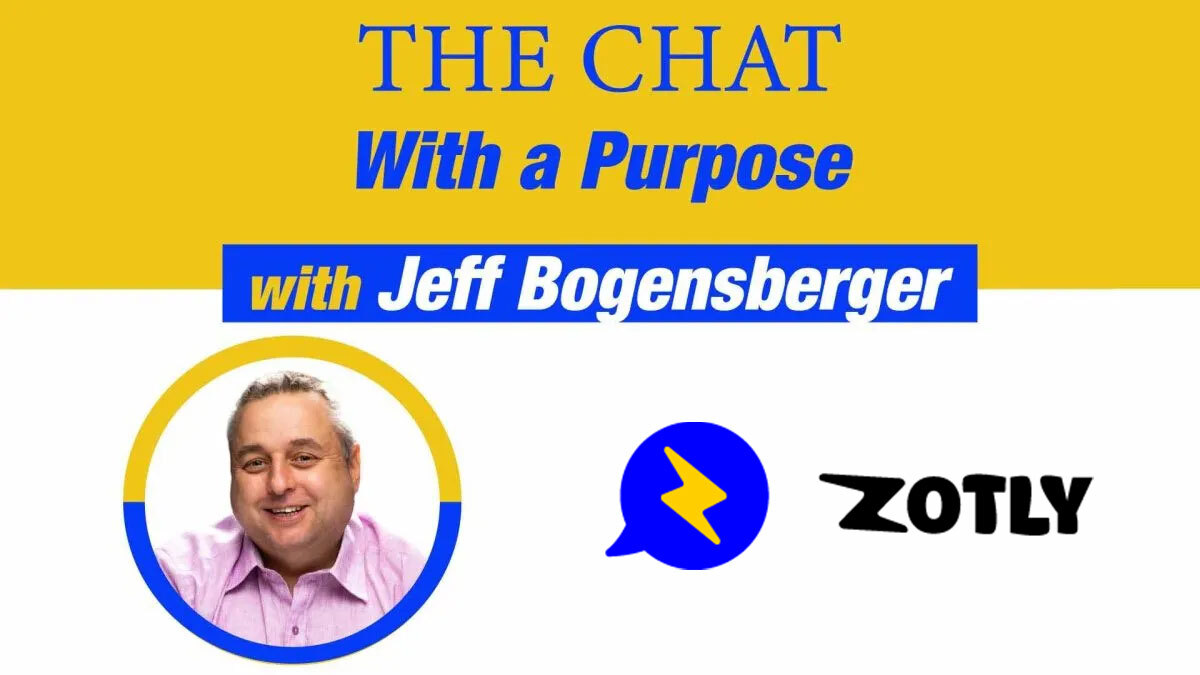
In this episode of The Chat, Terry sits down with Jeff Bogensberger, CEO & founder of The Laughing Otter, a platform that fuses entertainment, social impact, and blockchain to spread positivity. Jeff shares his journey of building a brand dedicated to counterbalancing negativity in the world, his approach to marketing, and how he’s leveraging tech and partnerships to create a thriving, purpose-driven business.
🔹 Key Themes Discussed:
🚀 If you’re a marketing or sales leader looking for fresh perspectives on branding, growth, and purpose-driven business, this episode is a must-listen!
00:00- Terry:
Welcome to “The Chat”, where we take you behind the inbound scenes of some of the world’s fastest growing companies. For the past nine years as Chatmetrics, we’ve had an exclusive inside view of how these industry leaders are revolutionizing inbound marketing and sales across diverse sectors. Each week we bring you conversations with top minds in marketing and sales, sharing insider secrets and strategies that drive inbound success.
00:39- Terry:
Join us on “The Chat”, your front row seat to the future of inbound.
00:51- Terry:
Today we’re joined by Jeff Bogensberger, CEO and founder of The Laughing Otter, a platform combining entertainment, social impact and blockchain technology to spread positivity and support the arts. Jeff is a seasoned entrepreneur and a thought leader with a track record of driving business growth and innovation.
01:08- Terry:
We’ll dive into his journey, explore how he’s using tech for social good, and gather insights on how he’s growing the Laughing Otter. Hi Jeff, welcome to the chat.
01:19- Jeff:
Yeah, thanks, Terry. It’s we’ve known each other for a few years now. I’m really looking forward to this chat.
01:23- Terry:
I am as well, I am as well, digging in a bit deeper. look, I like to jump straight into it, Keep the listeners, engaged from the beginning. But the very first question I have for you is the laughing otter. How did the idea come up for the laughing otter
01:38- Jeff:
Yeah, so there were micro factors and macro factors, that, that came together about 3. 5 years ago, 4 years ago. during, which is timely now, but during the last presidential election, I looked around and there was the election that was really, uh, polarizing and dividing.
01:59- Jeff:
There was a lot of other things going on that was, and with 24, seven news and social media, that’s all anybody was talking about. And I just saw this massive. Need for something to counterbalance the, just the negative, stimulus that everybody was consuming at such an alarming rate. And then what really triggered, me to take action was more on a micro level. Um, sadly, a friend of mine hung himself. Another mate, uh, drank himself to death, which is essentially the same thing. But, Just a little more, less dramatic.
02:39- Jeff:
and when that happened, I looked around and, I just, I saw every, my own social circles and, I live in Australia, I got a Canadian and an Australian passport.
02:51- Jeff:
I’m a white male, middle class, suburban dad. And so my circle of friends, we had nothing to complain about. And yet people were just miserable. And I just went.this gotta be an opportunity to just create a brand, create a platform, uh, to create a community that just celebrates having fun again. And so that’s where the laughing harder came from. And it’s, it’s evolving. We’ve got a lot of really fun, exciting things happening. We just had a really cool event in LA that. I’m going to get a lot of, get us a lot of publicity. And yeah, that’s where we’re at.
03:28- Terry:
Very good. Look, how do you see it’s social impact mission resonating with today’s business environment?
03:37- Jeff:
I think it’s, there’s really two factors and, uh, I think this through one thing, business leaders,really are vintage and younger. Um, we grew up. With, um, parents that were,children of the sixties. So, that there was the start of that movement when we were in Univers, like when I was in university that age.
04:08- Jeff:
That was the whole grunge era. And it was a Rio Reese resurgence of the neo. Hippie movement of the peace, love, harmony. And now our kids are also, it’s now with three generations of that loud voice of people being, fairer, more environmentally conscious that we believe in freedoms.
04:34- Jeff:
We leave and believe in choice. Uh, we hate racism. we, all these things that. are just instilled in us for, because it’s been three generations now. And as a result. Business leaders are just naturally running their businesses like that, and that old school mentality is starting to erode what’s also important is,there are like really three generations of people now who are demanding more from the brands that they associate with. they’re demanding a social conscience and what business people are finding is doing the right thing is actually profitable. whatever the ulterior motive might be. if the world is fairer, kinder, cleaner, and safer for all, well, so be it if it’s profitable. so I just see that whole, like with the, uh, there’s a, like the B Corp movement, social impact most large companies now have cultural, called culture officers, things like that.
05:47- Jeff:
So internally and externally, there’s just this belief in just being better. I know, I’ll put a plug in for chat matrix. I know that because we’ve talked about this offline, I know you guys do some really cool stuff, and helping people get a fair start in life. I’ll put that plugin for you.
06:04- Jeff:
Cause it’s well deserved.
06:05- Terry:
Thanks. Thanks, Jeff. Thanks. Look, tell me a bit more about the event in LA. what was that all about?
06:11- Jeff:
Okay. we, we brought 14 of the world’s. biggest creators together for four days of guitar challenges in Hollywood. So it,I’m a big music fan, I’m a drummer. I love that kind of stuff. And I did like these kids could play like they were amazing. there, there were a couple in particular I could have listened to for hours.
06:35- Jeff:
they were that good. Um, so we had, it was all about. Social media content. And, the, in the end, over the next few months, we’ll get 50, a hundred million views. On the content that was produced there. The, the creators, they had a ton of fun. We brought them in from all over the world. I lost track now, eight or nine different countries, all to Hollywood and all that kind of, they, they were our, They were super excited.
07:01- Jeff:
Then we, and we also, we closed it out with partnering, Promise to Live, we had a Hollywood style gala, the,at a theater in Hollywood, we’re full of, all the red carpet and all that kind of fun. And, um, and Promise to Live is a great organization that. doing some really cool stuff around suicide prevention. and it’s a really, it’s, I’ll put a plug in for them too, as well. Cause they’re amazing organization and the simple act of going on to the promise to live. com website and making a pledge that should you ever be considering making that ultimate choice that you’ll call someone. And, what’s cool is that it’s statistics are showing that people are 75 percent more likely to make that call if they, if they make that pledge, cause they’ve made a promise to someone and that, yeah, so all in all, it was. five days and, guitar, music, making a good cause and just meeting a ton of really awesome people, some famous people and all that kind of stuff. And that’s really highlights everything that the laughing otters kind of the whole business model of laughing otters have fun. Celebrate the arts and music and positive experiences and make a difference at the same time.
08:29- Jeff:
yeah, that was an awesome one.
08:31- Terry:
it’s a, how was it actually done? Was it like an event that there was tickets to people to come and attend like a concert or what did you do?
08:38- Jeff:
no, it was, these are all social media creators, like your YouTube, TikTok, Instagram primarily. And we just filmed four days of fun challenges. Primarily at the W hotel. actually we’re not supposed to say that W hotel in Hollywood. Um, and then we just use all that content, on our channels. Uh, Afitor was our partner in putting this on their channels. And then plus all of the creators have been posting, all on their channels and they all have. In an average of a million plus followers, so collectively, it’s gotten the laughing otter name out there. It’s got promise to lives name out there. there was a third partner’s end lines who are doing awesome stuff around, like clothing and shoes where every, a portion of everything they sell, goes to teen mental health. So all, yeah, it was just a great event that brought, yeah, some really awesome people together and I made, friends for life.
09:44- Jeff:
I got 14 creators who really love the vision of the Laughing Otter and we got some really cool stuff coming with them as well now. Um, outside the event?
09:55- Terry:
Excellent. Excellent. I’m looking forward to see that come through.
10:00- Jeff:
Yeah. it’s all on now. you go to the Laughing Otter, if you find the Laughing Otter on any of the main like TikTok, Instagram, YouTube, we’re posting con at least once a day on the stuff, and then you’ll get introduced to the creators and they’re posting their versions and yeah,it’s really cool.
10:18- Terry:
That’s good. I’ll put all those links down below here in the podcast.
10:21- Jeff:
Yeah. Cool.
10:22- Jeff:
Yeah. Awesome. Thanks.
10:23- Terry:
promoting that, that event and utilizing the content you’ve made from there. that sounds to me like a pretty innovative go to market strategy. What ones have you found to be most effective for startups in particular in a competitive landscape like this?
10:39- Terry:
Blockchain and social impact.
10:42- Jeff:
so your, what marketing channels are the most
Yeah. So what’s the most innovative go to market strategies that have you found that worked for you in particular in, you’re talking about two very well, innovative, competitive areas. blockchain and, social impact. a couple of lot, there’s a lot of players in those areas.
11:03- Terry:
So what, how are you getting the laughing auditor to stand out
11:06- Jeff:
yeah, so my primary, marketing strategy is around partnerships at this stage, whether that’s partnering with creators. Other companies that have large reaches, uh, who are doing cool stuff. Um, and then that kind of translates into, like the social media side of stuff, because I’m leveraging their communities and they’re leveraging mine.
11:35- Jeff:
And it’s really the marketing strategies that. Collaboration where I get, the total is greater than the sum of the parts. if you remember that kind of adage, um, that’s my approach and this should be every startup’s approach is.just be open minded to having conversations like the event in LA happened because somebody like Afitor from London reached out to me and was curious what I was about. And the, I’m in Australia here with you, like with you and they were in London and our meeting was scheduled for 10 PM at nine 30. Cause I’d been up since five 30 in the morning. I’m thinking I should just blow this. This meeting off, cause I’m tired. I want to go to bed, but I have this long standing war cry to myself is be willing to talk to anybody that’s willing to talk to you. And cause you never know where the conversation goes. And 15 minutes into the conversation, we’re like, yeah, no, we got to do an event together. And originally it was going to happen in London. And then another, then Zen lines reached out and said, we got this big gala happening in LA. And it was like, would you, they were asking, would you like to be a part of that?
12:56- Jeff:
And I said, you really need to hear what we’re doing. And again, within 15 minutes, it was like, we were moving the event from London to LA and We partnered and in the end it was huge. Um, the, and that’s, it’s just that mentality of just when you like most startups don’t have deep pockets. So the best thing you can do is just formulate those relations, relationships.
13:20- Jeff:
And if they’re win relationships, then they quite cost effective. The only, the last thing I’ll say on innovation and marketing is there’s really nothing. The only thing you can do wrong with marketing is nothing.
13:42- Terry:
and
13:43- Jeff:
so far, so many people get stuck on trying to make the perfect logo, the perfect vision statement, the perfect slogan, the perfect branding thing. that’s not where marketing succeeds. That, that’s what marketing agencies want you to believe because they can charge you huge amounts of money to do that. But the reality is just get your name out there. Tell the people who buy your stuff that you sell your stuff. Like it is so, you know, um, if, what would work better?
14:16- Terry:
Like I, I am a follicle expert that deals with trestles curls. Or I cut hair like like it’s just tell the people what you do and the more people you can tell what you do, that’s that’s the people who are successful. keep it simple? that philosophy just sits so strongly with me. The
14:43- Jeff:
yeah. And my brother who was in, marketing, and he’s now sailing around the world and he’s 10 times happier than any man I’ve ever met in my life. but that’s another issue. Uh, but. His,his, he basically said the truth is brands don’t make companies. Companies make brands. So whatever your logo is, or whatever your vision statement or your tagline is, it’s your actions. And the actions of the company that will define that. And the Nike swoosh would have been exactly the same if it was the Nike star or the Nike square or the Nike triangle, it’s all about Nike, getting out there and getting in front of your face in every possible way. So the more innovative you can be with. Depending on what kind of business you’re in, find out where your customers are, and then just bombard them with the message. Don’t worry, the, this is something I’m rather passionate about is so much attention is spent on defining the brand where, and it ends up being 90 percent defining the brand and 10 percent of execution. It should be flipped, pick a logo, and then spend all of your time and money on just getting it out there. And
16:10- Terry:
logo might change over time anyway.
16:13- Jeff:
yeah, that’s right. Yep. and you know what, where this is really highlighted, why it doesn’t matter is you go to a trivia night and there’ll be, there’ll be a trivia round and they’ll show famous brands. On the screen without the name underneath it, and nobody can remember who they are. So, don’t get obsessed with it.
[00:16:34] Terry:
Yeah, absolutely. Absolutely. So how do you maintain a balance when, between fostering a community community focused platform and driving revenue, particularly around customer engagement? how do you maintain a balance between the community? But, also got to make a dollar as well.
16:57- Jeff:
yeah, that, that’s a rather timely question for me. Um, about six months ago I made the decision that, okay, enough brand building. Now, everything I do, has to be revenue generating as, as well as brand building, and you can do both for laughing harder, we run events, and we sell tickets to those events.
17:22- Jeff:
We sell merchandise that has our brand on it. We, everything that we’re doing now is brand building, community building, and. revenue generating. It doesn’t have to be mutually exclusive. In fact, 99. 9999999999000 percent of the blockchain community makes that mistake it’s it’s all about brand building and community building, and nobody thought about how do we actually commercialize anything and how do we. In fact, um, I utilize a little, like you, you mentioned that we were in blockchain, but we’re not that we’re an entertainment band that where it makes sense, we’ll layer in some blockchain and stuff, but we’re definitely not a blockchain brand.
18:11- Jeff:
for that reason, it’s because I have seen so few use cases that are actually revenue generating use cases where customers are paying for it’s the most successful, actually I don’t know of any that aren’t, the only thing they’ve sold is their token. And most of that is in a speculative manner. nobody is. Nobody and the other ones, the other people who are making money are the exchanges and the blockchain platforms themselves who are basically taking a cut as this money gets shuffled around, but there’s nobody actually buying a widget and paying for that widget.
18:55- Jeff:
And there’s nobody actually buying a service and paying for that service. So that’s, and, but that you can make that mistake about focusing so much on this idea of community building. Well, I’m old school enough. I remember when community meant customers and users meant customers, like somewhere around, late nineties, there was this. Shift that somehow, and it’s primarily technology that does it. It’s not can you imagine a restaurant opening and going, yeah, we’re full every night because we give away our food and we’re expanding to a thousand restaurants because we know we can fill them because we’re not going to, we’re not going to charge for our food. Um, or we haven’t, we got a manufacturing plant. We’re pumping out. 10 million cars a day. we’re selling them all because we’re selling them for 20 a piece. that only happens in. The Silicon Valley world, which is fine when you’re, uh, one in a hundred thousand companies that gets enough funding to keep going and going and going never really makes any money. And then occasionally one in a billion or a hundred million companies or whatever it is, you become a Facebook where, okay, you’ve been around long enough now that you can start, you maybe you’re profitable, but I think even then’d be interesting to see what their real books are. but for most people who try that. two, three years in, they’ve just, they’ve blown all their money. They’ve lost all their savings. They’ve blown the money of their initial investors and that’s it.
20:48- Terry:
it depends
20:49- Jeff:
um,
20:50- Terry:
what side of the fence they’re on, isn’t it? The, web three, as they call it, I think is the, definitive wild west, as far as the internet is concerned at the moment. this concept of, look, there’s some good products being built on based on blockchain technologies.
21:04- Terry:
There’s no doubt about that. And I’m sure they’ll commercialize and they’ll become more mainstream in the future. But. this idea of tokens and NFTs and all that sort of stuff. the catch cry that I hear is this pump and dump, you’ll have the people that will make it seems like a good idea on the outside.
21:17- Terry:
It looks like it’ll be coming to some type of currency. And then when everybody’s bought in the founders sell it, all the price drops out of it, and then everybody’s left holding the can, except for the people that,the original ones.
21:28- Jeff:
yeah, even, say I read some of the like board eight yacht club, like they’re the poster child for it all. their market caps down 93 percent or something like that. So
21:38- Jeff:
that’s all it is. I think AI is in the same world. I don’t think, I think it’s all there’s so much speculation and so much false information on the, like the. Somewhere in Silicon Valley, and it does, it can’t, it doesn’t happen in any other industry other outside of tech where we’d love to, dream of building that has become synonymous with we do it’s equivalent of a drug company coming out and saying this, we’d love to cure can, we’d love this pill to cure cancer. And, but marketing it as this drug does cure cancer,
22:23- Jeff:
you like that’s, that only happens in investor driven Silicon Valley where reality doesn’t matter. it’s just that matters, which it’s something I’m a bit passionate about too, because what it is. For people like you and I, who are honest, we have a high degree of integrity.
22:45- Jeff:
We run our businesses with that same honesty and integrity. I’m not capable of making those lies and that hype and, all that kind of stuff. And It’s a slap in the face of honest business people all over the world that these, snake oil salesmen just get all the press and, from, cause we both, I know what you do in the background.
23:09- Jeff:
We both have a real, uh, vision of the world could be a better place. and when you’re extracting trillions of dollars out of the ecosystem. Into pie in the sky dreams that really nobody cares about. It takes away from the fact that we could be doing things that actually improve humanity
23:31- Jeff:
Because
23:31- Terry:
a better place.
23:33- Jeff:
yeah, that’s right.
23:34- Jeff:
And there’s no, I’ve seen no evidence that, especially AI of anything. I haven’t seen one use case in whatever, two, three years now that it’s been hyped that’s making the world a better place, like, where some of the attempts at blockchain, at least there, the heart was in the right place, but it’s just misguided, or just, a bit delusional about, the players that need to accept it, that sort of thing. But yeah,
24:05- Terry:
So again, talks of in terms of talking about building a community and really building a community as a whole group of customers. What role do you think the customer experience place in this
24:20- Jeff:
everything, like really, yeah, the, I find it interesting that people will outsource Or even like this, like you take AI, why would you put your most important thing in a company in the hands of unproven technology? there is nothing more important than that first phone call with a new customer.if you’re gonna, if you’re gonna outsource, there’s there’s a hundred things you should outsource in your company before you outsource. that, that component or there’s a hundred things you should like, and I know like the, one of the reasons I love chat matrix. Okay, technically, it’s an outsourcing thing, but you put people on that customer experience that are actually human beings who can think, who are very intimate with the knowledge of your product, because anyone who’s ever like I spent my whole career frontline, it’s not the easy questions that define whether or not you’re good at customer service. it’s the, it’s the hard questions. And it’s when you have to make a decision and sometimes you have to go against the rules. Like, uh,I don’t know, this is just a flippant example, but we have a no return policy. Well, there’s some times where you do take a return because it makes business sense to do so. Um, maybe it’s a big client, maybe it’s an influence of someone with influence, or maybe it just goddamn feel sad for that person that they, and you just go, you know what, I’m going to make a loyal customer out of this person because I feel bad about what we did. So yes, we will return. You can return it before you refund you. Whatever. But that’s what makes good customer service. And that’s why chat matrix, stands out about, just implementing a bot or something like that, because bots can’t think AI at this stage can’t think it’s a misnomer. That it’s artificial intelligence.
26:33- Jeff:
No, it’s just, it’s really
26:36- Terry:
base? It’s a big knowledge base.
26:38- Terry:
It’s a big set of advice.
26:39- Jeff:
it. And it’s, yeah. And it’s not like even all of the stuff that’s supposed to be creative, the, you look at it and you go, yeah, no, I can see where they pulled that from. I can see that’s nothing new. That’s exactly what I’ve seen a thousand times before. Sure.
26:54- Terry:
It only took them a few minutes to do it. Maybe whatever. But it’s not creative. It’s not intelligent.Look, I think there’s some places where I is useful. there’s no doubt. There’s a lot of places where I always useful. even today in, in our business, I’ll use it for different frameworks or ideas and suggestions, will I let it write a blog post for me?
27:13- Terry:
no. Will I let it write a response to a client in an email? No, there’s no one going to let it loose on anything like that sort of stuff. I think it’s the important human to human piece is where, You can’t replace an actual human being when it comes to that human to human conversation and particularly, talk about customer experience from a sales perspective.
27:36- Terry:
If you think about if you put yourself in the buyer’s shoes, what do they want? They just want some questions answered. They want someone that actually cares about them that treats them like a human being and that, that, they can find out whether or not whatever it is that you’re selling is going to solve the problem that they’re looking to solve.
27:54- Terry:
and that’s it. And that’s what builds loyal communities. That’s, I’ve managed sales teams, when I was, most of my career, I, I was involved with some. Like really bad companies that were doing really bad when I took over. And,I would go out and see customers and get yelled at and swore at and all this. And the best thing you can do is show empathy and be fair. take take a,don’t be defensive. Just go, okay. If I was the customer, how would I react to this? do they, are they, do they genuinely, have a legitimate beef? And if they do, then, but, and then, and again, why they’re, all that being said, I don’t believe in the adage that the customer is always right.
28:55- Jeff:
I think that’s a horrible thing.
28:57- Jeff:
think the, the another mark of a, a good customer service experience in, and is the ability to tell a customer to go to hell and they look forward to the trip, as they say, because you need to be pushed back. I learned this early in my career because if you keep giving in every inch you get give, they’ll take another, they’ll take a mile and they’ll keep pushing and pushing. To the point where they’re no longer a profitable client, you might have one client that’s just a thorn in your side
29:31- Jeff:
and they end up not only sucking up a disproportionate amount of your resources, but bad clients can be such a negative to your company culture. when I had one staff member once call me and say, I can’t do it anymore.
29:50- Jeff:
And she started crying. Where I’m, cause this is even way back then. It’s no, that’s not going to happen. And this was our mate, one of our major clients, and this was a C level person.
30:03- Jeff:
I called them up and said, this will never happen again.
30:06- Terry:
You will not yell at my staff
30:08- Jeff:
ever. who you are or whatever. We’re human beings here first. And, but all of that is part of your question of how do you build that? Like, how important to building community is that customer experience? 100%. There is no other, there is nothing else.
30:27- Terry:
Because if, because there’s also no point in having a community that aren’t customers.
30:32- Jeff:
That’s
30:32- Jeff:
just, that’s just vanity,
30:35- Jeff:
you know,
30:35- Terry:
Or potential customers that you’re working towards.
30:39- Jeff:
right. And yet you’re like if you having 15, 000 people on your discord saying, good morning, what’s the point of that?
30:51- Terry:
True. Look, let’s switch over a little bit to leadership and business development. You’ve transformed, or you’ve led transformations in various companies. What lessons can sales and marketing leaders take from your experience in scaling and restructuring teams for growth?
31:12- Jeff:
take all the stuff we’ve just talked about is really important. Having that empathy, but I take it one step further where. Everything I did, whatever I do and whatever my team does, I encourage them to have a 360 degree view of the world. so the, having the ability to put themselves in the shoes of other members of the team and in their client’s shoes, in their boss’s shoes, in their underling’s shoes, um, allows people to understand why things are happening the way they are. Um, and just, it’s just being able to step out of the whole environment in an unbiased way and just look and go, okay, why is this happening? what is the end goal we’re trying to achieve? And then, and actually, we’re walking, working backwards. and, can we have an angry customer?
32:13- Terry:
Why are they angry? Or like the goal is to make them happy again. Okay. What, what do they want from us to become happy? What do we need to do to make them happy? Who needs to be involved? what are we doing internally? That’s that we can’t do this. And then one, one thing that also is important But not everybody can do that, can they? Sorry to interrupt, but not everybody can do that, take a step back and walk a mile in my shoes, or walk a mile in their shoes. Certainly
32:42- Jeff:
I’ve, yeah. I’ve found,I’ve worked for nobody that can do that.um.the other thing that I, people talk about is communication, and it’s, that gets beaten to death, but it’s true, but what people are really bad at is communicating the bad news and committing and being willing to, accept the reality and the facts and then communicate those facts. People are, there was a couple of my companies that I, when I was brought in, like the client clients were angry, but there was nothing we could do to solve it. So I actually kept the clients because I went in, they yelled at me for two hours. And at the end I go, you got a choice to make, we don’t have the resources to fix this.
33:33- Jeff:
We’re not going to, so what do you want to do? And it’s amazing how even that honesty.
33:39- Terry:
honestly, yeah,
33:40- Jeff:
the other part that’s interesting around communication, is, it makes me laugh, the amount of people I’ve worked for during the job interview who said, I have an open door policy, but the open door policy is, yes, it’s an open door and yes, we can talk about any problem that you, you have a problem.
34:01- Jeff:
Yeah. You can come to me with any problem, but we’re all the people I’ve ever worked for have a big problem or thing is they can’t accept like a feedback on where they’re falling short. And so that open door policy is only one direction. Whereas if you’re really good leader, because you’re your team, and if they’re, if you’ve managed them properly and whatever, they know more than you do. So when they come to you and go, hey, no, that’s not a good idea. You’re going to, you’re going to do something bad here. I’ve never worked for anyone who accepted that, whereas I do. If my team comes to me and says, Oh, no. you’re about to make a big false step. I take that real serious. Because they know more than I do. and it’s so that’s big in the transformation is don’t assume your high level strategy is going to work just because it, it, because some consulting firm came up with some pretty PowerPoints and put numbers in an Excel sheet, anyone can do that. When your team comes to you and says, Hey, yeah, we know why you think this. But here’s the reality at the coalface why it’s not going to work because these are things that our clients expect or whatever, or the, your assumption here is wrong. that’s where real change, um, like that’s a big part of how the change, comes about is that willingness to, And the other thing that, uh, I’ve had nobody that I’ve worked for willing to, to understand is, again, that, the reality of the world, you can put anything you want in a PowerPoint or an Excel spreadsheet. But it doesn’t change reality, the client perception, marketing, or like the market size, the like, um, I had one boss who we do the forecasting and she, because it didn’t line up with what she told the board, she go, what if we’ve got to be able to make 3 percent more, we can, we’ve got to be able to raise the price 3 percent here, and we probably get 5 percent more clients a month.
36:36- Jeff:
Okay. And we can, but by the end, it moves the bottom line by 30%,
36:43- Jeff:
but it doesn’t change the fact that in a year, at the end of the year, and you, and, and all of a sudden you’re 30 percent less your target, well, it’s for all the reasons, we messed around with the Excel sheet. Excel sheets don’t make reality like you can put, you can do whatever you want. and I guess that’s probably another tip is numbers don’t lie. It’s just, they don’t then,it’s, it’s funny that I’ve been to a number of like startup pitch things and stuff like that. And you’re, you can put anything in an Excel sheet and you just go, yeah, that, that doesn’t, none of those numbers make sense. Yeah. They look wonderful. They don’t make sense. Yeah. if you break it down to reality and even on the extreme cases like you look at. Um, the valuation of, open AI or something like that, there’s only 8 billion people on the planet, you what, like 6 million of them live below the poverty line, another, whatever 1.
37:54- Jeff:
5 billion people work jobs that never are on a computer, then you have kids, you have retired, All of a sudden you start shrinking that market and going, okay, where’s this valuation coming from? Like it’s, that’s that kind of numbers thing. They don’t lie.
38:12- Terry:
yeah, true. Let me talk about the future of social impact in business. Where do you see the future of social entrepreneurship going, especially in terms of combining entertainment, community, and business? That seems to be a bit of the space that you’re playing in.
38:30- Jeff:
not a bit.
38:31- Terry:
yeah,
38:32- Terry:
that’s it, yeah.
38:33- Jeff:
I think what we’re, where we are, it’s really going is there. I think there’s going to be more and more. Profit for purpose, businesses that, are profitable. Like I’m the laughing otter is not a not for profit. I’m doing this to make money and I’m doing this to, for financial gain, if you will, but that doesn’t mean you can’t do things. It doesn’t change the fact that the laughing otter is making a difference in this world. and so there, I think there’ll be more and more profit for purpose businesses. And in a lot of ways you can, you could easily argue that.a clean energy business, let’s profit for a purpose. Um, uh, there, there are like here in Australia, I, I believe like Vinny’sthey’s, they’re a profitable business. back in Canada, Goodwill is, similar to Vinny’s here in Australia. They’re highly profitable business. But it doesn’t take away from the fact that they’re doing good. It doesn’t, you could argue recycling companies, the recycling didn’t take off because everybody all of a sudden developed a conscience. Recycling took off because companies figured out there’s lots of money
40:04- Terry:
Money to be made in it. Absolutely. So I look, I think the profit for purpose on the, I agree with you. Profit for purposes is probably, we will see much more of that in organizations moving forward, I think, as you’ve mentioned that generation that’s coming through and just want to do the right thing that, and that’s going to be a natural driver and whether people are actually talking about that or not.
40:23- Terry:
that’s, I would describe us as a profit for purpose business. And yet that’s, we don’t really discuss that or disclose it or really promote it anywhere. it’s the.
40:32- Terry:
The, almost the hidden factor, the reason why we’re in business, we do have a purpose that we’re driving for, but how do you combine, what, where do you think the future is in terms of combining the, the community and entertainment factors of that in, in general?
40:46- Terry:
I know you do it for the laughing order, but how do you see that as far as across the, the broader demographic?
40:53- Jeff:
I think it’s already, for someone like chat matrix, cause I know what you do in the background, so absolutely. I know that. You have a real altruistic vision. Um, but it’s less obvious. Whereas the laughing otter is that’s all part of the mission is make this world a happier place. And that’s, I know some other organizations, companies that are doing some really cool stuff around. Rewarding, uh, volunteership, but it’s a profit. it’s a for profit business and another one. Um, that’s going to be launching soon called Given Receive they have a model by which, corporations. through, through their activities, uh, give back and it becomes a full circle ecosystem, but that’s again, all profit now where the entertainment side of thing is, this isn’t new entertainment has. especially music, has long, like really since the sixties, when you look at, uh, the drivers of, the anti racism and anti war, Movement of the 60s was all layered into, everything from the psychedelic music year to, the Woodstock, which then led to, 10, 15 years later, 18 years later, we had live aid. Then Farm Aid and now, it’s become there, there’s events like that happening every year now, Coldplay, Beyonce, they have this coalition that puts on concerts all the time that, uh, that, that are driving, uh, the, what was it? 30 by. 30 mo I think it’s 30, 30, 30 goals by 2030 that, it’s in conjunction with the un and like it’s all things like, clean water, education,
43:02- Jeff:
equality, like all these, all these great things. And the. They’re, they’ve hit a huge percentage of them already, which really needs to get out, we need to hear more of that,
43:15- Jeff:
less of the crap, but that’s all driven by, what’s his name, Chris, the singer from Coldplay, and, Beyonce and a number of other, some pretty name, big name acts.
43:26- Terry:
Okay.
43:28- Jeff:
I love what Coldplay is doing, from a social impact side of things, but I am the, I find them the antithesis of, uh, like they’re the antichrist of music in my ears. But that’s another issue, but even another example of entertainment and that profit for purpose and everything like that. Coldplay partners with DHL, they run a whole campaign on, clean energy and all this kind of stuff. And how their tour was doing all these different things, but that’s where the, where’s the line of, okay, are they doing that for themselves?
44:06- Jeff:
Are they doing that to sell more records? Is DHL doing it to move more packages? More profitable where that line is. I don’t know, but does it really matter if the net is, a cleaner world and, and more awareness for people to, do things properly. I don’t like it, I don’t know. but it does show the highlight, the power of mute or entertainment for sure.
44:31- Jeff:
And. We’re the Laughing Otter is where we’re taking it is, we got a series of children’s books that we’re going to be putting out that all address, um, important issues, event, eventually the Laughing Otter, he’s a character. That’s going, when the children’s books come out, then he’s going to have friends and stuff just like Mickey Mouse and Donald Duck, but the message they’ll be sharing will have a positive spin on it.
45:03- Jeff:
so all of this is where the line is. I don’t know, but does it really matter if, in the end of it, if people are making money for making the world better? that’s a good question. There’s enough people making the, making money by making the world worse. that
45:20- Terry:
I agree. I agree. Look, one last question that’s been bouncing around my mind as we’ve been talking and we’ve slipped in and out of the conversation around technology. But do you think that there is a role for technology in community building and scaling communities?
45:40- Jeff:
yeah, for sure. the, for all the negative of social media and technology because there, there is a lot of it. and there needs, we need to revisit that. But it is also, it has been a global connector like nothing else. Like you could easily make the argument. That World of Warcraft and games like that have brought the world closer together than any UN initiative because kids are playing with kids from other countries and countries that historically you’re supposed to hate. Like the,
46:20- Terry:
Or even currently at war, or even currently at war. Yeah.
46:24- Jeff:
that’s right. your team or your squad or whatever could have people from, yeah, somebody in the Ukraine playing it with someone in Russia. And then they realized, we’re, this is really silly. they probably already do that, but yeah.
46:39- Jeff:
the access to information now, I think in a lot of cases we’ve gone too far where there’s, there needs to be more regulation on. On fact checking and assuring that, and eliminating the negative information, but that aside, there’s a lot of negative for sure, but there’s the ability to connect to people is like no other, for us, we fly a few creators to LA and all of a sudden we got to reach your brands in front of 50 million people.
47:17- Jeff:
So
47:19- Jeff:
that’s definitely community building. Um, there’s now we operate in a kind of a more global, mindset, but it’s no different if you’re a business that only cares about your, for example, Melbourne technologies, real, there are a lot of really good tools. Where you can connect with just people in Melbourne with very targeted messaging, quite cost effectively.
47:47- Jeff:
In fact, in a lot of ways, things like Facebook ads and TikTok ads and, um, like here in Australia, we have Gumtree and they’re better. The more targeted you are, the more use they are. if you’re, a landscape company, for example, we will, you can hit your geographical region for ,for a couple hundred dollars, you can hit everybody that possible that owns a house within the region that you cover.
48:18- Jeff:
So, technologies, if you understand it and learn it and. And I guess through technology, like it doesn’t take much to learn. It takes a couple hours on YouTube and you’ll know everything you need to know about social media marketing, and how to take advantage of it.
48:38- Terry:
Yeah. If you’re going to spend the time investing in it, for sure. For sure. I’m Jeff. Look, I’ve covered most of the questions I had in, in mind. Is there anything that I haven’t asked you yet that I should,
48:50- Jeff:
no, I think we’ve had a really good conversation. yeah, it’s been a lot of fun and, we just, Yeah, it’s there’s not really anything really that confusing about the Laughing Honour. we just want to make people happier and we’re wearing our slogan here, Find Your Happy. I don’t know if you can see that. Um, we’ll actually, we’ll be running a, launch next week. So probably by the time this, uh, gets out there, I’m sure, we’ll have a contest going, where we’re asking people to wear their Find Your Happy shirt. Somewhere where they’re happy. but it’s not the winners won’t come from like jumping out of an airplane or swimming the bottom of the ocean or anything like that.
49:34- Jeff:
It’s we want people that one thing with social media and all that and traditional media, there’s this idea that the only way you’ll be happy is if you’re slimmer, richer, smarter, driving faster cars in more exotic locations. Eating dinner and better restaurants, then you’ll be happy where we know true happiness comes when you’re baking with your kids or, um, my happy places, my backyard fire pit with a couple of mates and, and some cold beer and some music going others. It’s fishing others. It’s. Knitting, whatever is your happy. And, so we’re going to be running that contest. So that’ll be, it’d be really fun to see what people have come up with, what people are going to come in with.
50:23- Terry:
Yeah, that sounds good. Sounds good. We’ll make sure that I’ve got that. promoted down the bottom as well. And so who, who’s your audience? who are your customers? Who are your audience? who is the laughing out of four?
50:35- Jeff:
as the truth is everyone, everybody deserves to be happy. Everybody deserves to find their happy. and the reason why the laughing otter is we get involved with a lot of different things because that means something different for everyone, right? And then our audience for any particular event or experiences, you know, like, if we hold a comedy show, it’s people who like comedy shows.
51:02- Jeff:
When we hold. like we got a wine tasting happening and at the end of November, that’s people who like wine and there’ll be sake as well. So it’d be wine and sake
51:13- Jeff:
tasting. Um, we hold an event that’s all around guitars. It’s, classic guitar, music fans. as we grow, like the vision is to find, is to create as many experiences, both online and in real life. that everyone can find their happy and find something that just improves their day.
51:37- Jeff:
Um, my, my friend, summed up my web, our website, laughter. com quite well. He said, I was on your site for 15 minutes and I was happy for the rest of the day. I go on Twitter at the time now acts. For 10 seconds.
51:54- Terry:
And I hate the world. And as, as flippant as that is, that’s that’s the reason laughing water exists is we just, we want an alternative to just being angry. All right. Look, I agree. I love your website, it does, it makes me feel good as well. But tell me, how can people get in touch with you, Geoff, what’s the best way if they want to get involved?
52:21- Jeff:
we’re find us all on social media. laughing otter. com, if you go to the laughing otter. com, it’s got links to all the social medias. It’s got everything. but I’ve also, I’d love to meet people who are doing fun and crazy things. Always looking for partners, looking for not for profits to work with.
52:38- Jeff:
We love supporting not for profits on events. We owe every event we have. we layer some not for profit, in on it. So contact me, you can find me on LinkedIn. the only Jeff Bones burger on LinkedIn. that’s probably surprising to people. Um, but yeah, you can find me on LinkedIn. Reach out because like I said earlier on, I’ll talk to anyone who’s willing to talk to me.
53:05- Jeff:
So Let’s have a discussion, see where it goes.
53:08- Terry:
Alright, alright, that sounds good. we’ll get people chuffing off to the LaughingOtter. com Jeff, it’s been great talking to you today. It’s been, it’s been a, it’s been a pleasure having you on here. Thank you. And, as far as a cause is concerned, I can’t think of a better one. I’m sure we’ve all been touched by, by a loss, in our lives through someone that’s been in a less happy place than they really should be.
53:33- Terry:
I certainly have been, that’s for sure. So I appreciate the purpose of your organization. I think it’s,it’s one that’s certainly is a very worthy one and, has my support, has our support.
53:44- Jeff:
I appreciate that. What one, one, one comment that came out of the promise to live gala that really, I haven’t stopped thinking about it. people don’t want to end their life. They want the pain to end. So that’s that, I can make the pain end, then how, that’s really, Yeah, it’s there.
54:13- Jeff:
The Laughing Otter is all about fun and having, having making people happier, but there is a reason behind it all. There is a method to the madness and there is a, so that, that line, geez, that hit home, that just made so much sense to me and yeah, that’s when I think about all the time now,
54:37- Terry:
it’s true. Very true. Thanks for sharing that.
54:42- Jeff:
that’s a good one. yeah, it’s been a great conversation here, Terry. I really enjoyed it.
54:48- Terry:
Thanks, Jeff. Thanks for joining us on the chat. Bye for now.
2026 © All rights reserved Chat Metrics
Made with ❤ in Melbourne, Australia


