

Get my ultimate guide to boosting conversions and customer engagement delivered straight to your inbox.
Get my ultimate guide to boosting conversions and customer engagement delivered straight to your inbox.
“Every day you’re not driving customers to value, you’re losing revenue.”
–Donna Weber
Most companies think the sale ends when the contract is signed. Donna Weber says that’s exactly when the real work begins.
In this episode of The Chat, Donna breaks down the costly gap between what sales promises and what customers actually experience. From botched handoffs to delayed time to value, it’s a silent killer of revenue and retention. Donna shares how leading B2B tech companies are flipping this script with her Orchestrated Onboarding Framework by aligning sales, marketing, and customer success around one mission: fast, measurable outcomes.
You’ll learn how one company cut onboarding time and cost by 30 percent, why “delighting customers” is the wrong goal, and how to use onboarding to drive renewals, upsells, and advocacy. We also dig into the shift toward outcome-based pricing and the role of AI in scaling personalization without losing trust.
Bold insight: Every day you are not delivering value, you are leaking revenue.
If you want customers who stay, expand, and refer, this is the playbook. Hit play and close the value gap for good.
01:12- What is the Value Promise to Delivery Gap? Why most companies fail their customers right after the deal is closed – and how it tanks growth.
02:47- Incentives gone wrong: A company was losing $500K annually due to poor-fit customers sold just to hit sales quotas.
05:08- Why logging in ≠ value. Donna compares onboarding to joining a gym and never showing up – and why it’s killing your retention.
07:05- Swiss Army knife trap: How vague positioning of a powerful product led to customer confusion and zero urgency at renewal.
08:45- Turning churn around: How aligning sales and success on white-glove service helped a company reduce early cancellations.
11:20- The 3 sales most companies forget: Initial, expansion, and referral – and why skipping #2 and #3 leaves millions on the table.
15:37- Preboarding starts during the sales cycle. Donna’s “Embark” stage shows how setting expectations before the deal closes drives faster time to value.
17:52– Real example: How a supply chain software firm cut weeks off their onboarding timeline by prepping data and communication before contracts were signed.
23:03- Proving value with reports: A middleware company created a “quick start” reporting package to show execs security savings – leading to stronger renewals.
30:22- AI meets onboarding: Donna predicts a future where onboarding managers orchestrate teams of bots – and how AI is already saving teams hundreds of hours.
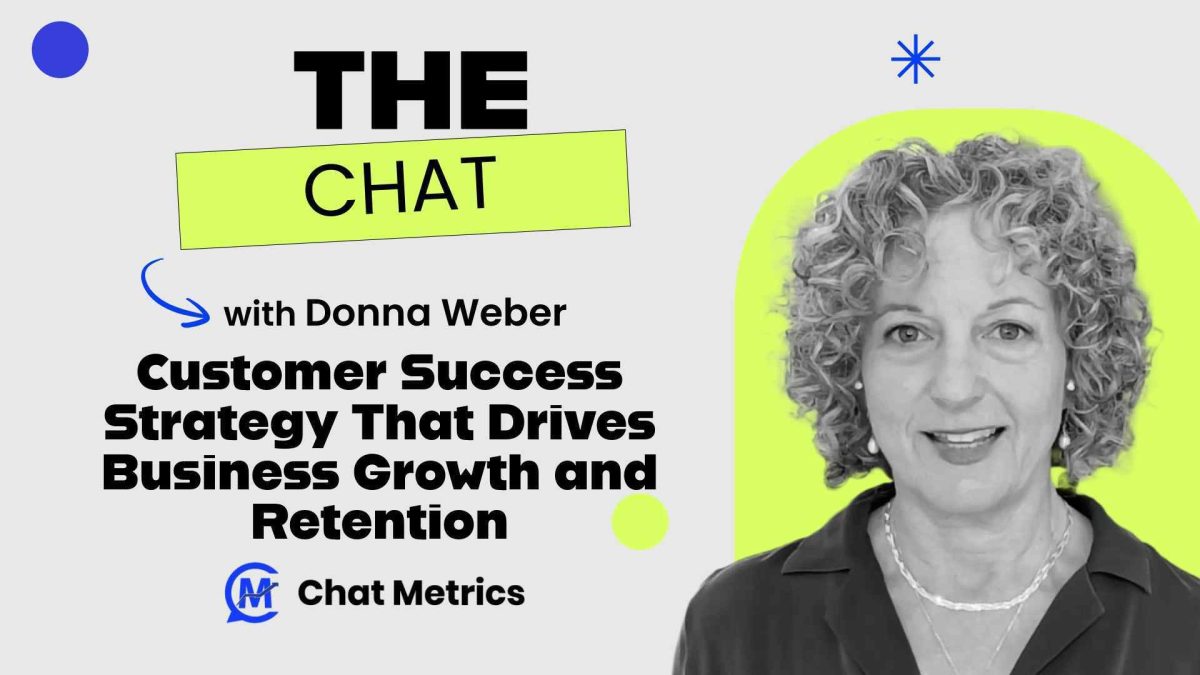
Episode Title: Customer Success Strategy That Drives Business Growth and Retention
Host: Terry Wilson – CEO of ChatMetrics
Guest: Donna Weber, author of Onboarding Matters and creator of the Orchestrated Onboarding Framework
Episode Summary:
In this episode, Donna Weber explains why most companies lose customers before onboarding even starts – and how to stop it. She breaks down how sales, marketing, and CS misalignment kills growth, how to drive time-to-value faster, and why onboarding should start before the deal is signed. Donna shares real-world examples from B2B companies that scaled faster and cut churn by shifting from reactive onboarding to outcome-driven journeys. If you’re serious about retention, this is required listening.
[00:00] – Introduction
Terry introduces the podcast and the guest. Donna Weber has helped fast-growing B2B companies scale onboarding, reduce time to value, and drive retention.
[01:00] – The Value Promise to Delivery Gap
[03:00] – Why Sales Overpromise
[05:00] – Where Companies Go Wrong
[06:00] – Focus on Customer Outcomes
[08:00] – Misalignment Between Sales and CS
[10:00] – Quick Wins to Shorten Time to Value
[11:00] – The Three Sales Every Business Makes
[13:00] – Why the Initial Sale Is the Weakest
[15:00] – How Sales and CS Can Accelerate Time to Value
[17:00] – Use Case: Supply Chain Software Company
[19:00] – Sales Forecasting and Trust
[21:00] – Onboarding for Revenue Growth
[23:00] – Middleware Company Example
[24:00] – Metrics That Prove Onboarding Success
Lagging indicators: Net revenue retention, churn
Leading indicators: Activation events, % users active, feature adoption
[25:00] – Case: Amusement Park SaaS
[26:00] – Orchestrated Onboarding Framework
[28:00] – Scaling Through Repeatable Systems
[30:00] – AI’s Role in Scaling Success
[34:00] – Future of Onboarding = AI + Automation
[37:00] – From Satisfaction to Real Customer Value
[39:00] – Outcomes Evolve
[40:00] – Rise of Outcome-Based Pricing
[43:00] – Final Wins and Rapid Fire
Links & Resources: Connect with Donna Weber on LinkedIn
Learn more at donnaweber.com/
00:00- Terry:
Welcome to the chat, come behind the inbound scenes of some of the world’s fastest growing companies for the past 10 years. As chat metrics. We’ve had an exclusive inside view of how these industry leaders are revolutionizing inbound marketing and sales. Across diverse sectors. Each week we bring you conversations with top minds in marketing and sales who share insider secrets and strategies for driving inbound success.
Intro:
Join us on the chat, your front row seat to the future of inbound.
Terry:
Today on the chat, we’re joined by Donna Weber, one of the leading minds in customer onboarding and customer success strategy. Donna’s helped some of the fastest growing companies in the world shrink their time to first
01:00-
value scale their customer success teams, and turn new buyers into loyal champions.
Terry:
She’s the author of Onboarding Matters, the creator of the Orchestrated Onboarding Framework, and a trusted advisor to B2B leaders. Who want to turn their customer promises into profitable growth. If you’ve ever felt that gap between what sales promises and what customers actually experience, then this conversation is for you.
Terry:
Welcome, Donna to the chat.
Donna:
Oh, Terry, it’s such a pleasure to be here. Thank you so much for including me.
Terry:
Thank you. Look, I’d like to jump straight in and you talk a lot about the value promise to delivery gap. The gap. What is that exactly and why is closing that gap one of the most urgent challenges for marketing and sales leaders today?
Donna:
Well, Terry, I mostly work with business-to-business technology companies, and they’re often enamored with their remarkable products, and their products are remarkable. making a lot of promises during the buyer journey, often focused on the features and functions and the products.
02:00-
And then, you know, the deal closes and they, the sales teams celebrate whether you have a gong to hit or,a high five to cheer.
Donna:
And then, you know, often all those discussions that customers have with sales reps. Don’t go anywhere. And so it’s really important to move to, to close that gap between what was promised during the buyer journey to what’s delivered during the customer journey. if you want your customers to stick around and buy more, if you work in a subscription business, you know, it costs seven to 11 times more to acquire a new customer than to keep one.
Donna:
If all you do is keep acquiring customers that are leaving through the back door, you’re gonna be in trouble fast.
Terry:
Absolutely. Absolutely. Why do you think it is that drives sales to potentially, I don’t wanna use the word, but over promise?
Donna:
Well, you know, a lot of it is the incentives. for example, I worked with a company, where the sales teams were hitting their numbers off the charts. Like at the end of every quarter they had these, great bookings numbers. And, at
03:00-
That time, that’s what they were being incentivized on.
Donna:
They were all about growth. And up until a few years ago, for most startups, it, it was all about growth at all costs. So they’re incentivized to close all these deals. But what happened with this company was during the implementation, during the onboarding, a lot of these customers were poor fit customers and they, the implementation teams were taking a really long time.
Donna:
The customers were frustrated. The customer facing teams were pulling out their hair they were poor fit customers they should never have been sold to in the first place. So the sales teams looked great. The head of sales, you know, his motto was, time kills all deals. But the irony was that they had to keep coming back in.
Donna:
With these poor-fit customers. To meet with the buyer, to redefine expectations, they had to bring the legal team in to write up the rewrite, the agreements and contracts. And
Terry:
Right.
Donna:
It was costing that company half a million dollars a year in all of this, like delayed value
04:00-
Delivery, and it was actually slowing down the sales teams, even though they thought that, you know, by selling to anyone, it would speed things up.
Terry:
And not to mention the opportunity cost of the sales team having to be focused on this ongoing sale instead of generating new business and new revenue. Yeah.
Donna:
Huge opportunity costs.
Terry:
So where do most go wrong? in trying to close that gap?
Donna:
They go wrong in, in focusing on a go live on a login, right? Oh, okay. You can log in, value quote is delivered. they’re not bridging that gap from what was promised to what was delivered. So, like, for example, let’s say I go. My local gym, well, I’ll give you an example.
Donna:
I was just out for dinner with a friend last night who did join my local gym. I go regularly, but, they’ve been paying for, three months now and haven’t been once.
Terry:
Yeah,
Donna:
There’s all the promise, right? I’m gonna join the gym, I’m gonna get fit, but if I don’t actually show up and use the equipment.
Donna:
Or take the classes and actually possibly get in a little
05:00-
Pain, through working your muscles and, getting out of breath, you’re not gonna obtain any value. So just because there’s a membership or subscription or a login does not mean the customer has obtain any value.
Terry:
Very true. Very true. and so if that’s the gap, what’s the first step in, in closing that gap?
Donna:
You know what? Since we talked last month, I’ve been really, focusing on customer outcomes, on meaningful business value outcomes, and I’ve recorded several videos and I just finished an article on that today. it’s about outcomes. you promise an outcome. ideally the sales teams are promising some specific outcomes, and then the post-sales team, the customer facing teams are delivering on those specific outcomes.
Donna:
So you’re getting meaningful value. Now, for example, I work, I worked with a company that has this, web server. Networking product. And when I talked to internal teams to learn more about the product, they kept saying, well, it’s like a Swiss Army knife.
06:00-
You can do anything with this product.
Donna:
Because they were so vague about it, the sales reps didn’t really know how to sell it.
Donna:
The marketing team didn’t know how to talk about it. And the implementation and customer success teams and support teams, no one really knew what to do with it. as a result, the it was sold. They met, the sales teams were meeting there. Sales numbers, but oftentimes it just sat in the back, you know, on the back burner.
Donna:
Customers didn’t know what to do with it. Oftentimes customers didn’t even know they, they purchased it, it was kind of rolled up in a package. And so when it came to renewal, they’re like, what? there was no urgency, there was nothing specific. So, what we did, if I can just continue on that story, what we did was, we defined three.
Donna:
Specific business value outcomes. Three meaningful use cases that would provide benefit to the customers, and then. Once we built those out, then the sales reps said something to talk about marketing had a story, and then the post-sales teams or the post
07:00-
Land teams could then drive the implementation and the adoption of those use cases.
Donna:
And now we can demonstrate value delivered. But now there’s this huge opportunity to continue the value with this really,flexible product.
Terry:
And that was the question that I was going to ask is how could that sales leader,what change could they make this quarter to improve alignment? and really it’s understanding what that use case is and being able to communicate through the sales process.
Donna:
Yeah. Can I tell you another example of a
Terry:
Please do.
Donna:
Yeah, the, this company was experiencing a lot of,churn and paused, paused and canceled subscriptions during those first, like two months when they were waiting for that.
Terry:
Okay.
Donna:
To be implemented so that reduced and then customers were like ready to be champions once they were, once the login was available.
Donna:
So we were focused more on some quick wins, which are more about the context and concepts and mindset to be successful on this premium solution.
Terry:
And so it’s really a win-win for both from the organization’s perspective, they’re reducing the churn. Obviously the revenue growth continues, but from the customer’s perspective, and really that’s the penultimate of any organization, if they’re getting the return, the return on their investment, they’re actually, you know, Time to what do we call it?
Terry:
Time to revenue, but time to return.
Donna:
Value.
Terry:
Yeah. Time to first value, is shortened dramatically because it’s even the perceived value. Of being involved and having that white glove service,
10:00-
That in itself is a value that’s being delivered by the organization, and so the perceived value is even brought being brought well before they’re actually logging in and getting value. from the platform itself.
Terry:
Brilliant, brilliant. You’ve said before that there are really three sales, and I remember when we were talking last time, you went through this, process, three sales that happen in a customer journey and most companies only focus on the first one. Can you walk us through, what those three sales are?
Donna:
Sure there’s three sales. There’s the initial sale, for one. The second is the expansion sale, and the third is the referral sale. And if you rush that initial sale, like all you do is close it and the customer churns before they re renew you, you have, there’s just so much cost to that. You know, when I work with companies, I calculate out what it costs to acquire a customer, what it costs to onboard a customer.
Donna:
And when you break even on that customer, so let’s say your customer pays you $5,000 a year, it costs you $3,000 to acquire them and maybe two or
11:00-
$3,000 to, get them fully onboarded and implemented and adopting your solution, well then that’s 12 months before you can make any money before you break even.
Donna:
And if they churn. In that first year, you have lost. Now five or $6,000. you thought you were making but you just poured $5,000 down the drain and in on top of that you lost any expansion. well, first of all, you lost any renewal and compounding revenue. Second, you lose any expansion revenue.
Donna:
And third, if they become raving fans. I mean, gosh, think about how much referral business you could get. And the thing with the referral business is it costs so much less than going out and trying to acquire those customers with, cold calls and marketing in the first place.
Donna:
So, the company
Donna:
In fact effect is huge.
Donna:
And when you keep a customer year over year, the compounding revenue just grows exponentially.
Terry:
So, which do you think out of those three is the weakest usually?
12:00- Donna:
What I think as the weakest is the initial sale because, uh, you know,are you familiar with the term, the ideal customer profile or ICP.
Terry:
Yes.
Donna:
Think that people talk about that more, but, I don’t know if they really stick to it. I think that the, you know, the end of the quarter, it oftentimes things just get thrown off a window because the internal metrics are more important and people wanna make their numbers and go to club and, and get their compensation.
Donna: But, if you
Terry:
Well,, that’s the sales team’s time to value, isn’t it? The dollars in the hip pocket.
Donna:
And you know, to be honest, Terry, I just still con continue to be a bit confounded because in our age of subscriptions and, and renewals like that first sale, it’s not a, you know, I, I still see sales teams. So first focus on that first sale without thinking about, what do I need to do here to create a customer for life?
Donna:
Sure, okay. Maybe the sale might take longer. but maybe you start with a smaller amount of revenue. But if you look at that
13:00-
Long lifetime value, it could be huge. And, I work with companies where, you know, back to that product where they were kind of rolling it in.
Donna:
Those kind, those sales reps just wanted to sell these big deals and kind of walk away. Sometimes you sell a small deal, maybe to a small team and a big company. I mean, I, I’ve worked with companies where it’s like consumption. you pay by the pay pay as you go. It’s called PayGo.
Donna:
They, let’s say they started with a company, I’ll just give an example. Like Disney, one small data team thought, Hey, let’s try out this, tool. And,they, maybe they’re paying $10,000 and then now it’s a $4 million a year contract.
Terry:
Hmm.
Donna:
Like, you know, it can be very shortsighted.
Donna:
We wanna look at the bigger of where we could go.
Terry:
You know, it’s really interesting. I expected you to say it’s the on the onboarding process, but absolutely, I understand why it is. the broken piece is the sales. If the expectations are not aligned with what the organization can deliver
14:00-
Regardless of what the customers need, then there’s always gonna be problems when it comes to the onboarding and retention process.
Terry:
If that, if there’s just a.
Donna:
Yeah, if you come back to that ideal customer profile, so that company where they’re all about time kills all deals, you know, we, when they did start really sticking to their ideal customer profile, then you can create this proactive, prescriptive onboarding and implementation approach.
Donna:
That you can really get customers through very quickly, and that means you can deliver initial value very quickly. So that means they’re gonna stick around. The faster they get initial value, the faster they’re gonna buy more. so that means you could create this machine where yes, we’ve sold and we are gonna deliver.
Donna:
And you’re not trying to create these cust, these special snowflakes that every customer’s unique and needs all this special love and care that increases your cost dramatically. That reduces your ability. The scale and as your company grows, like you just cannot continue, doing all that kind of special treatment.
15:00- Donna:
It’s gonna, it’s gonna take you down.
Terry:
Absolutely. Absolutely. So one of your big mantras is every day you’re not driving customers to value, you’re losing revenue. what’s a few ways that sales and customer success can work together to accelerate time to value, particularly in complex B2B environments that you’re working.
Donna:
Well, if it’s a high, like if it’s a high touch, longer sales journey, then I like to, I have the six stages of my orchestrated onboarding framework that you mentioned, and the first stage is embark. And I like to have that stage during the buyer journey so we can start setting expectations for what’s coming.
Donna:
So rather than, okay, we’re gonna close the deal and see ya, and then the customer’s just kind of left hoping and wondering. First of all, where that leads is to ruminating and,you know, worrying and dwelling in buyer’s, remorse.
Terry:
Yeah.
Donna:
Really wanna bridge that gap. So one of the ways to build trust is, con continuity.
Donna:
And when you show
16:00-
Them this journey ahead, then the one they, it helps set expectations so they don’t need to create. their own stories usually, nightmares two. it shows them that you got your act together. You’re not just trying to sell them. You really wanna take them on a journey with you.
Donna:
You’re partnering for their success. and then also it can set up expectations. So we talked about B2B complex. Well, let’s say there’s data migrations. Well, okay, the product doesn’t even work until your data’s migrated. Maybe it’s gonna take three weeks to clean up your data. during the buyer journey, you can start talking about, okay, here’s what you need to do to start cleaning your data.
Donna:
So the minute the deal closes, we can be off and running rather than we’re gonna sit around for three weeks while you try to clean your data. You can start to fast track a lot of the needed things. It also helps the customer understand their accountability and what part they have to play in it.
Terry:
Do you have any specific examples you could give where an
17:00-
Organization’s done that and they’ve been able to slash that time to value?
Donna:
Oh I got
Terry:
Donna:
Worked with this one company. They provide a,I’m blanking on what it is. Where you have all the different, oh, supply chain management software, they didn’t, they would sell to these big companies, but they were kind of like more just the, the people who paid them were their, vendors, but it was kind of a B two, B2C.
Donna:
Experience anyway, very
Terry:
Yep.
Donna:
And they could not recognize revenue until all of these contractors and vendors were onboarded. And so we actually had the first two stages of their onboarding during the buyer journey. So that we, they had to write all these letters to all their, contractors. We had to get them all, on the platform.
Donna:
And so rather than waiting for the deal to close and then trying to do all that, it was taking weeks and weeks and they could not get any revenue recognized. We did all of that during the buyer journey. And so we’re getting okay. That, you know, okay, big company, we need the names and all the contact information for all your vendors.
Donna:
Get all that set
18:00-
Up, get all those letters out, and then bam, the minute the deal closes, all those letters are going out and we’re able to start recognizing revenue in, you know, in a few weeks rather than months.
Terry:
Where was there any resistance to bringing that? That process forward and before the contracts are signed, actually sharing that information earlier in the journey.
Donna:
You know what it really depends. But in that company, the head of sales was just like, bring it on. Let’s do it. He was, that was unusual, to be honest.
Terry:
it was really refreshing. But they were like, yeah, I get it. Let’s make it happen. Yeah.
Terry:
What about from the customer’s perspective? Haven’t signed contracts yet.
Donna:
Yeah. If you let them know why. This is what we’re doing and why. The big thing, actually, I’m gonna get
Terry:
Have you heard of Simon Sinek?
Terry:
Yes.
Donna:
Start with Why. So we start with why. And that is, the purpose, the motivation. And if you tell people why you’re doing something, they’re gonna get a lot more on board. Then you do the how and the what. But if you just tell them the, what, they’re kind of left wondering, and they’ll, they may resist, but if you tell them why.
19:00- Donna:
And, so what I like to do is we create this. Branded onboarding framework. And so you, they, you help them show the journey ahead and then you show them where we’re going and why. and so that’s why I think because it’s kind of weird, you know, sales reps are wor get worried, oh, it’s gonna slow the deal down.
Donna:
Oh, if we break it, bring the sales, the CSMs or the onboarding team in, it’s just gonna slow things down. But, people wanna know that they’re in good hands.
Terry:
I think it’sabsolutely brilliant in that it does a couple of things. One, it can solidify the sale effectively, help closing the deal because they sh they’re actually seeing. Some giving a lot of credibility to what sales are saying to them because they’re actually seeing those steps start to be taken.
Terry:
And it’s also very strong indicator to sales that if the customer is taking these steps, then this deal is going to close. And from a forecasting perspective, that’s gotta be pure gold as well.
Donna:
It’s an indicator for sales in terms of the deal will close. And so it obviously helps with,forecasting as well.
Donna:
Absolutely. I
20:00-
Think that’s a great point. on a personal level, I was working with vendors to get some solar panels on the, on my roof. And and one of them, you know, we had the sales rep literally at our dining room table after dinner, right. And it built a great relationship. The deal closed and we didn’t hear anything.
Donna:
We had to pay a thousand dollars deposit. We didn’t hear anything for two weeks and.
Terry:
Oh, wow.
Donna:
was just left wondering, oh shit, I lost my money. I don’t know what’s next. And then, eventually they said, okay, we’re gonna have a technician come out. But if they just send an email saying Thank you for your business, with a little visual, here’s what’s next.
Donna:
Shannon’s gonna reach out, schedule a technician within two weeks after that, this is what happens. it just makes all the difference in the world. I know there’s, this company’s got their act together and it gives me more trust and confidence that I made the right decision.
Terry:
And I think trust is probably the big component there. It,is one of the things that can remove that buyer’s remorse, that concern after the deal’s been closed that, did I
21:00-
Really, make a good decision here or not? Classic example. Let’s talk about onboarding. but through the lens of revenue growth, what does world class onboarding actually look like and how does it directly tie back to renewals, upsells, and advocacy?
Donna:
Well, what on good onboarding does not look like is just rolling out The implementation. Onboarding is not the implementation. A good onboarding is really about helping to. Capture and validate those goals and outcomes. what we don’t want to do is ask, Hey, Terry, tell me about your goals and outcomes for buying our product.
Donna:
That, all of that was likely communicated and captured. So, you know, need to have that continuity we talked about. so I like to validate it, build great relationships, and help customers obtain some initial value. If your product takes a long time to implement. Like we were talking earlier.
Donna:
There’s lots of ways you can deliver value even before they have a login, or a solution at their fingertips. You can help with the training, you can help with
22:00-
Mindset context. You can build out prototypes, but what you want is your customer cheering. that you brought they, that they bought your solution the project teams on the customer side sharing, you know, some great stuff with the buyer to show how great they’re doing so, so it’s about delivering meaningful value as quickly as possible, and then ideally continuing with some onboarding of additional value.
Terry:
And I think that getting the customer to the extent where they’re a champion, they’re sharing those wins, from a revenue growth perspective that then gives like case studies and evidence for the sales team to use in future recommendations. And when you’ve got a champion within a business, often they’re not just a champion within that business.
Terry:
They’ll be a champion for your product, you know, beyond their broader network as well.
Donna:
Absolutely. here’s an example of a company I worked with. They do this like middleware networking protection software. So it’s kind of not, it’s not very sexy, it’s kind of hidden. And they were able to implement the solution and go
23:00-
Live, but the customers didn’t really know if it was having an impact.
Donna:
It wasn’t really obvious unless they would know when the network went down, but if they was saving the network, it wasn’t really obvious. So a really impactful thing this company did was they, defined like a two week quick start package to get them set up with reports. And so then let’s say the administrators could show reports, shared them with the executives and the buyers show all of the security issues that were addressed, all the stuff going on behind the scenes, maybe.
Donna:
Translated to the revenue saved, right? The money saved from of these, network, outages. So that was a way like they, and then they required that all customers included this package, included this, service because it demonstrated value so quickly.
Terry:
I if I’m the revenue leader, CRO or CMO, or maybe it’s the VP of sales. What metrics should I be tracking to know if our onboarding’s working? I mean, apart from theobvious
24:00-
one, which is churn.
Donna:
Yeah, yeah. So there’s lagging indicators, like, you know, net revenue rotation, revenue retention. There’s churn retention numbers. but I like to include some leading indicators. So it depends on what’s important to your business, but, It may be product usage metrics, like percentage of, a certain part of the product being used.
Donna:
It may be percentage of active users. It may be some initial value metric to say how do we define that initial value has been delivered. Oh, those first reports have been generated. That’s not like the end dollar be all of that product, but those reports are generated and being shared.
Donna:
That’s a great initial value metric. So some things like that. there’s a company I worked with actually in Australia where they found when customers used their, this is a, they have a, they have software for amusement parks and they found when their customers use their digital waiver tool, they are much more loyal.
Donna:
So then we don’t
25:00-
wanna sit around and wait. And hope that the customers eventually find this tool. We wanna get them to there as quickly as possible, because when they use it, they’re more loyal and they’re more sticky. So that’s a great, like, hey, let’s get them to that waiver, like in, in a matter of weeks.
Donna:
Then we know they’re gonna stick around.
Terry:
And is the way to do that, to watch the steps of usage across the way, and then when they get to the point that they should be using that, bring that to their attention straight away, or how was that actually orchestrated to?
Donna:
If something like that, now I have the sales rep start talking about it during the buyer journey. Hey, we have the digital waiver. We’re gonna get you to the digital waiver within three weeks. This is what we need to do to get there. part of the onboarding journey. Let’s say if you, if,you want more of a one to many approach, a digital approach, you can have, in product guidance, pointing customers to these important outcomes you can have.
Donna:
You know, learning, courses, learning management system, learning
26:00-
Pathways, guiding customers, you can have email campaigns guiding customers to these outcomes. so there’s lots of ways you can drive customers there. You can have a customer success manager, handholding and, Hey, let’s get that digital waiver have rolled out.
Donna:
So there’s all these different ways, but you’re not just hoping they get value, you’re taking them to that value.
Terry:
Absolutely you may. Before your onboarding framework, the orca orchestrated onboarding, what? What makes it different from traditional approach? Most teams use.
Donna:
I call it orchestrated onboarding because it’s not just one person’s job or one team’s job. It’s really about bringing all the teams together that work for customers. To work together in a seamless, harmonious, orchestrated way with the focus on the customer and the customer’s goals and outcomes.
Donna:
I worked with a company where the, all the internal teams were so siloed. They all had their separate goals, their separate priorities, their separate metrics, and most of them, to be honest, didn’t have much to do with the actual
27:00-
customer. So when you orchestrate that and have everyone aligned.
Donna:
You know, like telling that outcome story, selling that outcome story and delivering on that outcome story, then, you know, one, the customer experiences a seamless experience, and two, they’re gonna get that value very quickly. And then ideally, you’re incentivizing internal teams on like a North Star metric related to customer outcomes.
Terry:
It’s interesting. I imagine that you’ve probably been brought in at the best and worst times you’ve been brought in at the beginning to help design from the start for those that are very proactive and very conscious and focused of churn and customer onboarding and getting to value, for those value creation organizations.
Terry:
But I’m sure you’ve probably seen the worst as Well, I, if somebody’s onboarding’s a hot mess, churns high, where’s the best place to start fixing it? Or what’s the first thing that you’ll look at?
Donna:
Yeah, I’ve seen a lot of hot messes, I gotta tell you. it really depends on the company and kind of what, is happening. When I work with high growth companies, a lot of things. they’re doing a lot of
28:00-
things well, they’re growing, and,and their customers love them.
Donna:
They’re getting an injection of,of funding that usually gets applied to the sales and marketing engine, and then they’re gonna have this tsunami of new customers coming at them. So, you know, oftentimes what works is that they are pouring all this love and care, Over their customers. The customers love them, they’re successful, but there’s just no way.
Donna:
Onboarding 10 customers a month and now they’re gonna start onboarding 50, they just can’t. Continue that. So the biggest thing I do it, you know, we look at, like earlier we talked about, the costs of onboarding are just too
Donna:
And we look at, if it’s costing you, let’s say $3,000 to onboard a customer and you’ve got 10 customers, but now you’re gonna be onboarding 50, like it starts coming out into millions of dollars and costs.
Donna:
And then that’s gonna really stall the company’s growth and ERO growth and erode margins. So one of the biggest things is to start creating scalable, repeatable, approaches.
29:00-
Look at what is, kind of what’s done over and over. Look at how we can deliver that. in a one to many way, in a self-paced way, in a digital way, then let those passionate team members be focused on what’s unique for each customer versus what’s the same I.
Terry:
So that’s what you see most of the hot messes is caused by where you’ve had this surge of growth or surge of increase of new customers coming in.
Donna:
Yeah. And the cus and they just don’t know how to, oh my goodness. I worked with one company where they have a marketing platform and they, I met with the customer success managers. Over Zoom and their exhaustion and burnout was palpable through
Terry:
Wow.
Donna:
And they were like handholding their customers every step of the way through, you know, onboarding and their Let’s build your first campaign and okay, you need help with your second campaign.
Donna:
And they were busy helping all new customers and all their existing customers and they were. So what we did was we built out a foundational learning journey, of
30:00-
the basics. Here’s how to create a campaign here. What is a campaign? You know, we built that for the campaign creators and for the administrators.
Donna:
And so then customers could learn the basics and then the CSMs could be there to help with, what’s unique for each customer. So that’s an example of how we scaled.
Terry:
What impact do you see AI having? As far as, this is concerned, and I’ll say, but I guess more in terms of, I hear you talk about processes and repeatable actions. I guess that’s almost my mind triggers then. Okay. We can bring automations in here to reduce the workload on the individuals so they can focus on those customizations where the customers need something individual, support or attention.
Terry:
Have you dipped a toe much in AI and automations yet?
Donna:
I am so excited about AI because I have seen so many. Teams doing these basic, repeatable things, and it’s just like, I don’t know about you, but I get really bored and,maybe leave the company or, feel frustrated in my job. people have special
31:00-
Skills. We talked about trust.
Donna:
we talked about being strategic, and so this is a huge opportunity to uplevel people. build really meaningful relationships and to help their customers see around corners to really, you know, meet their goals. And so with ai, things that I see are happening are bridging that gap from the buyer journey to the customer journey.
Donna:
Rather than having no information or having to dig with the information for that, the sales reps gather, really. the customer facing and onboarding teams to have all that information at hand. That’s one way. additional ways are, like we talked about in product guidance,in app chat, all these things where, let’s say I log in, I don’t know what to do, but if AI can tell me.
Donna:
Detect who, what persona I am, and guide me to those meaningful outcomes in the solution, then that, that’s gonna help me deliver value. so it’s time to stop throwing like this generic information at customers,
32:00-
And really taking them on a transformational journey.
Terry:
I agree. I look, I think,we see organizations these days. Swan AI is a classic example where It’s a business being built by three founders. Their goal is 30 million a RR, and there’s only three employees. They’re all, the rest of the employees are a i a AI agents. You know, their customer support, they’re onboarding everything they’re building out that way.
Terry:
Obviously, it depends on the level of complexity and the level of customization required, whether or not an organization can be built that way. But I’m with you. I think there’s, ex we’ve started to use it with some of our onboarding processes. The cus not the client facing side of things, but certainly internally to help reduce the workload on our team dramatically.
Terry:
We’ve, there’s one particular, aspect of onboarding that was taking us, literally. 24 hours of man time. it was two days. We run 24 7 shifts. So it was like literally handover from one shift to the next. It was about a 24 hour process And we’ve brought that back to three hours now, being able to leverage our and automation.
Terry:
So
Donna:
What did you
Terry:
I.
Donna:
to reduce that time?
33:00- Terry:
We brought AI in to effectively capture the information and reformat it and put it in a way that our team can use. That was the big component of it. It’s analyzed the information and because that was when it was done by hand, it was all captured, individually put into the format that we needed it to be put, updated into the platform we needed it to be. That’s now a pretty smooth process.
Donna:
That’s
Terry:
We’ve got a human in the loop in terms of they do the final check before it gets uploaded. but beyond that, we’ve had to do that. We brought out a new offer ourselves, a lower value offer. And so to be able to take some of those costs out, to get down to that,offer, and which is opened a whole, new part of the market to us that we didn’t have access to before, and that, and they didn’t have access to us,
Donna:
Thank you for sharing that. Yeah. I was, at a conference in Stockholm. I was speaking at a, conference for a company called Plan Hat and Emmanuel Melanda, he works with Nasdaq and he was saying in the near future. company’s AI bots will be working with our customers AI
34:00-
bots, during onboarding.
Donna:
So for example, in the B2B complex implementations, there’s integrations. You know, I’ve worked with companies where they have to integrate with health. Systems, electronic records, health insurance companies really complex. And, the customer teams, they kind of get bogged down and they stall out.
Donna:
So working kind of bot to bot and then, maybe an onboarding managers is actually managing a team of bots, onboarding bots. and then, you get together and kind of make sure everything’s going on track. But a lot of that. Integrations, the customizations, the migrations like that has really stalls things out.
Donna:
And, I worked with a company that provides a CRM for, financial advisors and they spent so much money on migrating and cleaning up the customer’s data. and this was last year, so I hope they’re doing that more quickly now. But that was like their secret sauce, but it was really eroding their margins.
Donna:
There’s just such huge opportunities here.
Terry:
You know, I’ve been blessed over my career to have worked in mid-market
35:00-
Businesses that. Were suppliers, customers to enterprise, mid-market businesses that were customers of enterprise, enterprise that were selling to mid-market And enterprise, that were buying from mid-market enterprise, selling to enterprise and vice versa.
Terry:
That I’ve seen that whole ecosystem of what it looks like and it fascinates me. Well, I guess I’m a little bit surprised in that there’s a. Very, very large amount of hype around, ai, which is in fact automation. It’s not actually ai. these bigger businesses in the backend have had MRP systems talking to each other for years in terms of automatic order triggering into.
Terry:
Material replenishment systems that then automatically deliver product back out to the other side. That’s nothing new to me. And when I look, I guess the thing that AI is bringing is that capability for smaller organizations to deliver that. ’cause it’s quite expensive to have that functionality.
Terry:
And that’s why sort of mid-market to enterprise is really, you know, where you start to see that happening. But that’s automation in my mind. That’s not
36:00-
Necessarily ai. I think the AI overlay lets you do it at a smaller scale.
Donna:
You to personalize tailor, you know, I think there’s that element too.
Terry:
True, true. And once you get to that level of intimacy in a relationship, customer, supplier relationship, you. have all of those things. That’s utopia for a supplier. And that is, switching costs become more expensive because you’re so embedded into their organization. but you really wanna make sure that their experience is so good that they don’t want to leave.
Terry:
You want to have people that are welded to you because they want to be not frustrated because they have to be.
Donna:
Yeah. And that’s why people aren’t going away. as AI becomes more common, people are pushing back, they’re resisting it. I think you were talking about that in our last conversation about people want to talk to people and so if they feel like it’s, they’re just kind of being shoved down a path with an AI bot it’s impersonal and it’s not.
Donna:
Doesn’t relate to what they want and need to accomplish, then gonna lose their trust.
37:00- Terry:
Absolutely. Look, you are big on driving customer outcomes, not just satisfaction. There’s a very clear, I think, difference between those two. What’s the mindset shift, companies need to make to move from customer success to real customer value delivery?
Donna:
Well, there’s a word often used that I don’t like is what? Oh, let’s delight our customers. And like, we’re not here to delight customers. We’re here to deliver tangible results. So, for example, I like to use gym analogies, but if I hired you to be my personal trainer and I show up for a workout and you ask me, Hey Donna, what do you.
Donna:
Do you feel like whatcha are you in the mood for today? Yeah. You know, Terry, I’m kind of a, tired today on a late night. You know what would delight me is going for coffee and getting some dish on, those celebrities that you train, right? That would delight me. But that’s not gonna deliver any results.
Donna:
if you, if I show up and you push me and I might be swearing, I might be cursing your name in the
38:00-
Next morning when I can’t get outta bed ’cause my muscles are sore. it may be a painful process, but it delivers results. And sometimes the customers that complain about your products the most are the ones who are using it the most.
Donna:
cause they’re hitting all the edges. sometimes the end users are delighted, but the buyers have no idea and they changed because they didn’t know. I don’t know
Donna:
So it’s, it is all about, that measurable impact. And then I do also wanna add those outcomes that a customer may have initially purchased your product for.
Donna:
If you reach those, that’s great, but that’s not the end, it’s the beginning. because there’s, those outcomes are evolving. So let’s say I, I hire you to help me lose five pounds. I lose five pounds, great. But now I feel great. hey, I wanna run a 10 k. I wanna run a marathon. Like now. A whole new set of outcomes, the door has opened.
Donna:
I wanna, compete in a triathlon, you know, and now you’re gonna help me reach
39:00-
All these goals that weren’t even in my mind when I was sitting on the couch.
Terry:
Absolutely. I love that. I love that. it’s almost like coming from the steel industry will do $160 million deal and you know, people will be arguing this stuff’s worth a thousand dollars a ton and people will argue over $5 a ton differential in pricing. Try and negotiate you down. in our business now with chat metrics, it’s completely different.
Terry:
I get people we charge per lead and I have, you know, senior leaders and CEOs calling me saying, how can we get more leads? How can we pay you more next month? it’s a different perspective when you’re at that stage of the value you deliver. So I immediate and measurable.
Donna:
Well, do you think, so it sounds like you are, you have, sales driven outcomes, that you’re charging for the outcome. Do you think that more of the industry is moving that way there? There’s been some talk about that at customer success events I’ve attended.
Terry:
Most definitely. I think, the, I guess the most public one that I’m aware of is Mannie Medina, who was running outreach,
40:00-
Has started his own business. I can’t remember what it’s called now, but it allows, it facilitates. SaaS and technology businesses to move from, a monthly subscription or per seat pricing to outcomes-based pricing.
Terry:
And I couldn’t help myself. You know, he did his big launch and,the spin obviously is, Subscription pricing models are dead. we’re moving to this now and I couldn’t help putting your comment on there yet. Yeah. Manny, we’ve been doing this for a decade, the nothing new.
Terry:
Good to see you catching up finally, type thing. But, I, I do, I think that it, particularly if you have a look at, what’s the latest thing that’s been adopted dramatically is ai. How do they charge? That’s token usage. So it’s, I’m seeing more and more businesses now. charging, not necessarily for seats.
Terry:
There might be a retainer. There’s a minimum that’s required. And then one, one, Yeah.
Terry:
Which gives you a certain, a platform fee or it’s just a certain amount of usage up to here is covered every month. It’s like organizations need that to be able to cover their cost and provide the service in the first place.
Terry:
And I guess if that doesn’t fit for you, then you’re probably not a
41:00-
Good, client. For that, for that business. So there’s a platform fee, but then beyond that, it’s all usage based Or outcomes-based as opposed to, as to number of seats. the platform fee. might include a certain number of seats and, you’ve got a flat fee, but I’m seeing more of and more of it, and I think it’s, it will gain momentum.
Terry:
As ai, I mean, if you have a look at all of the tools and products that are wrapped around ai, most of those have a similar type of pricing, although I’ve gotta say, the tools that use, that you use to build AI type products like the N eight N and the replete all of these ones, they, same thing.
Terry:
They have a basic, and then everything is added on top of that. But I guess I was a bit surprised to see things come out recently. There’s a, an AI video, creation that have, monthly fees and it’s a bracket of usage. They don’t have. The next is you pay per usage. The next is the next bracket, and then the next bracket.
Terry:
It’s like traditional
42:00-
SaaS type pricing. You’re not paying for, you’re not paying for seats, but you’re paying for capacity. And then once that capacity absorbed, you have to step up to the next one. There’s not this variation, and I think that’s a little bit of a backward step. Or maybe that’s a, the next step they’ll have to take will be to move to usage,
Donna:
if they, really wanna get the market penetration.
Terry:
But I’m seeing that. what are the conversations you’re hearing in customer success about.
Donna:
Well, I see like you, that we’re moving more to a consumption or outcome based. sales and, and payments. I see that we’re moving in that direction. we went from on-premise where you own product to subscriptions, where you rent, you’re basically renting. and then people just wanna pay for what they’re using.
Donna:
I think we’re really going into that, that, that direction. I did work with a big data platform. have, they, oftentimes companies will start with pay as you go, consumption based, but then there’s a point where it’s actually cheaper if they get a contract with you. So they’ll, like, there’s a point where they’ll go, look,
43:00-
you’ve increased to this volume.
Donna:
Actually less expensive to have a contract with you, and then they move into some annual fees
Terry:
Yeah. yeah. and that as an annual pricing offering as well. Often,
Donna:
Yeah.
Terry:
There’s monthly pricing And then 20, 20%, 30% discount, click the button and, pay the annual fee. So you, it’s almost like allowing. Smaller businesses to lock in lower pricing for an annual contracts, but it’s fully self-service.
Terry:
It’s not like a sales led grade too.
Donna:
Bring that back to outcomes, if people are paying as they go, they’re gonna try a little bit. And if they don’t get any meaningful value, they’re never gonna continue consuming. you’ve gotta start delivering value in these kind of morsels so that they get that value and then they’re, you capture their attention and then they want it more.
Donna:
You know? So you gotta keep them on that. That outcome journey. So they keep consuming more. If you don’t get to that initial value, then they’re just gonna walk away.
Terry:
Absolutely. Absolutely. Getting close. to wrapping up here, Donna,
44:00-
I’d like to throw a couple of quick, rapid fire questions at you. What’s the best onboarding win you’ve seen in the wild?
Donna:
The best onboarding win I’ve seen in the wild is that company that went from, Selling to poor fit customers to really refining their ideal customer profile. We reduce the time and cost to onboard and implement customers by about 30%.
Terry:
Why?
Donna:
You know, you just have like raving fans rather than frustrated customers.
Terry:
And the on flowing, impact across a business would be Enormous. in all aspects. Enormous. Yeah.
Donna:
all those resales and opportunities, costs.
Terry:
What’s a sales or marketing buzzword that you would like to just retire forever and you’d be happy if you never heard it again?
Donna:
Well, delighting your customers.
Terry:
Delight you, you did mention that way. what’s your favorite tea and when do you like to drink it?
Donna:
Oh, I don’t have my mug right here ’cause it’s my afternoon. But I love Earl Grey tea with milk.
Terry:
lovely. and what is a book, that you recommend, either than your own? Obviously we’ll talk about that in a minute, but, is there a
45:00-
Particular book that you are reading at the moment that you’d recommend?
Donna:
There’s a particular book I do recommend a lot. It’s called, A More Beautiful Question by Warren Berger. And it’s all about asking questions and listening, and that’s the way we can provide a lot of value to our customers is by actually listening. so I highly recommend that book.
Terry:
Thank you. Thank you. We’ll get that included in the closing paragraph. Now, is there anything that I haven’t asked you that I should have?
Donna:
Wow. Great question. I think we’ve covered so much. I’ve really, really enjoyed our conversation.
Terry:
I did as well. So, in terms of getting in touch with you, we’ll have all of the relevant links in the podcast and the blog that we’ll do about this as well. So is there a particular channel though, that you prefer to be, contacted on?
Donna:
I’m on LinkedIn. I’m pretty active on LinkedIn, and then my website is donna weber.com. D-O-N-N-A-W-E-B-E-R. Just one B, like the grill.
Terry:
Thanks. I noticed that this morning, actually while I was typing up the notes and doing my research, it’s it’s one, one beat. Just like the, and like the grill. it’s one thing that I do enjoy doing. So Don, it’s been a pleasure having you
46:00-
on today. Thank you. it’s been a wonderful conversation. I think that from our audience’s perspective, often we are always thinking about the pointy end, the marketing and the sales, aspect.
Terry:
When, as you rightly pointed out at the beginning. It costs seven to 11 times more to get a new customer than it does to retain a customer and the costs associated when you lose a customer, as you mentioned with regards to the onboarding process and the training processes, it’s just sunk if they’re not there to, to the timeframe where you actually at least breaking even, which is worst case scenario if think about that from a financial outcomes perspective.
Terry:
Thank you so much for today. I’ve, appreciated your insights as I’m sure our audience will. So thanks for being on the chat.
Donna:
Oh, thank you so much, Terry.
Terry:
That was excellent, Donna. Thank you.
Donna:
Thank you.
2026 © All rights reserved Chat Metrics
Made with ❤ in Melbourne, Australia


