

Get my ultimate guide to boosting conversions and customer engagement delivered straight to your inbox.
Get my ultimate guide to boosting conversions and customer engagement delivered straight to your inbox.
“You can’t communicate value if you weren’t part of creating it.”
– Andrea Saez
Product marketing is broken – not because of bad messaging, but because PMMs are kept in the dark.
Andrea Saez believes it’s time they had a seat at the strategy table.
In this episode of The Chat, Terry sits down with Andrea Saez, Head of Product Marketing at Turtl and author of The Product Momentum Gap, for a no-BS conversation on why most GTM strategies fail before they even start.
Andrea unpacks the core dysfunction most B2B teams ignore: PMMs are expected to position products they didn’t help shape. She shares the real-world results of fixing that gap – from 250 percent lifts in demo conversion to GTM frameworks that actually work in an AI-fueled world.
You’ll also hear Andrea’s sharp take on where AI adds value in product marketing, where it creates noise, and the ethical lines we must not cross.
You can’t communicate value if you weren’t part of creating it.
If you’re a B2B sales or marketing leader tired of misfires at launch, listen in. This episode will flip your GTM perspective.
01:45 – Why most product marketing fails before it even starts. Andrea explains how late PMM involvement weakens go-to-market strategies.
04:30 – The 250% demo surge. Andrea shares how one homepage messaging change drove a massive spike in demo requests.
06:10 – “We’re expected to communicate value but never invited into the room.” Andrea exposes the trust gap between product and marketing.
08:55 – What the Product Momentum Gap really means and how closing it helps companies grow faster with more alignment.
11:20 – Why “just positioning it” is a dangerous mindset. Andrea lays out what PMMs need to own in strategy.
14:30 – Where AI helps and where it quietly crosses the line. Real-world examples show how AI can backfire without human oversight.
17:40 – The myth of replacing strategy with speed. Andrea cautions against treating AI as a shortcut to customer understanding.
20:05 – How to operationalize trust across product, marketing, and sales. Andrea shares her internal documentation and enablement playbook.
24:10 – Messaging is only as strong as your proximity to product decisions. Andrea explains why distance creates confusion.
27:30 – Final challenge to leaders. If PMMs don’t know why a feature exists, they can’t communicate its value effectively.
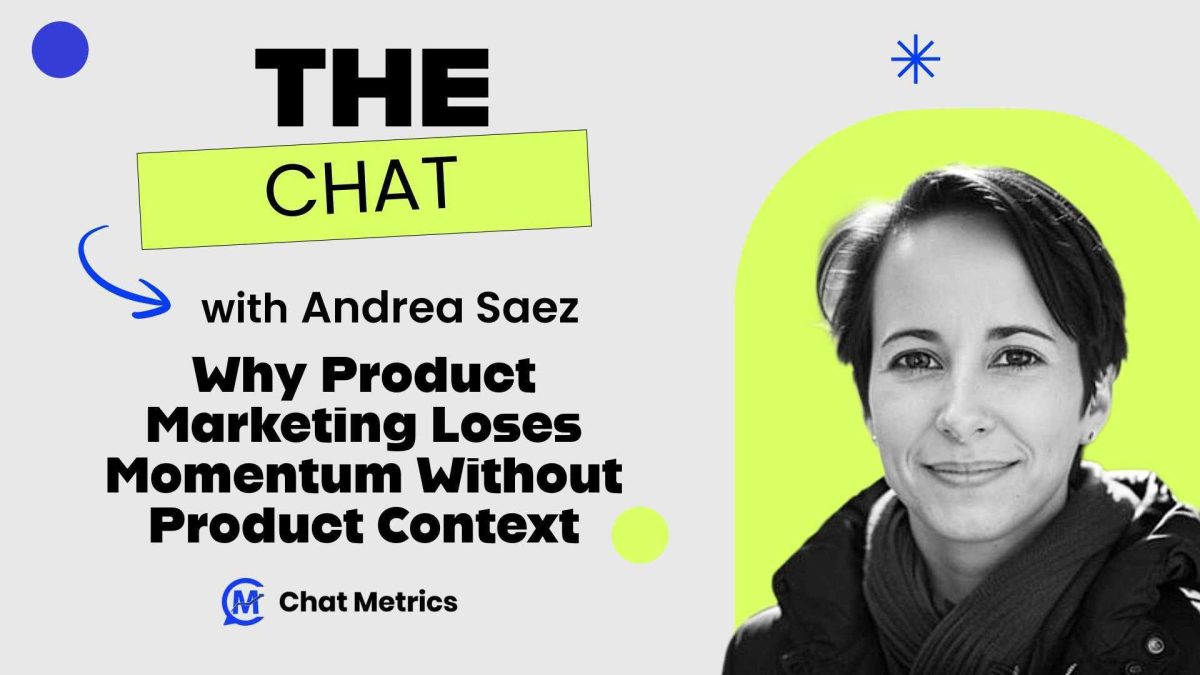
Podcast Title – Why PMMs Must Be in the Room Where Product Decisions Happen
Host: Terry Wilson, Founder and CEO of Chatmetrics and Zotly
Guest: Andrea Saez, Head of Product Marketing at Turtl | Author: The Product Momentum Gap
Summary
Too many GTM strategies fail because product marketers are left out of product strategy. In this episode of The Chat, Terry sits down with Andrea Saez to unpack the root of the problem – and what happens when you close the gap between product and PMM. Andrea shares proven tactics that drive real results, from 250% increases in demos to tighter GTM execution. They also dive into the rise of AI in product marketing and the critical guardrails every team needs. If you care about trust, growth, and customer truth, this one’s for you.
[00:00] – Welcome and introductions
Andrea shares her background and why understanding product is non-negotiable for marketers.
[03:15] – The silent killer in GTM: misalignment
Why late-stage involvement of PMMs leads to poor launches and weak positioning.
[07:40] – Product momentum explained
How a lack of shared context across product and marketing stalls growth.
[11:00] – Real-world impact of early PMM involvement
How messaging changes drove a 250% lift in demo conversions.
[15:10] – Where AI accelerates and where it risks trust
AI helps with speed, but without human input it erodes credibility fast.
[20:20] – Building cross-functional trust systems
Why GTM is a team sport — and how Andrea uses internal training and documentation to align teams.
[24:30] – The dangerous myth: PMMs can just “position it”
If you’re not part of the product conversation, you can’t communicate value.
[28:40] – Final takeaway: What great product marketing really requires
Empathy, proximity, and the courage to ask better questions.
Key Insights for B2B Leaders
“You can’t communicate value if you weren’t part of creating it.”
Links & Resources: Connect with Andrea Saez on LinkedIn
Learn more at: www.turtl.co, getforma.co
00:00- Intro:
Welcome to the chat. Come behind the inbound scenes of some of the world’s fastest growing companies. For the past 10 years as chat metrics, we’ve had an exclusive inside view of how these industry leaders are revolutionizing inbound marketing and sales across diverse sectors. Each week we bring you conversations with top minds in marketing and sales who share insider secrets and strategies.
00:34- Intro:
For driving inbound success, join us on the chat, your front row seat to the future of inbound.
00:49- Terry:
Today on the chat we’re joined by Andrea Saez.
00:52- Terry:
Head of product marketing at Turtle co-author of the product Momentum Gap and one of the most insightful voicesin modern product marketing. She spent over a decade building GDM strategies that bridge the gap between product and marketing. And she’s here to share the hard one lessons, big wins and bold opinions that have shaped her thinking.
01:10- Terry:
Andrea, thank you and welcome to the chat.
01:12- Andrea:
Thank you so much, Terry. Thanks for the invite.
01:14- Terry:
I would like to ask you a question about, PMM for SaaS. What’s broken in? How most SaaS companies approach PMM at the moment?
01:25- Andrea:
Ooh, saucy question. I would say the biggest disservice that anyone is doing to their own SaaS is either not having a PMM, or having a PMM that is just focused on building landing pages and writing blog posts or building decks. There is so much more value that A PMM can bring, beyond that. And even when, sometimes I see levels of maturity.
01:49- Andrea:
They’re like, oh no, you’re totally gonna be, you know, managing or go to market, blah, blah, blah. But then the PMM doesn’t have access to the product team, or they’re not working with the product team. And throughout the years, when I with other pmms, or people in, let’s call it go to market positions.
02:06- Andrea:
Like I worked with someone that was, our go to market specialist or sales enablement specialist that are, you know, branches of product marketing. and within the same realm be like, oh, so glad you’re here to talk to the product team because I have no idea how to speak to them. so they don’t work together.
02:22- Andrea:
They’re kept very separate. I think those barriers need to be brought down because product marketing is product as much as it’s marketing. So product marketers need to work together with their product teams need to understand how and why decisions are being made, what the strategy looks like, and just be really embedded in there in order to then take that into the market.
02:44- Terry:
Isn’t it so interesting? We talk about these silos in businesses and here on this podcast in particular, we’re generally talking about the silo between sales and marketing, and sometimes success get mentioned, but very rarely product.
02:59- Terry:
why do you think there’s that separation between product and PMM?
03:02- Andrea:
I think there’s a lack of understanding. and a lot of people say, oh, product marketing is marketing. And I’m like, no, it’s not. Product marketing is as much product as it is marketing. Like I said, if anything, product marketing stemmed out of product. It didn’t stem out of marketing, it came out of the need of having there be a translator of value, and someone to take the products to market.
03:23- Andrea:
And a lot of the times in startups, it’s the product manager that does this. It’s not the marketer, it’s not gonna be the marketing manager or the marketing executive. It’s going to be the product manager that goes, okay, these are the release notes. This is the stuff that we’re releasing. This is how we talk about these things.
03:39- Andrea:
This is why we’ve built this stuff. And then the marketing person might go, oh, okay, I’ll build a landing page based off of that. But that just means that you’ve got two people playing product marketer at different angles. you can’t just say, oh, it’s a marketing rule. absolutely not.
03:53- Andrea:
It’s as much product as it is marketing. and I really, really feel passionate about the fact that every product marketer needs to at least go to a one-on-one product management course to understand the basics. the more you can learn about product, the better off you’re going to be.
04:09- Terry:
So why then do you think that, messaging sometimes fall flat, even when product is strong?
04:15- Andrea:
I find that a lot of the time, There is
04:20- Terry:
a gap, as we’re communicating value. And the first is the lack of understanding and alignment of what value means within a team. the second is, a lack of alignment into the perception of value of the customer. So the perception of value the customer has is inherently gonna be different than the perception of value that you have.
04:42- Andrea:
’cause you’re trying to provide a certain value, but the customer might see another one. And a lot of teams have a very difficult time readjusting and going, oh, hey, maybe we’re doing the wrong thing, or maybe we’re communicating the wrong thing. and the third is, I think that the one that ties everything together, is a lack of understanding or alignment, around what are the behaviors and the experiences that you’re trying to create for. user. and what I mean by that is every product at the end of the day is going to create change, modify some sort of behavior, right? if you think about
05:18- Terry:
Mm-hmm.
05:18- Andrea:
social media, a lot of those are negative behaviors. if I think about my day-to-day tools, slack helps me with communication. Figma helps me, with a different type of communication.
05:28- Andrea:
if I need to create something for, my designers to, to make it better essentially, ’cause I’m a terrible designer,you know, putting together a landing page, mockup and just go, Hey, this is what I’m thinking. Let’s ideate from there. I have, email, that’s a different type of communication, right?
05:42- Andrea:
All these tools are changing my behavior into how I communicate with different people. and it’s modified the way that a lot of us think. how many people do you know that actually pick up their phones now, right? People don’t like to answer the phone. We like to text because that has changed her behavior. So we need to think about we’re changing these behaviors or modifying these behaviors and then going, we are changing this behavior and this is the value that you’re gonna get out of it. And a lot of teams don’t do that. They don’t communicate what is the actual value and the change of behavior that you’re implementing for somebody. it’s so wild when you actually start talking about behaviors. When people go, I get what you do.
06:20- Terry:
I just had that moment myself in that talking about actual as a behavioral change. ‘ cause that’s what happens. That’s how value is, derived from any product, service or otherwise. It’s the behavioral change on the other end.
06:33- Andrea:
Yeah.
06:34- Terry:
It was actually fascinating to hear, to describe it like that.
06:36- Terry:
Often I’d imagine that product, the production team themselves will not imagine, be very much focused on features. And the things that they deliver as opposed to the way it’s necessarily used and what it delivers for the client. Is that what drives some of that, gap in messaging as well?
06:53- Andrea:
Yeah, absolutely. if you’re able to communicate to your product marketer or not, communicate, rather work with your product marketer from the very beginning and say, okay, as we’re building these things, these are the behaviors that we want to change. Then the product marketer can take that, build a messaging framework, and then marketing sales Cs can take that and then, continue and, extend that messaging through email, through phone calls, through, zoom calls, through whatever, mediums, landing pages, emails, et cetera, that they’re, implementing. when that doesn’t start from product, then there’s a lot of assumptions that happen. the go to market side, where they’re like, we’re just gonna come up with, a lot of buzzwordy stuff, to see if it sticks. I saw a landing page from a company that shall remain anonymous. and they had very clearly used ai and they started out with, do this, not that, which is a very typical way of,you know, having a GPT, right? And I messaged them and I was like, Hey, so first of all, you’re telling me what you don’t do, but you’re not telling me what you do.
07:54- Andrea:
Tell me what you do. Tell me what the benefit is, tell me who you’re for. And I broke it down for them. and eventually they changed it, but it’s, people have this thing where they’re just like. They wanna tell you all the things they don’t do, or they wanna tell you all the cool things their platform does. it’s not about that. Elevate the user, don’t elevate the platform. Tell the user how you’re changing their behavior and how you’re gonna benefit them. Don’t tell them all of the cool features that you have or the cool tech.
08:21- Andrea:
Nobody cares about the cool tech.
08:22- Terry:
Here comes my most embarrassing moment. Let me go and have a look and see what we’ve got on our name page at the moment and see what I’m gonna do it publicly. Where are we? I can’t even remember what it is at the moment. We’ve had made a few, changes over the last little while and let me see,
08:40- Andrea:
free advice.
08:41- Terry:
See sales reps on your site 24 7.
08:45- Terry:
So that’s pretty well what we do. It’s turn your website into your best sales person, so
08:49- Andrea:
Okay. 24 7. You’ve created an expectation now, which is great.
08:54- Terry:
Yep, yep, yep. bots don’t build trust. Forms are too slow. Your best buyers bounce when there’s no one to talk. We fix that.
09:01- Terry:
this is an assumption because I have insight and no data, but I, the
09:06- Terry:
of course. Okay.
09:07- Andrea:
The challenge is AP test that and instead of saying negative, negative, negative, negative, we change that. Maybe try to flip it and go say all the positive stuff, right? First,
09:18- Terry:
Yep.
09:19- Andrea:
and see ab test for fun.
09:20- Andrea:
See what happens if I’m wrong. That’s great.
09:23- Terry:
because it’s in, right underneath that is when we do go into the positive stuff, our live reps chat with visitors, qualify leads and book meetings. So you wake up to a full pipeline. So that should be the next thing up the top. I think that’s a much better message than the one I.
09:34- Andrea:
switch it. Start with a positive, start with the dopamine. Hit first and then start
09:39- Terry:
Yeah.
09:39- Andrea:
could the comparison.
09:40- Andrea:
set the positive, give the dopamine, hit and then go, oh, now let’s compare.
09:45- Andrea:
this is the problem that you’re having. This is what’s causing problems. This is how we do it better.
09:49- Terry:
they talk also about, saying, you know who you do it for. This is what we do and this is who we do it for.
09:54- Andrea:
Excellent.
09:55- Terry:
critical component, do you think?
09:56- Andrea:
Absolutely. I think it really sets the tone. And I’ve always said one of my favorite websites ever, is by Help Scout, and I think they’ve changed a little bit, but there was at one point, they had very clearly clear messaging where they said, we help B2B SMBs, I think it was, do X, Y, Z. And I was like, that is perfect, they’re very precisely saying, you are the lot that we’re, after. It wasn’t from enterprise to, startup. It was like to medium businesses. This is what we help. And it was wonderful because it really set the expectation of the type of complexity, the type of product that I was walking into, the type of service that I was walking into. and I thought they did such a fantastic job.
10:40- Terry:
I feel like I’m using Apple this free advice here, but the next line on our website is built for B2B marketers, agencies, and high ticket services.
10:48- Andrea:
Perfect.
10:49- Terry:
So,
10:50- Terry:
not bad, but it’s still for me, I guess it gives the right sense, but again, there’s three in there other than one.
10:55- Terry:
At least it’s not all things to everybody, which is
10:57- Andrea:
I honestly,
10:58- Terry:
shoo. We sort of passed that.
11:00- Terry:
yeah, the best products are not trying to pretend to do it all for everybody. No.
11:05- Andrea:
and I have a bit of a gripe with do it all tools. And on the one hand, yes, they’re very good because they do it all. On the other hand, once you try to apply it to do something specific, it falls apart. and they pretend oh, we can do it. It’s no, you can’t do it all. You can build a database, then maybe that’s fine. That’s all some people need. but when you start trying to hack things together, that’s where I worry. and I think the one tool that I hate the most, and they probably hate me, is, Atlassian, just everything they do is so half-assed. And they try to do everything, but none of it is right. and to this day, I do not understand how it’s so embedded in so many organizations because the times that I’ve had to work with it, I think they moved the menu that I needed 15 times I could never find what I needed to do.
11:53- Terry:
It’s funny you should say that. They’ve just changed Trello. I just got used to Trello and they’ve changed it again now it’s like, it’s funny. I love that ad. I can’t remember. I think was it monday.com where they had an ad about, they were talking about Jira and they were canning Jira and said, no, JIRA’s out now ’cause it’s such a terrible service, et cetera.
12:11- Terry:
There was a funny ad and look, tell me what exactly is the momentum gap.
12:15- Andrea:
that is an awesome question. in every startup’s life or every company’s life, there is this moment where, you start up really, really solid and you’re building quickly. You’re getting, you know, PMF, you’re proving it, and everything is moving really steadily. And then start, things kind of start going like this, right?
12:32- Andrea:
And that is the gap where sales cycles are starting to get longer and, You know, you’re like, okay, but why? What’s going on? People are starting to complain. Churn is starting to happen, but you’re still building things and you’re like, why are people not using the features that we’re building? and that gap that starts to happen between product development cycle and then all the other shit that’s happening around you, it’s like I said,
12:57- Terry:
Yep.
12:58- Andrea:
People are complaining, you’ve got all this feedback, complaints, sales cycles are getting longer, people are turning and you’re like, but why? And then often the founder goes, I’m just gonna get involved again and I’m gonna start making decisions. Because when I was involved in the beginning, everything was wonderful and that is the worst thing that anyone can do.
13:15- Andrea:
Ask Brian Chesky. He is going through the product
13:17- Terry:
Mm.
13:18- Terry:
gap right now very clearly. ’cause he’s decided he’s going to control everything and everyone, because in the early days when he was involved, everything was right. And that is the worst approach to things. It’s a very different environment. when you’re at that stage and the business has progressed, you, the customers are different. The product’s different. The organization is different.
13:37- Andrea:
And what a lot of teams
13:38- Terry:
Mm-hmm.
13:38- Andrea:
fail to understand, particularly leadership, because they are the ones responsible for this, is that, like you said, the maturity curve has changed, right? Your product has changed, the maturity of your customers has changed, and you cannot expect the product to remain the same while the maturity of your customers is growing. so what you need to do is first get alignment again on what is your product strategy, what are your goals, what are your OKRs? And as part of that, what are the values, behaviors, et cetera, that you. Want to implement with your product, right? Like I said in the beginning, every product is gonna change or modify behavior in some sort. so make sure that you get that straight. And are those behaviors, actually behaviors, that tie to a problem that your audience is having? a really good example of that is, Spotify. if you’ve heard about this. I read about it this morning.
14:30- Andrea:
Spotify is now going to have a chat so you can talk with your friends. And I’m like,
14:34- Terry:
Oh really? Hmm,
14:34- Andrea:
oh really? I’m like, okay. So who made that decision? and I’m trying to understand in the back of my mind, what is the behavior they’re trying to change? Are they trying to get people to chat with each other over Spotify?
14:45- Terry:
I’m like, spot when I have Spotify on, what I love is I am disconnected from everyone and everything else. exactly.
14:51- Andrea:
a behavior I want. I do not want to be talking to people when I’m listening to music, but they’re releasing this chat thing. So it’s really interesting to think about when they got together in a room and said, we’re gonna get people to start talking.
15:05- Andrea:
Is that even a behavior that the user finds valuable?
15:08- Terry:
Wow. is that a chat between users or is it a chat for the creators, the artists to actually engage with their fans?
15:17- Andrea:
I believe it’s between users.
15:19- Terry:
Why I am with you. You do that. I’m listening to a podcast. I’m listening to music. The last thing I want to be doing is talking to anybody else. That’s my me time.
15:27- Andrea:
your
15:27- Terry:
That’s my only me time.
15:28- Andrea:
Exactly. Precisely. It’s my only me time is when I’m listening to my podcast or listening to my music
15:34- Terry:
I do not want anybody to be messaging me, right? I’m disconnected from the world on purpose. Sometimes I even put my phone on do not disturb so I can just do what I’m doing and relaxing. So it’s stuff like that when you start making decisions on features that either don’t fit your strategy or you do it because, oh, we need to close that one deal. Or because you have shiny object syndrome, or because somebody at Spotify said, Hey, I think this wouldd be a cool idea. And they didn’t really validate that. Don’t know..
16:02- Terry:
That’s really interesting.
16:03- Andrea:
yeah. So it’s stuff like that where really it starts with leadership and the product team and then extending to the rest of the team
16:09- Andrea:
align around what are those behaviors you wanna create. Because there is no
16:12- Terry:
Mm
16:13- Terry:
alignment around that. Then everything else is gonna fall flat. And then from that, you start looking at value indicators. So what are the leading and lagging indicators that are gonna tell you that you’re actually moving in the right direction? And now we’re moving more into the product world, right? Yeah.
16:28- Andrea:
As you build those things, as you go to market, then you can take that and use it for your messaging. so I’m really looking forward to seeing what Spotify has to say about why I need to chat with other people.
16:38- Terry:
So how do companies, what do you think it is that actually creates that gap? How do they fall into it? Especially ones that think they’re aligned with their market?
16:47- Terry:
I understand that it happens,
16:49- Terry:
what do you think it is that actually is causing it?
16:50- Andrea:
Yeah, it’s not really speaking to your customer. it is getting derailed by that one feature. had to build to close that deal, which to be fair, sometimes it happens, right? And it’s fine if it happens once or twice, but if that’s how you’re building your product and you’re chasing, you know, the next big feature, or the next feature that’s gonna close a deal, then what you have is not a product.
17:15- Andrea:
You’re an agency. You’re just
17:16- Terry:
Mm,
17:17- Andrea:
for
17:17- Terry:
The service. Yeah, yeah, yeah, exactly.
17:19- Andrea:
you don’t have a, an actual product. that’s what usually tends to happen. And that’s when the product leader has to come in and go, okay, wait. If this is our strategy, we need to be very clear and make really, rough decisions, ruthless decisions around why are we building this next product?
17:34- Andrea:
Or why are we building this next feature? and I actually had a conversation with our product manager yesterday where I was like, I’d love to understand why this feature that’s in discovery more important than all the other features that we already have evidence for. and he talked me through
17:49- Terry:
mm
17:49- Andrea:
and I was like, thank you.
17:50- Andrea:
That’s what I needed to know. That’s that
17:52- Terry:
mm.
17:52- Andrea:
all the reasoning is what I needed to know. But you need to set context as to the priority, what’s happening around everything. And again, how this all leads back to behavior change and value. but most importantly, what is your plan for keeping track of those leading and lagging metrics?
18:11- Terry:
So what does it take then, to build momentum that actually lasts across those launches, particularly if you’re trying to keep the momentum up rather than move to the more bespoke agency type model.
18:21- Andrea:
alignment, leadership alignments, making sure that everybody understands,who you’re building things for. That’s so crucial and so many companies don’t align, on that. They think they have 10 ICPs. It’s no, you have got one. You’ve got one. Just build for one. like I said, understand who you’re building things for, what’s the problem that they’re really having, What is their perception of value? what are the experiences you wanna provide and what are the behaviors that you want to change? And I would say align on that. It’s on page 1 28 of the book. if anybody wants to look at it, once you have line with that, print that out, put it all over your office, send it to,if you work remotely like I do, send it so they can print it out, put it on Figma, put it on, fig jam, put it on Miro, whatever it is that you use, and just have it there so that it’s constantly accessible and everybody can constantly remind themselves of all of these things and how, they bring together, your product and or your platform. that’s the first part. like I said, alignment, alignment around all of that stuff. and if things were to deviate. Because they do. Nobody’s ever perfect. make sure that you keep a note, keep a record. I’m a big fan of keeping records for everything. Like this decision was made because X, Y, Z, that you have that moment in time to go back on and go a retro, right?
19:37- Andrea:
We made this decision and this was the outcome of that.
19:41- Terry:
Mm.
19:41- Andrea:
deviated,
19:42- Terry:
These were the reasons why at the time? Mm
19:44- Andrea:
Exactly. And
19:46- Terry:
mm
19:46- Andrea:
successful, you can go, oh, great. Maybe we can repeat that sometime. And if you weren’t successful, then you can go, and this is why we weren’t successful.
19:54- Terry:
After-action reviews are so important. It’s the only way that true learning can can happen. I, I believe, I feel so. That is that what true cross-functional alignment looks like to you? Where you go through that whole strategic piece to start with and understand what the values and what the behaviors are that you wanna drive, and you actually have that physically visible touch, feel, talk, and it becomes the culture of the organization.
20:16- Andrea:
absolutely. and what’s really interesting is here our product leadership team is actually our CEO or head of product or VP of marketing and myself, and the VP of Success that’s gonna join us as well. So the success of the product is all of us making sure that we are aligned and understanding why we’re making decisions. and then each one of us can take that and go, okay, if what we want to, if the behavior that we wanna promote now these are value pillars, then how do we communicate that through each of our teams?
20:48- Terry:
when you started personally getting involved, like in that disconnect at an earlier stage, what was it that you noticed was the biggest change
20:56- Andrea:
say biggest problem. I have been in situations where I’ve walked into a room and asked the C levels, Hey, so can you tell me what the value of your product is? what do you do? And they’ll be like, we don’t know. Can you tell us?
21:08- Andrea:
’cause we don’t actually know. And I’m like,
21:10- Terry:
Wow.
21:10- Andrea:
if
21:11- Terry:
Wow.
21:11- Andrea:
I have to tell you what you do, that’s a big red flag. or they’ll give me different stories. I remember being in a situation earlier in my career where I sat down with the CEO, he gave me this whole like pitch about what they do and why he’s so passionate about it. The product manager was in the room, then the CEO excused himself and left. and the product manager goes, yeah, that’s not what we do. That’s not it. I was like, oh,
21:33- Terry:
Oh my God. I hope the team don’t do that with me.
21:35- Andrea:
So yeah, so that’s the danger zone. once things start, once you go through this process, it’s, you’re gonna see things just being a lot more clear and teams just gaining clarity around what they’re building, how they’re communicating, what they’re seeing, what they’re saying, how they’re marketing. a really fun story is, I said something about, having seven ICPs earlier that did actually happen to me once. So I walked into a company, they were rebuilding their website, and they’re like, yeah, we have, seven different ICPs. And for those ICPs they had like different personas and different industries.
22:04- Andrea:
And I was like, shit, there’s 140 different, segments that you have that is impossible. You’re a, you’re never gonna finish your website. And even if you do, the messaging is gonna be so off track. And the CEO thought that he could create a different page per persona. And I was like, stop. No. I’m like, we need to reel this back. And the process took, I remember four months, for everybody in leadership and in product to align. And we went from seven to five to three to finally one. and once we had that one ICP and it was very, very clear what they did, who they did it for, what the problem that particular, ICP was having, then were able to create messaging, very direct messaging for the website.
22:48- Andrea:
Yes, it was niche, but it was a niche that existed that they wanted to cater to. and when the new website launched, visits went up by 600%. It was crazy because the messaging wasn’t all over the place. It was very, very, very precise and the ICP knew what they were looking for, and we were able to stand out for the company that solved the problem that they very specifically had.
23:09- Andrea:
And the search engines aren’t confused about what you do because of all the different messaging across your website.
23:14- Andrea:
Yeah, Correct.
23:15- Terry:
I had a conversation earlier today Exactly along those lines with a company that is currently, one of our clients and They want to change their website and refine it specifically to four ICPs.
23:27- Terry:
And I said the same thing. I said, the messaging is just gonna be confusing. And that the answer is, we’ve got a homepage, which will be generic and speak to everybody, but then they can pick on, you know, I’m this, I’m that, I’m the other. But then it’s four pages. It’s like, is it driven because you want to cater to all of those.
23:45- Terry:
Is any one of those niches too small that it’s not going to feed you for the next year? You know, it’s like focus on one and get it as they say, the riches are in the niches.
23:54- Andrea:
Yeah,
23:55- Terry:
I think, you know.
23:56- Andrea:
Focus on one and once you have your footing in there, then you can move on to the other one. Right?
24:00- Terry:
Yeah.
24:01- Andrea:
but if you’re
24:01- Terry:
Yeah.
24:01- Andrea:
trying to build everything for everyone, is where you start having problems.
24:07- Terry:
Okay.
24:08- Andrea:
I was talking about some things that I’d seen in AI and decided to do a spotlight series in within our podcast in terms of, you know, where pot, AI might have overstepped the mark or
24:20- Andrea:
overperformed or underdelivered.
24:22- Terry:
Now I know you use ai, through Turtle and we use AI through our business too. I’m very supportive of ION and I think it’s a great tool. I’d really like to, as far as our spotlight series is concerned, which is ai, the fine line, explore the nuance of using AI and product marketing without crossing into chaos.
24:41- Terry:
can you share what’s working for you right now at Turtle when it comes to AI in personalization and intent signals?
24:47- Andrea:
Yeah. so what I love about what we’re doing here at Turtle is that team has really thought about the infrastructure behind it, the purpose behind it, and. It wasn’t one of those, oh, we need to have AI because everybody has ai. it has a very specific purpose for what it does and how it works.
25:06- Andrea:
And I can tell you that I mean, dog food, right? I use my own product constantly, as a product marketer, and I love it. And it saved me so much time. that’s the first value, right? Saving me time. That’s the behavior that I was hoping it would change. so our AI is called Hatch. you like hatch the turtle, it’s very cute. and it actually helps throughout the entire content, workflow. So what it does first is you can create, A presentation either through a prompt by putting text, or if like many marketers have, we’ve already written the whole thing, exported into PDF, which then generally goes to a designer and, those cycles go on and on.
25:45- Andrea:
Instead, you can just upload that raw PDF into turtle, and it’ll turn it into a presentation based on your brand guidelines. So the AI will look at your brand guidelines and then spit out, essentially the first draft. and then from then you can generate new images. you can select new images, whatever you want.
26:01- Andrea:
You can, even summarize, translate all the good stuff that comes with ai. you can personalize it, which is fantastic. I was actually playing with our batch personalization, with Six Sense, the, the intent, a BM tool,
26:14- Terry:
Mm-hmm.
26:14- Andrea:
and just, churn out all these wonderful personalized documents, in minutes.
26:19- Andrea:
it’s so great. and then once it’s out in the world, important part and the gap that a lot of marketers have is they don’t know if their content is actually having an impact. And I had a conversation with someone that’s like, they work at a really big enterprise company, product marketing. It’s like we’re creating all this stuff, but we cannot actually track the impact of any of our PDFs. We don’t know what we’re doing is working, like we’re just building it to build it. Right.so what we do is we’re able to track, the impact, your pipeline. So you can connect to HubSpot or Salesforce, whatever it is that you use, and we’ll attribute, you know, the direct,of those particular documents.
26:57- Andrea:
But we also give you behavioral analysis. So how far are people reading, what you could do better? Are you actually, targeting your ICP?
27:05- Terry:
Mm-hmm.
27:06- Andrea:
Is your ICP reading your stuff, we don’t know, who is actually reading your stuff? even hidden opportunities. so what are the potential opportunities for accounts that you don’t know about that you could be, calling up and having a chat with? and it’s just really powerful stuff. But we’re, it’s even better is it then gives you recommendations and it tells you based on all of this stuff, what are the things you could be doing more of. and it’s so powerful. But even just in the first value point, like I said, the creation part, saved me weeks of enablement materials, Dex presentations that I’ve had to create. I’ve done it in a day, one day, all that stuff.
27:42- Terry:
Yep.
27:42- Andrea:
of writing it, having to put it into a PowerPoint, having to send it to my designer, then having to change it because maybe the text doesn’t fit anymore. that would’ve been a two to three week process.
27:52- Terry:
And that’s enormous when you think about, to be able to do all of that in one day, the time savings and not take anything away from your capability, but to do it so quickly, and I’m sure it’s such a higher level of quality as well.
28:03- Andrea:
Yeah. Oh yeah. It’s so wonderfully designed as well. And I don’t have to think about the branding because it just does it for me.
28:10- Terry:
Mm-hmm.
28:11- Andrea:
Yeah.
28:12- Terry:
And so how does that work? I, from the branding perspective, it’s just all set in there as a, as a brand guide,
28:17- Andrea:
yeah,
28:17- Terry:
automatically applies the branding.
28:19- Terry:
a brand center. So you go in, you set your fonts, you can upload your custom fonts, primary colors, secondary colors, all that stuff. and it just does it for you. Hmm. Mm-hmm.
28:28- Andrea:
those guidelines. you can even define tone of voice. You can define your ICP. So it, it learns from that, words to include, to avoid.
28:36- Andrea:
So it’s really powerful. And like I said, even just for me. It has saved me so much time in the creation of that content. So that for me is AI with purpose, right? It has a very specific purpose. It has a very specific value that for me as a marketer, it’s just, it’s changed the way that I work.
28:54- Andrea:
I,
28:55- Terry:
So where do you personally draw the line then between helpful automation and overkill?
29:00- Andrea:
again, just go back to what’s even the purpose,what’s the problem that you’re trying to solve? I think some really bad experiences with ai. and I think everyone knows the Klarna situation where they fired everyone in their support team, and they were simply and solely AI driven.
29:17- Andrea:
You couldn’t speak to a human at all. and so many people had such a terrible experience with that, that they then decided to hire people back. So that was a very costly, situation for Klarna. I’m glad that they learn and they said, Nope, we’re hiring everybody back, right? Because the experience was just atrocious.
29:36- Andrea:
And I was stuck in a loop where I ordered a product, but the product took 30 days to arrive, but you only have 30 days to give it back. And I’m like, how can I give it back in 30 days? If they took 30 days to send it, That AI just did not comprehend. And they’re like, no, you can’t. You have to go to your bank and cancel and, do the cancellation through there and contest the payment. But my bank wouldn’t do it because it wasn’t made through the bank. It was made through Klarna. So Klarna had to be the one that, was just like, it took weeks of this whole thing. Finally, I got it sorted. But I’m sure if I had spoken to a human and explained what happened, they would’ve been able to see that it actually took 45 days. For them to send it. And that’s why I got stuck in the loop and they would’ve fixed it in two minutes
30:21- Terry:
Well, you know, the experience, the poor customer experience must have been so damaging, but I, my mind straightaway goes to, well, what did that do to the organization’s culture? You’ve got all these people there that were so lowly valued that the management were happy to shift them out and replace them with some technology in a heartbeat.
30:42- Terry:
Then what, you know, how committed are they when they come back?
30:46- Andrea:
Yeah. And I can tell you, I used to work in support and I can tell you firsthand, it is such a difficult and also thankless job to, You have to have this level of emotional intelligence that’s so high and protect your wellbeing because people will insult you. They will go off at you,you’re getting a thank you from someone. changes you just being like, thank you. that’s why when I work with my own support team, make sure that I tell the product team, know, have the support team been told about this, It’s their responsibility to talk to the support team. Have they been informed of the documentation they need to write? And they’re like, oh,we can do it later. And I’m like, it doesn’t matter if we can do it later, they need to know it’s coming. Right. Don’t you never release something and then tell everybody else later? No, you warn them first. let them know first so that they can prepare themselves because that is unfair to them. so yeah. I You’re a hundred percent right. I’m so glad you said that, because yeah, for sure. it’s such a thankless job and like you said, the culture that they’ve created, even hiring everybody back, what does that say? How must they feel?
31:52- Terry:
I think that’s probably the single biggest negative impact. And so if you roll forward that for any a period of time, any job offer opportunity that’s put in front of those people, there’s gonna be zero loyalty. If it’s more attractive than where they are now that their loyalty factor’s gone down to virtually zero, they won’t give any consideration to that at all.
32:09- Andrea:
Absolutely.
32:10- Terry:
yeah, Costly, costly. It’s interesting, we, where we sit in live chat, we are focused on lead generation. but it’s interesting you talk about the, you know, product, talking to support to make sure or success to make sure that they know what the documentation is. We can tell when there’s been a change because we sit on the homepage and all of the front market facing pages.
32:31- Terry:
we handle the easy stuff, level one support, you know, where it’s just an easy, easy quickie read this or, you know, how to find your login. Is the blue cable plugged in? It’s like that type of stuff we do. but when it gets to level two or anything like that, then we’ve always got a process in place where we’re, you know, inviting those, people that we’re chatting with.
32:50- Terry:
We’ll give ’em URL to another page where that’s where they might have intercom, where they’re sitting in to run their support or, you know, fin or whatever it is that, that’s running their support for them at the time. And we focus on the lead generation at the front end. But the reality is, you see when somebody has changed, a feature implemented or made some type of change that hasn’t been either well received or well communicated because all of a sudden the number of chats that were related to service and dissatisfied and, grumpy customers compared to, you know, normally just people researching and looking to buy a product, just goes through the roof.
33:26- Terry:
it’s fascinating to see how quickly it happens. Like literally it’ll be one o’clock in the morning, the team sitting there doing the thing, and then all of a sudden you’ll just have that one particular website where something’s changed and there’s this flood of chat start to come through with, why is this, I can’t find that, that looks different.
33:41- Terry:
Who did this without telling us about it? You know, we’ve gotta roll it back. It’s affected our integrations. There’s so many things that happen,
33:48- Andrea:
One lot
33:48- Terry:
it’s.
33:49- Andrea:
of people don’t think about is if your customer finds out first, which they usually will, right? And they notice a change and they reach out for help, and your team is like, what? What change? Like we didn’t know what is that safe for? The quality of the service, the quality of your company, the perception of your company. You’re making so many mistakes right there.
34:11- Terry:
we have one supplier who has consistently made changes that has affected our integration with their API that has negatively affected our service in a material way. And we’ve been the first to find out about it. They haven’t told us, and then we’ve gone back to their support every single time.
34:30- Terry:
Their support doesn’t know anything about it either, and it’s been a shocking experience. it’s a shocking experience. so what did it really take to get traction on the Nova launch at Unmined?
34:42- Andrea:
That one was, an interesting one. so for context, Nova is, I. A support, mental health support chat, ai. I’m very aware of trying to use the right words there because, both in mind and myself and, you know, collectively as a team, we were very strict about not wanting to call it therapy because it’s not therapy.
35:02- Terry:
Mm-hmm.
35:03- Andrea:
it is a way to get support. it was a way to also get introduced to how easy it can be to talk to someone, right? and eventually get the user to the point where they were then redirected to get real life therapy. which I’m a huge advocate for, right? Everybody needs therapy. Life is hard.
35:22- Andrea:
Please go, don’t ever try to deal with things yourself like it’s totally normal to get that support. but Nova was the introduction, right? And it would. Be very easy for somebody to go, I’m struggling with this, and the Nova would say, here’s some resources for you. the online team has a team of psychologists that had created a lot of video resources, written resources as well. and then, you know, it would then go, here’s also therapists that you can chat with. if those self-help resources, get you to a point where you might need a little bit more help. so it had a lot of guardrails, again, by the team of psychologists that had set those guardrails to make sure that it wasn’t hallucinating, that it was providing the right level of support, and that if anyone was at risk, that it would immediately flag it,and reroute the user to immediate help.
36:12- Andrea:
Right. And go, please go get help. there were emergency numbers like ev everything was set up to really provide the most, aid when needed. then the other side to that is how do you sell it to someone knowing risks that AI potentially brings? So we had to create a lot of resources and try to put forth a lot of trust, what we were doing, which included, obviously creating an AI FAQ risks, document. We also had a, an internal team that was constantly looking at the ai, to, everything was private by the way, anonymized, a hundred percent private, but making sure that, like I said, it wasn’t hallucinating, wasn’t giving incorrect responses, was rerouting to the right resources and everything. So I think that is a type of AI that can be very powerful, very beneficial, it also had a lot of stringent guardrails around it. And that is truly, if you’re going to build a product like that is the way to do it, right? you cannot have an AI that has the potential to hallucinate. I was reading a story this morning on Reddit about, a young boy who was 16, who was able to hack around Chat GPT by pretending that he basically unlocked it right by pretending that he was writing a story about a character that committed suicide. And Chat GPT gave it, tips and then the poor boy committed suicide. And now the question comes down to, is Chat GPT responsible? I don’t know. Right? If you can hack around it. You understand, whereas an ai, a mental health AI that had the right, that would’ve had the right guardrails around it, would have spotted that immediately and said, Hey, something’s not right here. Right.
37:53- Terry:
but by the same token, that’s not what he was looking for either, was it? I read a little bit about that this morning, and quite frankly, it upset me too much. I stopped reading about it, but I did see one comment, I think it was on, either the Reddit thread or might have even been on, on X, one comment that said, look, you know, the parents are now suing, OpenAI, and one comment said, look, you know, it’ll get thrown out.
38:15- Terry:
This is no different to somebody going on a search engine and Googling, you know, how to commit suicide. But is it, and I don’t know, I I’m haven’t thought about it today. I’ve been too busy. I’m will reflect on it now that I know a little bit more detail about it, and I’ll have a position. But, you know, I don’t know.
38:30- Terry:
Is it that, is it not this, this is a little bit different the way we interact with this information, the way it talks, the way it guides.
38:37- Andrea:
And I don’t know because I’ve never Google searched any of this, but would Google not flag you? Would Google flag you? I don’t know. Would it flag you? Would it not flag you? do we need those level of guardrails just because it’s a chat or just because it’s Google doesn’t mean that those guardrails shouldn’t be there. Right. Why wouldn’t they be there? And that’s where we get into a whole realm of AI ethics, product ethics. where do we draw the lines when we’re building these products to make sure that people are not trying to unlock. Right.certain behaviors, negative behaviors, how do you set those Guardrails, who’s responsible for setting those guardrails? It just, it spins into a whole deal of like, well, don’t, aren’t people free to search whatever they want to search? And it’s like, are they, you know,so there’s,
39:25- Terry:
Look at social media.
39:27- Andrea:
Right.
39:27- Terry:
Social media has guard, guardrails. They’ve got enormous investments made in making sure that there’s no harmful, content that’s posted. So,
39:35- Andrea:
guidelines. Precisely.
39:36- Terry:
hmm,
39:37- Andrea:
That is the part
39:37- Terry:
hmm.
39:37- Andrea:
of like building products, especially AI that, I think requires an ethical group, of different individuals, different backgrounds that are gonna be able to come together and go, you know,how do we set the right behaviors for users? Because that’s what it comes down to, right?
39:54- Andrea:
Behaviors. it always comes back to that. and how do we agree on that? to make sure that we’re providing a safe service regardless of what it is, because I will argue that social media has a lot of very negative behaviors that all of us have latched onto. how do we make sure that, we are setting those guardrails for our users? It was really interesting. I was just thinking, I started, I playing Game by, I’m losing my voice a little bit. This is where I realized you told me to get a glass of water
40:22- Terry:
It a get some water. That’s right.
40:24- Andrea:
But I was playing
40:25- Terry:
That’s right.
40:25- Andrea:
This video game. and it was the first time ever that I’ve loaded a game and the game has told me, make sure that you’re taking breaks.
40:33- Andrea:
It is not healthy to sit for the next four or five hours. Right.
40:38- Terry:
Right.
40:38- Andrea:
Make sure that you’re taking breaks. And I was like that. I love that. That’s really smart. And every time I load that game, it tells me, make sure that you’re taking breaks. It is not healthy for you to sit down for a lot of periods of time. And I was like, every game should have that.
40:52- Terry:
Interesting, isn’t it? I wonder is that just tokenism to comply with some sort of feel good aspect? Is there a popup that pops up every two hours in the game that says, Hey, don’t forget to take a break like they do in our, like it does in our cars. You’ve been driving for two hours without a break. It’s, look, I think it’s a great, wonderful first step.
41:09- Terry:
It really is. and I think the whole purpose of this conversation really is to raise awareness and just the level of awareness around what could go wrong. And, you know, I wouldn’t want to be in that space in AI making the decisions on what will is acceptable, what’s not acceptable, and what guardrails.
41:26- Terry:
I’m watching it very carefully. I do have a concern that it’s nowhere near good enough as it is at the moment. I’ve seen, you know, small businesses, side hustles, spin up products out of. Places like replete and then go and sell them to people to start using, not understanding that this is just a basic open LLM sitting in the back end of this thing that, you know, you’re putting all of your information into,
41:51- Andrea:
Yes,
41:52- Terry:
Including your payment details, where the reality is there’s no guardrails or, or security whatsoever.
41:57- Terry:
You know, I’ve mentioned a couple of times in this little episode in the past that, you know, if you wanna put guardrails in, I don’t think that you should be allowed to put a product to market that doesn’t have a compliance and, an ethical supervisor. So if you’ve got an agent the people are talking to, then there needs to be two agents above that.
42:14- Terry:
That absolutely one is compliance to make sure that it’s delivering what it promises deliver. And the other one is an ethical one that has the guidelines in terms of what’s acceptable and what’s not acceptable that manages both of those. So,
42:26- Andrea:
Yeah,
42:26- Terry:
but that’s,
42:27- Andrea:
one of the thing
42:28- Terry:
that.
42:28- Andrea:
I like about Hatch AI is that in order for it to actually work, the user needs to give it guidelines, right?
42:35- Andrea:
You have to give it your ICP. You have to give it a tone of voice. You have to select your languages. Otherwise, it’s not really going to be effective, and you’re only going to get most
42:45- Terry:
Mm-hmm.
42:45- Andrea:
out of it if you go in with those guidelines from the beginning and go. You know, these are my fonts, these are my colors. set it up. You go through that setup in order to get the most out of it. And that’s how it works.
42:57- Andrea:
So it doesn’t deviate, it doesn’t start, you know, spinning out stuff that it’s not supposed to. And it has a purpose, it has guardrails behind it, right? It’s AI with a purpose. But I agree, all these companies spinning out products, I remember this was way back when, those little fun little apps that you would upload your picture and it would age you or whatever. and I remember not doing it on purpose because I didn’t know who was getting my data, right? I didn’t know who was taking my image, what they were training, they were doing with that. And my brother for fun, he decided to do it for me. And I went off at him and I was like, you do not know what you’ve just done. You do not know what you’ve just done right? You’ve just given not just my information, your information to someone. Now they know that we’re related. Now they know they can scan where and how we look alike. You don’t know who’s taking that image, what they’re doing with it, how they’re training a model. Like his normal non-tech brain was not there. But because I work on it, I know what’s happening, potentially happening in the background.
44:00- Terry:
And that’s the reality. And I think that’s, you know, why conversations like this that raise the awareness are so important because people don’t even think about that kind of stuff. and, you know, as you well know, if the product’s free, you are the product. Simple as that.
44:13- Andrea:
You are the Product.
44:14- Terry:
Yeah.
44:14- Andrea:
Yep. They’re using you.
44:15- Terry:
Yeah.
44:16- Andrea:
You’re not using it.
44:17- Terry:
One way or another. So where do you see AI elevating the product marketing manager’s role, and where do you think it could go off the rails? Potentially
44:26- Terry:
I think in terms of a lot of the manual workflows, it can certainly help. I’ve actually created,a bot for my own team. and it’s trained on everything from tone of voice strategy, features,everything they need to know, go to market. so anyone in our team can go into it and go, Hey, you know, I have this customer this industry. They’re the VP of marketing. I want to sell them about the, you know, the revenue blueprints. The flywheel, whatever, and I want to pitch these specific features that they’re interested in. Can you help me write a really great email and it’ll do it for them, right?
45:01- Andrea:
Which is great. so they can get up to speed, train themselves, learn how to write, learn how to pitch, which is really, really good. where I think start falling apart is it’s one thing to maybe use it to write an email. It’s another thing if you’re constantly using to write your landing pages, write all of your copy, because you can tell the lack of humanity is, where the lack of empathy is. I think it’s fine to use it as an ideation tool as a first pass. but everybody needs to remember that it’s not a person, right? I see a lot of websites that are written by ai. For ai. It’s not written for humans. Like that example I gave you earlier of, you know, it’s this, not that. And I’m like, cool, so what are you, because I don’t actually know,
45:50- Terry:
Yep.
45:50- Andrea:
don’t do this
45:51- Terry:
Yep.
45:51- Terry:
You know, I’m like, okay, cool, but don’t tell me what I’m not doing. Just tell me what I’m doing. If you start it with the negative, I’ve already lost track of everything else that comes after. I am always so interested as well. I wonder if, and there’s already been some studies that have shown it, but one, the downside of of that is if you have a team member that uses it all the time and doesn’t use their own brain to think, and you mentioned, you know, it’s good ’cause they can learn and come up to speed.
46:14- Terry:
What if they’re not learning? What if they just keep using it all the time and believing what the output is a hundred percent? Without having that, you know, self-check, that worries me. I’m not thinking for one second saying anyone in your team’s doing it, but I’m just thinking, you know, there’s, that is a risk.
46:26- Andrea:
And I have had situations where my team has pinged me and said, Hey. You know, it just hallucinated and told me this, and I’m like, oh, thank you for letting me know, because now I can go back and set the guardrails. but it, listen, it will hallucinate, right? It’s what AI does.
46:39- Andrea:
and again
46:39- Terry:
of course.
46:40- Andrea:
it’s a tool, it’s not meant to do the work for you. so that is, I think, the number one thing that everybody needs to remember, whether it’s a mental health app, whether it’s an app that’s, helping you create content like it does with Turtle. if it is, it’s called Captain Shellington, our internal bot, that’s gonna help you write an email. It’s a start, but it’s not the final thing. It’s never the final thing. You still need to get in there. same with the mental health app. It’ll reroute you hopefully to go get help. That is the final frontier, not the app, right? That is the final frontier. So just using a little bit more of our logic, and I think we’ve become really lazy with ai where we just don’t think for ourselves anymore.
47:21- Terry:
I couldn’t agree. Couldn’t agree with you more. It’s something I’m so focused on. I have so much self-awareness of, and yet I still caught myself today deep in a conversation and through research where it was just instead of stopping to think about something, it was natural. I, instead of asking myself the question, I actually just kept throwing the question back into the next question that came along into, the chatbot.
47:40- Terry:
And I realized after three quarters of the way through when I stopped and looked at where I was, I wasn’t where I needed to be. And when I looked, looked back up the conversation, it was because I kept asking the questions, I knew what the answers were. I should have been prompting, not asking, questions.
47:53- Andrea:
If you really want to, run a fun experiment is ask it a question, get the answer and then do what it said, and then it’ll go, oh yeah, that looks great. But then challenge it and go, actually I don’t think it’s great and I a hundred percent the next thing it will do is it will go, oh yeah, you’re right.
48:11- Terry:
It doesn’t look great. It’s so why’d you tell me to do it? Because at it’s interesting, I’ve actually.
48:15- Andrea:
the decision, right? Not the ai.
48:17- Terry:
I was getting sick of it. doing just that and really supporting your decision and reinforcing your beliefs or reinforcing your positions or statements. And so, about a month ago now, I built a prompt in which is, something along the lines of,you can never agree with me upfront. You must always challenge me and take me through a questioning process until I actually convince you that what I’m doing is right or you realize that it’s wrong and you can prove me otherwise, through the conversation that we’ve had.
48:49- Terry:
I hate it. I hate it. It argues with me all the time. It makes me think so much deeper. It makes me really know, you know, beyond my game in terms of, what I’m doing. But it’s been amazing. It’s actually taken my own thought process to a whole new level now, even beyond before. DP two is always that critical thinking component, but now to be able to do it backwards and forwards in such a, quick and challenging environment, it’s I hate it.
49:15- Terry:
And it’s a love-hate relationship I’ve got with my
49:17- Andrea:
but that’s the
49:17- Terry:
chat.
49:18- Andrea:
smart way of using ai, right? That is the smart way of using it, is to use it to challenge you, not to use it to just give you answers that you’re gonna run off and just do.
49:26- Terry:
Correct? Correct. Correct. thank you for that component on ai, the fine line. appreciate that. It’s wonderful.
49:34- Andrea:
what’s a moment in your career where a go-to market movement missed and what did it teach you?
49:40- Terry:
Ooh, fun. One, earlier in my career when I first became a product manager, It is a fun story,well, I’ve got two, but I’ll share the one where it completely flopped because that’s a fun one. that’s what we wanna hear. Come on.
49:51- Andrea:
I had just become a product manager. I had no idea what it meant. and the story of how I became a product manager is hilarious in it of it itself. But essentially something got released. nobody knew how it got released, why it got released, but it was essentially a whole change to the design of the product. and back then, the Google material design was quite popular and so it just went out and it was basically my responsibility to know it was going out, but I didn’t know.
50:17- Andrea:
It just got put out. and within minutes all of our customers were calling in, being like, what the hell have you done? For context, our customers were parents, whose full-time job, obviously this was 15 years ago, was not to be looking at this app, they used it to sign up their kids to. Soccer practice, football practice, swimming lessons, whatever. and they just needed a very simple, easy to use, easy to look at product. We made it orange. It was orange and blue.
50:45- Terry:
Okay,
50:46- Andrea:
and they’re like, I cannot use this.
50:47- Terry:
let’s.
50:48- Andrea:
sign up my child to swimming lessons. Like I don’t know where to look. And when I took a look at it, I was like, I can, I get it.
50:54- Andrea:
It’s very confusing. so it just, it went to market. I didn’t even know about it. It was my responsibility to know about it. you know, like I failed the CEO failed because he told the designer to do it. Like it was a whole mess of like company misalignment. but we were able to revert it very quickly.
51:10- Andrea:
And the lesson there is always have alignment with your team. always,
51:14- Terry:
Mm-hmm.
51:14- Andrea:
talk to each other.
51:16- Terry:
Okay. What’s your personal framework or mental model for doing high leverage Positioning,
51:21- Andrea:
I always start with who are we building things for? Who are we talking to? Who is who? Start with who, who, what, why. all you need. everything else is a cherry on top, but if you can understand who, what, why? That’s it. Like keep it basic, right?
51:36- Terry:
And I love that. I think that Start with who in terms of the other centered component, and it starts at the customer, which is really where the end result is.
51:44- Andrea:
lot of people start with what and why, and they don’t think about the who. I do it the opposite is who, what, why Always start with who.
51:51- Terry:
Absolutely. Absolutely. So how do you balance then being the voice for the customer versus a partner to product when tension arises?
52:00- Andrea:
My first question to any team that I’ve always worked with, and everybody calls me this, I understand. I’m the queen of why, and everybody hates me for it, but I’m always like, cool, but why are we doing this? Tell me why. I actually had somebody create a, there was a meme going around of like a 4-year-old, a product manager, whatever.
52:20- Andrea:
And then the middle was why, and somebody changed it to have my name instead of product manager. was like 4-year-old Andrea, the middle. Why? It’s like, yes, that is forever going to be me.
52:31- Terry:
Perfect. Absolutely perfect. So how do you protect your time for strategic thinking when execution tries to take over your week?
52:40- Andrea:
We have a rule here of No Friday, me meetings. So it’s meant to be thinking. Time doesn’t always workj
52:46- Terry:
Great.
52:47- Andrea:
but we try. honestly, I just block out my calendar. And I put myself on do not disturb. I put a little brain on slack and it’s just thinking time and I turn everything off and I’m like, this is thinking time.
53:00- Andrea:
This is for me. there have been times when I have had ideas and please do not do this. This is not healthy. Do not learn from me. but I have had ideas on a Saturday or a Sunday, I have worked for a couple of hours because sometimes, know, my neurodiverse brain just cannot stop. so I’ll go into working mode and work for a couple of hours, but then when I tell my manager, the first thing he’ll tell me is, great, take a couple hours off, your next working day because you’ve already worked that.
53:26- Andrea:
Right? luckily I’ve worked with him at Unmined. so we both come from a mental health background and he understands the importance of, you know, not burning out. So if I do find myself in those situations where I’m working late or I have an idea at three in the morning on a Saturday because it happens right when your brain is quiet, suddenly all the ideas come out or the solutions, the problems you weren’t able to figure out earlier. and I’ll do that work. He makes sure that, you know, everyone on the team takes that time back for themselves.
53:55- Terry:
One, what a wonderful culture. That’s perfect. That’s how it absolutely should be because it’s true. Our subconscious never stops. And when they’re in those moments of rest and peace and quiet, there’s often when we will be solving the problems, the last thing you want to do is create an environment where
54:11- Andrea:
yeah,
54:11- Terry:
you’re not willing to do that because it’s all take, take, take.
54:14- Terry:
So
54:14- Andrea:
yeah.
54:15- Terry:
that’s wonderful. great approach. What’s your take on what product marketing managers should stop doing to be more effective?
54:22- Andrea:
Stop letting Chat GPT write your copy for you.
54:24- Terry:
tick that number one. how do you decide what not to build into a go to market plan, and how do you justify those cuts?
54:32- Andrea:
Go back to what the user behaviors are. That should be the baseline, right? That’s what you’re trying to communicate. also just make sure that we’ve recently made this mistake. Scope things out early be really, really ruthless about stuff not creeping in. We recently made that mistake. We’re like, oh, we should do this very last minute.
54:52- Andrea:
And of course, it flopped because we didn’t put the right level of, of effort into it. but it was a self reminder
54:57- Terry:
Yep.
54:57- Andrea:
to ourselves of just because you can do it doesn’t mean that you should do it. Everything should be done in time with purpose aligned to the scope of the project. everything else, great idea.
55:09- Andrea:
Save it for next time.
55:10- Terry:
Okay.
55:11- Terry:
That starting point that you keep coming back to as far as behaviors are concerned? it’s really resonating with me. I’ve gotta say. That’s where I paused for a moment to just actually catch my thoughts. next quick question for you. What’s something you believe about product marketing that most product marketing managers wouldn’t agree with, but they probably should?
55:29- Andrea:
You need a background in product, you need to learn how product works. You need to speak their language. You need to know how sprints work. You need to know how roadmaps are set up. You need to know how product developments, what dual track Agile is, how it works, how it benefits you. because launch of a feature does not begin once the feature is built. You don’t take over at that point. It begins when the product team was in that room and said, we should solve this problem. that’s where you ask your first why. Why should we solve this problem? Who are we solving it for? And you can only do that effectively if you understand how product works.
56:08- Terry:
Brilliant. Brilliant. And if you were building a product marketing manager’s bootcamp from scratch, what would day one look like?
56:16- Andrea:
Saucy question. Can I answer that in a minute? I think the first thing I would say is to build a path towards success is to explain the different types of product marketing are, they’re very different depending on the maturity of the company, the go-to market of the company, the business approach to the company. You can be more towards sales enablement.
56:38- Andrea:
You could, right? if there’s sales led, you can be a PLG company, you can be a hybrid company. and just set it really straight of these are the things that you can expect. Choose your path because it does not look the same. I will tell you firsthand, I really dislike doing sales enablement. It is not for me. I’d much rather have a sales enablement partner and focus on the product side of things. That’s where my strength is, and that’s where
57:02- Terry:
Mm-hmm.
57:03- Andrea:
I feel I can really push the boundaries with my product team, coach them to work with product marketers, know, and half that sales enablement partner. But if I have to do sales enablement, that’s not where I shine. But there are people that are wonderful at that and I love them for that. so pick your path, right? Choose your own journey.
57:21- Terry:
Absolutely. and you, there’s one, when this is published, if you look back a couple of weeks before, you’ll find, we had a conversation with the sales enablement manager and, it was brilliant at his job and his role and his space. And I think that is so critical to understand that there can be overlap if it’s forced and if it’s required because you don’t have the resources for it.
57:39- Andrea:
But obviously staying in your lane and leveraging expertise where, or specialists where you can is, And the people that, you know, when I grow my team, I never hire somebody that can do what I do, because that would be pointless. I hire somebody that’s going to compliment the strength of what’s lacking. so if I’m good at something, what’s my weakness? I hire that person to do that. that’s what a great team looks like.
58:00- Andrea:
So yeah, I’m,
58:01- Terry:
Absolutely.
58:02- Andrea:
the first to admit, I am not a sales enablement person. I love sales enablement people. They’re so good at what they do, and it’s a different type of product marketer, but it really depends
58:11- Andrea:
the path that you wanna take. Again, there’s so many things that go into that.
58:15- Andrea:
So just be, from that point and go, choose your own adventure. Where do you wanna go with this?
58:20- Terry:
Great, great. Look, one last question from me.
58:23- Terry:
Explain to me what’s the roadmap,
58:25- Andrea:
Ooh. A roadmap is a way to communicate direction and intent for your products. It is absolutely not strategy, and it is absolutely not a list of features. It is not a timeline. It is not a laundry list of things that are going to do. It is, again, a way to communicate direction and intent
58:47- Terry:
direction, and intent in terms of
58:50- Andrea:
where you’re going.
58:51- Terry:
product development itself, or for the behaviors that you want to adjust.
58:56- Andrea:
they’re the same thing. What you’re developing should be based on behaviors.
59:00- Terry:
True, true. 100% true. Andrea, look, I can’t tell you how much I appreciate your time today. we’ll obviously have all of the links to get in touch with you and the link to your book and so forth on, on the bottom here. Thank you so much for joining us on the chat. It’s been a great, great conversation.
59:15- Andrea:
Thank you. And I’m sorry it turned a little dark there for a minute. But that’s, I think, part of the reality of dealing with ai, right? and ethics of the stuff that we’re building. And sometimes we’re building really fun products and sometimes we’re building products that have a very serious effect on mental health, on our lives.
59:32- Andrea:
And it’s just, you know, again, choose your own adventure.
59:34- Terry:
It’s the reality. You know, I think, that’s the important thing for me. I think if we don’t talk about it, then, you know, awareness isn’t high enough to be able to make sure that, you know, we’re safe and sound and tucking our loved ones into bed each night. So
59:46- Andrea:
that’s
59:46- Terry:
The important thing for me.
59:47- Andrea:
Yeah, definitely.
59:48- Terry:
Thank you, Andrea. It’s been wonderful.
59:50- Andrea:
Thank you. Bye.
2026 © All rights reserved Chat Metrics
Made with ❤ in Melbourne, Australia


