

Get my ultimate guide to boosting conversions and customer engagement delivered straight to your inbox.
Get my ultimate guide to boosting conversions and customer engagement delivered straight to your inbox.
“AI isn’t replacing people. It’s giving them capes.”
– James Dougherty
What happens when AI meets empathy in go-to-market?
This is more than digital transformation – it’s human transformation.
In this episode of The Chat, we sit down with James (Jimmy) Dougherty, a seasoned enablement strategist and technology evangelist at Esker, who has spent over two decades helping companies bridge the gap between complex tech and human teams.
From his early days building CMS platforms to orchestrating multi-agent GPT-powered workflows, Jimmy brings unmatched insight into how AI is being humanized to truly enable, not replace, teams. We explore what it really takes to drive adoption, why empathy and listening are critical skills in workflow design, and how automation tools like CoPilot, ChatGPT, and N8N are reshaping the workplace.
Whether you’re an AI-curious executive, a sales engineer, or just navigating digital transformation, this conversation is packed with practical insights, humor, and a glimpse into the future of work, where bots are your coworkers and empathy is still your superpower.
01:22 – Why AI adoption isn’t the problem – it’s understanding where it fits into real workflows.
02:35 – How Esker helps GTM teams find the balance between AI automation and human value.
03:18 – The surprising outcome of Jimmy’s experiment with multi-agent GPT workflows and team-based AI models.
04:36 – How transitioning from engineering to sales made empathy his most valuable enablement skill.
05:51 – Why AI means systems can now write their own code, signaling the start of self-generating workflows.
08:44 – The shift from “AI as threat” to “AI as superpower” and why we should give people capes, not pink slips.
12:28 – Why empathy is the foundation of change management and adoption during AI transitions.
16:27 – How humor and cartoons on LinkedIn help break resistance to AI topics and boost learning.
21:33 – Rise of no-code platforms like N8N and Replit that let non-engineers build GTM workflows in hours.
24:01 – How Jimmy used AI tutors built with Esker docs to learn ERP systems from scratch.
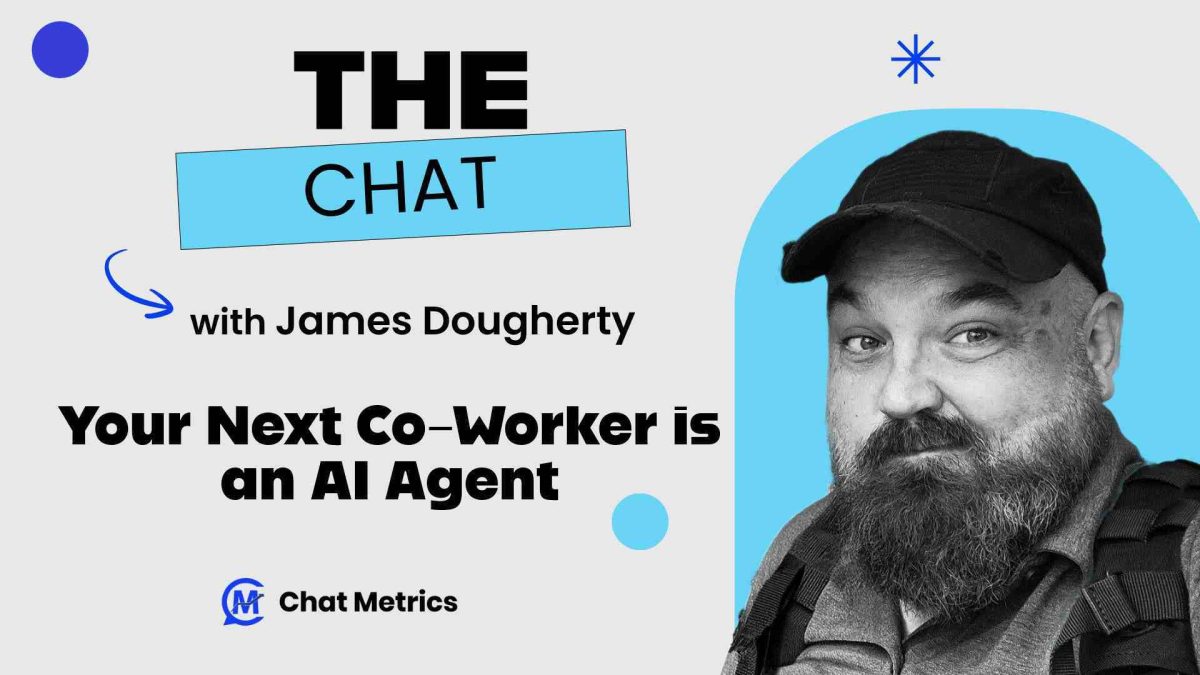
Podcast Title – The Chat – Your Next Coworker Is an AI Agent
Host: Terry Wilson, Founder and CEO of Chatmetrics and Zotly
Guest: James (Jimmy) Dougherty, Technology Evangelist at Esker
Summary
In this episode of The Chat, Terry sits down with James Dougherty to unpack how AI is transforming go-to-market (GTM) teams – not by replacing people, but by enhancing them. From orchestrating GPT-powered agents to building scalable, human-first sales workflows, Jimmy reveals how he integrates AI into real-world enablement. Learn why empathy, workflow clarity, and humor are critical in AI adoption – and how to turn resistance into results. If you’re leading a B2B team into 2025, this episode is your blueprint.
[01:22] – Key Problems Jimmy Solves
[02:35] – AI in the Workflow (GTM Alignment)
[03:18] – Building GPT-Powered Agent Teams
[04:36] – From Engineer to Enablement Leader
[05:51] – System Design in the AI Era
[07:09] – Human + AI Orchestration
[08:44] – “Give People Capes, Not Pink Slips.”
[09:21] – What a Tech Evangelist Does
[11:06] – How to Design Scalable Workflows
[12:28] – Empathy Is Enablement’s Core
[14:22] – Personality-Driven AI Agents Work Better
[16:27] – Humor as an Onboarding Tactic
[17:57] – Real Talk on Lead Gen Hype
[20:00] – History Lessons: Internet → iPhone → AI
[21:33] – Rise of No-Code & Vibe Coding
[24:01] – Learn Fast Using AI as a Tutor
[26:13] – The David the Do-A-Bot Workflow
[28:05] – Enterprise AI Use = Security First
[29:51] – Building Agents with Personality
[30:35] – Book Rec: AI in Education
Key Takeaways for B2B Leaders
Links & Resources: Connect with James Dougherty on LinkedIn
Learn More at: www.jimmydnet.com
00:00- Intro:
Welcome to the chat. Come behind the inbound scenes of some of the world’s fastest growing companies. For the past 10 years as chat metrics, we’ve had an exclusive inside view of how these industry leaders are revolutionizing inbound marketing and sales across diverse sectors. Each week we bring you conversations with top minds in marketing and sales who share insider secrets and strategies.
00:34- Intro:
For driving inbound success, join us on the chat, your front row seat to the future of inbound.
00:49- Terry:
Today on the chat, our guest is Jimmy Dougherty, an now enablement strategist who spent over two decades turning complex tech into actionable strategy from building CMS systems.
00:59- Terry:
In the early internet days of orchestrating GPT-powered workflows, Jimmy bridges the gap between human teams and our agents. Now at Esker, he’s helping enterprises adopt automation with clarity, empathy, and measurable results. If you’re curious about the future of AI in real-world workflows, this conversation is for you.
01:19- Terry:
Jimmy, welcome to the chat.
01:20- James:
Awesome. Thank you. Thank you.
01:22- Terry:
let’s get onto a topic straight away Can you tell me what’s the biggest problem you’re currently solving?
01:27- James:
there’s two lines that I’m really searching to, or problems I’m searching to solve. the first problem is of course, the, adopt. Adopting AI in the workplace. I’m not finding people are having a hard time, at least from my perspective, adopting ai.
01:46- James:
What I’m having a hard time is for them to start understanding what it’s gonna be. I mean, there is this whole. Layer of, what they see in the news and what they hear. That’s a, it’s a bit of a, but to reality is that they don’t know how it can help them. And that’s the problem I’m looking to solve, whether it’s on my personal projects or at work.
02:04- James:
and then the other one that goes in line with this is is AI actually going to fit in the workflow? How is it gonna actually help you? Right. And I think, those are the two challenges that I think we see today.
02:16- Terry:
so I’ll just say this before we move on. I’ve got some questions which are more generalized. I’ve got a special section, you know, we spoke about the Spotlight series about on ai. So I’ve got some, a section with some questions specifically on that. what I’m talking about now though is your more general, role and what you’re doing in a day-to-day basis, which I kind of guess you’ve answered that anyway.
02:35- James:
Yeah, I mean, you know, in my general day to day, there’s a couple of things that, I’m juggling or at least exploring. First and foremost is, at Esker we’re really pushing to move AI into the, the workflow, but also educate our customers on where it’s valuable and where it’s not, or where that human intervention needs to be.
02:56- James:
and that in itself is, is exciting, right? Because we’re seeing a lot of peoplethat are starting to see what the future is and what the future could be. And they do have those questions like, well, where exactly does this AI fit? Where exactly do I fit? And how does that work? And like I mentioned, you know, personally, I’m always working on ways to, implement AI into a pupil’s, whatever it is.
03:17- James:
I try to stick it in there.
03:18- Terry:
it’ll be weeks ago now, but, I, did see your post earlier today where you’ve built a team of, GPTs effectively, you know, hold an AI agent force effectively. And did you enjoy that? What were the challenges you found?
03:32- James:
you know what? I love doing that and it’s something that I’m even, wanting to explore further because it was a whole question that in itself was proposed of. Well, what’s better? And I actually had one of my managers ask me that, what’s better? You know, is it this one prompt that we see people doing or is it multiple prompts or multiple agents going across?
03:50- James:
And well, can those agents talk to each other? And if they can, what’s the advantage to it? and that’s really what I meant to explore in that, you know, in my post and what I’ve been working on is how that concept. Really works. You know, it’s, I think I was talking to my daughter and I think we’ll probably get to a little bit of this later, but I was talking to my daughter, you know, one, I think what the most important skill that, people coming into the workforce will need is management of people.
04:15- James:
And what they’re gonna find out that it’s not as much people but these bots that will be just like their coworkers and managing those and working with those. and
04:24- Terry:
Hmm.
04:25- James:
in that project.
04:26- Terry:
Yeah. Interesting. Interesting. You’ve had a career that moved between support, sales, engineering, enablement, and ai. How did that evolve over time?
04:36- James:
Well, I started I’ve been a geek since I was a, as a kid, but, I wasan engineer and then I moved into to support in itself. And, I had the sales team come up to me and say, you know what, we want you to join as, as a sales engineer. and my first response was, heck no.
04:52- James:
I did not wanna be a used car salesman. I didn’t want anything to do with sales. No. And, they wind and dined me for about a week, week and a half. And I said, fine. And that had to be probably the best decision I had ever made. Soon after that, we were, we were at, Cisco Live of Vegas. and this, the world opened up and I had a background in just understanding business and sales, right.
05:14- James:
You know, family, business and those type things. But, really adopting sales to everything that you do, at least that concept of, of networking and people. And just how you interact with, everybody. That’s, really pushed my technical side to a different level and that’s where I really started getting into the teaching and translating babble into people talk.
05:38- James:
And, and at that point, that’s where I really moved into, enablement.
05:41- Terry:
Okay. from CMS systems in the early, 2000 to multi-agent AI bots, how has that changed your approach to building systems at all? I.
05:51- James:
Oh yeah, absolutely. you know, I’m lucky enough to have a few miles, on my tires, so. I understand the concept of systems and them communicating with them. I mean, I’ve evolved in the evolution of APIs and interconnected systems, but now with ai, the concepts are, Well, they’re evolving, right?
06:09- James:
So we have that foundation of interconnectivity and their importance. But now it’s evolving. It’s evolving in a way that, we just can’t, really get a hold of right yet because, well, it changes every day. So, yeah, I mean, it’s changed. And I think if I was gonna say in one word, it’s changed in a positive way because now we have the integration or the interacting of those systems is evolving into more
06:31- James:
of a more complex way and we can get far more information out of it than we ever thought of. And it’s easier.
06:37- Terry:
And do you think there’ll be a time where they become self-generating to a certain extent?
06:41- James:
Sure. Oh yeah. Absolutely. Absolutely. we’re seeing that now
06:44- Terry:
Hmm.
06:44- James:
in some aspects, where, even some of the models of Chate kicking out, at least in, from what I’m, my reading and researchers testing is that’s the concept where they’re sitting there saying, we need to solve a problem.
06:57- James:
It will actually create the code that goes along with it by itself, so we can build code to solve that problem.
07:03- Terry:
Yeah. Yeah, we are. There is the early stages of that actually happening now, isn’t there?
07:08- James:
Yes.
07:09- Terry:
Yeah, It’s interesting you talk a lot about human plus AI orchestration. What does that mean in practice?
07:16- James:
You know, that it’s funny. People sit there and say, well find your, when you’re gonna talk about something, find your niche. Find out what you really find you know, passion on. And
07:25- Terry:
I.
07:26- James:
go back to my early enablement days when I was trying to. only teach people about the technology that I was supporting, its importance and why, you know, how it worked in their workflow.
07:35- James:
I go back to that and I’m starting to say, well, this is en mass, right? This is, you know, everybody’s going to have some aspects of AI touch their lives, and so I really made it You know, it is 24 7 learning about everything I can, on understanding how AI is gonna fit into the human workflow in all of these aspects, right?
07:54- James:
When I come in every day, you know, what is it? You know, for me, I’m in that top tier of people that every day I come in, I’m talking to my agents, they’re helping me with what’s going on during that day. And it’s not just general prompt. It’s like, everything from Google Gemini to chat GPT,
08:10- James:
Across the board and a few of the other models, even the ones that I’m using with multiple, touch agents going on there, I’m interacting with it. So I’m exploring different ways that people are gonna be interacting with it. And, my really, where I wanna shine with this is ways where teams can be, where things can be explained to teams, to where they sit there and say, yeah, you know what?
08:29- James:
this is it. And that’s why I kind of get in that whole, here’s your cape. story, you know, it’s like, I don’t want people to say, this is replacing my job. I don’t want people saying, oh my word, this is this horrible. I want them to sit there going, oh my God, I can’t believe that I’m able to do this.
08:44- Terry:
Hmm.
08:45- James:
to, do a hundred times more than I ever thought I did. I mean, we go back into reflection of history, right? And, people were making shirts by hand and all of a sudden the sewing machine came out and everything that’s going where they can make hundreds of shirts.
08:57- James:
Yes, we can look through the history and there were some positives. We can look through the history and there’s some negatives, but the concept is that change will happen. It’s gonna be how you embrace it, and that’s really where I wanna do, I wanna take the human aspects of it and help them channel the opportunities that are coming, and work with organizations to do that.
09:13- Terry:
So in your current role, your title I think is Technology Evangelist.
09:18- James:
Yes,
09:19- Terry:
is, that right? Can youExplain what that is?
09:21- James:
So a technology evangel is kind of two, One is that your role is to really dig down, find passion on something, and really dig down onto it. Right now, I’m working with Esker a couple ways. I’m learning all about how they’re gonna embrace AI and how we’re going to move it into, the next generation, but also is integration.
09:39- James:
Hence the reason why. One of the things that I’m exploring on a personal aspect is how integration works with ai. because that’s how. we are gonna scale in the future. Is that we’re gonna be able to integrate in a way that maybe our competitors can’t moving forward. you know, I’m not losing, I’m not handing out any information that isn’t there publicly, but the idea is that’s really where I gonna go.
10:00- James:
So, as a technology evangelist, the first thing you’re gonna do is you’re going to live and breathe the technology. And that’s something that I’ve been lucky enough to even focus on and. as you can tell, the next step is being an evangelist, right? Taking that word at its literal meeting and going out there and telling people about it.
10:14- James:
And that’s something I’ve felt, I’ve just really enjoyed doing. whether I’m on meetings with companies or I’m talking my blogs or my posts or interviews like this is just saying, you know what, it’s not just, this is the best technology is, hey, look at your workflow.
10:27- Terry:
Hmm.
10:28- James:
What are the pain points that
10:29- James:
You’re seeing every day. Right? and sure that’s a sales term, but I even get to, I go, really? When you get in there and you get your cup of coffee, right? What are the things going through your head that, oh my God, I gotta do this today, or whatever. You know what? Whether it’s the solution that I support or something that’s coming in the industry, this technology will help eliminate those.
10:49- James:
Giving you more time to do the things. And I don’t wanna say the things that you like doing, right? ’cause that just seems like that. just poppycock, right? But it will give you more time to focus on the things that matter to where your skills are vital. and that’s, you can see me get excited about that.
11:04- Terry:
Well, so that.
11:06- Terry:
all brings a question to my mind then in terms of when you are designing workflows, that aren’t just tech demos, they’re actually change how teams operate, how do you approach that?
11:16- James:
Well, I mean, the first step is you sit and listen. and I’ll be honest with you, you ask anybody how I got into all of this, and early in the career that had to be the most difficult skill to learn, is to sit and listen. when I was young, I was like, oh, look at all of these features and we can do all this and stuff.
11:33- James:
And I don’t think the users got a word in edgewise. so that’s the first step is listening. and then the second step is just understanding, as I said, the pain points. You are taking what they
11:43- Terry:
Mm-hmm.
11:43- James:
told you, understanding where the challenges are, understanding what makes their day, their week, their month, you know, happen.
11:50- James:
and then understanding what the end goal is. and third is then working with their team to implement some sort of flow. And that’s, you know, showing them, Hey, AI or however we propose a solution is going to help you in these points. And this is how we would do it. And to do this, we need your help.
12:09- James:
And executing this. And so basically getting the team on board, you know, getting to beyour internal evangelist, right? Moving Forward
12:16- Terry:
Hmm.
12:16- James:
You know, getting decision makers on board. And once you get all that, you have the least resistance and well, you have a successful project.
12:23- Terry:
So what role does empathy play then in your enablement strategy?
12:28- James:
For me it’s like number one.
12:30- Terry:
Hmm.
12:31- James:
You know, number one, and I know that’s, some people might sit there and say, well, you know what? Sometimes they’ve got a face change and like Absolutely. If you don’t, if you can’t feel what they feel and understand what they’re saying and find a way, like, who knows, you know, they could be a hundred percent right.
12:47- James:
Like in their feelings, right? I mean, wait a minute, we’ll go back. Yes. Their feelings are their feelings and they’re Right. Right.
12:53- Terry:
Yeah.
12:53- James:
empathy on what they’re doing, I mean, they are, their feelings not, but I’m saying there might be a, a different viewer or a different solution that would help that resolve that without having to really change something.
13:02- Terry:
Yep.
13:02- James:
But if change needs to be done right, it’s having empathy into what they’re facing, what they’re seeing their lifetime of dealing with that project and finding a way to communicate it to them, to where they give you buy-in, right? So empathy is a hundred percent, it’s people, right? I mean,
13:18- Terry:
Yeah.
13:18- James:
am, a person that is like, rah, rah, rah, ai.
13:21- James:
It’s the best thing ever, right? But I’m not all, naive either, right? are people, everyday people that have. Issues and problems and joy and happiness in their day work. We gotta pay attention to that.
13:33- Terry:
But I think your whole perspective and well, I’ve enjoyed, you know, the couple of conversations you’ve had in this one, it is that you’ve got this, almost, It’s actually more than human in the loop. This is, it’s an integral part of our, you know, day-to-day lives.
13:45- Terry:
Where you spoke there earlier about, you know, one of the challenge will be learning how to communicate with coworkers that.
13:51- Terry:
are actually AI agents. It’s, I suppose, to humans, it’s like there’s always going to be, a people or a team, of real humans. can you share a moment where a workflow you built changed the game for a team or for a client?
14:03- James:
You know, there’s two things that came to mind. One is Where I did something or when I exported something. It was kind of early into last year that really changed my perspective on what I was going to do or what I was gonna focus on and.
14:17- James:
And then I can talk about how maybe it changed, a team. You know, first and Foremost
14:21- Terry:
Sure.
14:22- James:
is when building a prompt, right? You’re building a, you build a profile first, right? When you’re building this AI agent, you’re building a profile. You’re telling it what it is, right? And a lot of people sort of say in this situation, you are an expert, customer service representative, and you give it a lot of aspects that make it what it’s doing.
14:37- James:
And you, you tell it which documents that it can utilize and all these type things. You build it and you tell it what it is. And the one aspect that I found out, and I used it for my writing, right? ’cause as my proofreaders and stuff like that, the one aspect that I found out is I gave it a personality.
14:51- James:
I made it kind of humorous right?
14:53- James:
Now, don’t get me wrong, it’s not fail safe. And I’m sure that the people say when I can’t do that, that you’re, it’s just smoke and mirrors and whatever. But it made a difference when
15:01- Terry:
Yeah.
15:02- James:
I, it was just the other day I sat there and you are a right approach. or something to the thing.
15:07- James:
You’re like Tony Robbins and stuff. And I made a joke, right? And please nobody get angry at me. But I made a joke. I go, Jesus came to you for advice. Right. And it was so funny ’cause I told it, it was humorous. It was always like, and it was so funny how it reacted back and the jokes that it would crack. I’m going, that’s it.
15:23- James:
That’s it. That’s what will make this whole process flow. And so I started kind of doing that with the teams that I’m working with. It’s a little bit, when you’re in the business world, sometimes it’s a little bit that, you know, you have to be, a little bit more cautious in how you do that. But that I’m going, that’s why focus on what I’m doing when I talk about
15:41- Terry:
Yeah.
15:41- James:
the agents.
15:42- James:
You can see it in my writing and going on when I talk about those agents, is you start giving the personality. And that’s why we see Chad GPT five that just came out, one of the big issues that came out is that they removed this whole. Kind of personality aspect initially, and everybody was furious about it.
15:58- James:
Go, I use this to talk to, I use it as a coach, I use it as zingy. You know, there’s a big debate on whether you should or you shouldn’t. But to be honest with you, when I added some sort of personality to it made a difference. It made a big difference. So moving forward, I do that because like I talked about, it’s that human AI connection that I’m looking for.
16:18- James:
And what’s the best way. Of doing that. I mean, another aspect is, as you can see, everything I do kind of has this cartoon. when I do my posting stuff, it’s kind of cartoon themes and people
16:27- Terry:
Yeah.
16:27- James:
this is a professional world. I says, LinkedIn, why are you doing that? Right? I go, because you know what?
16:32- James:
AI is hard to swallow sometimes and people
16:35- Terry:
Yeah.
16:36- James:
need something that’s a little bit funny, so a little bit of sugar with the medicine, right? That gets them understanding, gets ’em to giggle a little bit. So they’ll just start accepting the message a little bit more. And when they actually see what the message is, they’re saying Yes.
16:50- James:
That’s gonna work out. See it at work. Right. I’ve been working on, and I go on, but I’ve been working with the team, right? Just getting like copilot going on and we just worked a few minutes finally getting up their licenses and just building prompts and they’re going, oh my God, is awesome.
17:05- James:
This will save me a lot of time.
17:07- Terry:
Hmm. Hmm.
17:08- James:
That’s where the value is.
17:09- Terry:
Yeah. Yeah. And that’s the, when you get to the point where you go, okay, I get it. I get it. And this is what’s gonna drive me forward. It’s interesting you talk about the humor, in, LinkedIn. So I’ll mention two posts. One was, I think it was today or yesterday, I just saw a comment that came up from Chris Walker saying that, you know, this,
17:28- Terry:
The post was a guy saying that my co-founder or partner charges six figures for this AI framework. I’m gonna give it away for free. You know, it’s an obvious lead magnet. You know, I’m sick of seeing those things, to be honest with you. It’s like there’s a couple of the, lead gen gurus out there that have gone through and said, oh, you know, do these big lead magnets and giveaways and you’ll get hundreds of leads.
17:49- Terry:
I think, you know, when you’re on an interesting topic, it’s easy to get hundreds of, names and maybe, or email addresses, but they’re not necessarily leads by any sake for the,
17:57- James:
right.
17:58- Terry:
you know, stretch of the imagination. and Chris’s comment was just that it’s just fake, you know, it’s presented as giving, but really it’s just capturing contact details to try and, create legion.
18:08- Terry:
and to that vein, I did a post a couple or a month or so ago, maybe a little bit longer than that, which was. Have you seen that gif and I can’t remember what they call it, but it’s like a gif that is millions or literally hundreds of little paths to follow in the gif. If you have a look back through my feed, you’ll see it.
18:23- James:
Okay.
18:23- Terry:
and you know, I said, this is the workflow that books 4,000 meetings for us every single day, blah, blah, blah. And it was just the whole satirical thing. I just took the mickey out of the lead gen gurus. That post went crazy. The post went absolutely crazy. it was like, okay, so I can see.
18:39- Terry:
There’s a lot of people that post on LinkedIn. It’s supposedly only the, you know, the 5% or the 1% or something. but there’s a lot more people that actually see the stuff that’s in there. And I think when you actually crack that thought that the majority are having, that’s when you start to see people that you know, the real side of what’s going on
18:57- James:
agree. I mean, and for me, what I’ve found any success that I had is, you know, I try to add that I’m honest, right? A little bit of humor
19:07- Terry:
Yep.
19:08- James:
and I’m not asking for anything. I go, here’s the information
19:11- Terry:
Yep.
19:12- James:
and I’ll usually sit there and say, you know what?
19:14- James:
Ask a question or comment or whatever. you know, what do you think? something that aspect, but the subject’s strong. And when you, when you do it that way, people just start pinging me. It’s like, Hey, what do you think about this? Or what do you do about that? Or, Hey, tell me more about, you know, X, Y, or Z.
19:29- Terry:
Yeah. Yeah.
19:30- James:
that, and the reason why I bring that up and kind of, you know, hitch it to what you were saying is that. We are dealing with a technology. AI, right, is unlike any of the other things that people are, are trying to sell. A promoter teach on LinkedIn. AI will change the world. You know, again, like I said, I got a few miles on my tires, but I’m sure everybody that I’m, we’re in our audience today remembers somewhat of when the internet came on board, you know, and how it changed our life in a way that even today we can’t imagine, even me.
20:00- James:
As somebody who, you know, I was the dial up BBS guy, you know, in my little eight bit computer and stuff like that. I can’t imagine a world without the internet.
20:09- Terry:
It was only 2004. That when we were driving around, we were using Riverd Xes, you know? Right. and, you know, book Street, I’ll say the words that describe what that is You know what I’m talking about? Book Street Directories, real maps to actually see where we wanted to get to and you think about it today, you know, with a mobile phone and, and Google Maps or ways or whatever else it is that you’re using. It’s like, you don’t even have to look at it. it will speak the directions. To for you as you’re coming, as you’re going along. So look, there’s good things.
20:37- Terry:
That’s amazing. Sometimes I wonder if it, makes us a little bit dumber too, when we don’t have to use our brain for those things.
20:42- James:
and that’s one thing, again, I’m probably speaking to a smaller portion of the audience, but that’s one thing I would, recommendany of our younger audience members right, who, maybe are getting concerned about all these changes. I mean, it changes overnight and stuff.
20:54- James:
don’t want to, I mean, even me saying this as I, I’m the old guy in the room. Right? But go back, look at history, specifically the technology’s history, right? And just start understanding the dynamics of the changes. Like, I mean, how about, when Steve Jobs announced the iPhone changed the world dramatically and he didn’t introduce something that was totally unique.
21:15- Terry:
Yep.
21:15- James:
he packaged it in an easy to use way. That’s where AI is gonna go. Where when it started
21:21- Terry:
Yep.
21:21- James:
getting packaged in the easy to use way and things are somewhat standardized, that will be the next evolution of the next change.
21:30- Terry:
and that’s coming. We’re seeing the beginning of that already, aren’t we? there’s tools like,
21:33- Terry:
replete, N8N,
21:35- James:
yes,
21:35- Terry:
that, letting you build, AI agents with no code, vibe, co coding as they call it now, you know, build, fully operational, apps And, websites and so forth. it’s you know, it’s progressing very quickly, a lot faster than I’ve seen anything else, progressing the past.
21:50- James:
and it’s funny ’cause like you just mentioned vibe coding, right? And it goes back to my whole concept of adapting what we are doing in AI to just normal human. You know, workflow interaction. So I took a whole concept. Something thatI’m kind of experimenting with was how, in my past days, I worked for a company where we actually had a small app developed, right?
22:08- James:
And it was a game or something like that to promote our network monitoring suite or whatever. You know, that was a pretty big undertaking where you had to get developers and you had to get stuff. Well, I sit there and said, huh. I want to develop a game for it. Was this kind of a book story thing that I was writing and doing with, I wanna develop a game to support that.
22:28- James:
Now, I am somewhat of a development background, but I’m going, you know what, vibe coding’s, the way to go. I’m talking within an hour. I had a prototype going, you know,
22:36- Terry:
Yep.
22:37- James:
that includes graphics and things going on there. So imagine how that can enable marketing teams, how that can man, you know, just personal enablement.
22:44- James:
Something simple like that again, it’s going to change everything,
22:49- Terry:
and it will take away, I believe a lot of the power that the big enterprise businesses have in terms of when they want to add a new feature or solve a particular problem. now you’ve got anyone that, could effectively solve a problem as a side hustle.
23:06- James:
right?
23:07- Terry:
as a side hustle effectively, just spend some time on the weekend, build a product that solves a problem.
23:12- Terry:
And then it’s, can be a, a business, a financially, Effective business. And by effective, I mean profitable. the reality is there’s a lot of complexity that goes into it. Obviously as you’re starting to get customers, there’s payment systems, there’s security, et cetera, et cetera.
23:26- Terry:
but I’m seeing that even things like I built, a little app in replete a couple of weeks ago. I learned a lot. I’m not a coder. I’m the opposite to you. I’m the anti Jimmy. I have no idea when it comes to coding whatsoever. but I built an app that took me probably six hours all up to end up with something that was operating, but I learned a lot through that as well because of the questions that it was asking me.
23:48- Terry:
and when I went back to make changes, I realized that I needed to have the full scope at the beginning because it meant it had to go back and rewrite, you know, databases and those types of things to make sure that it was actually could deliver what I was looking for at the end. But it was a fascinating process.
24:01- Terry:
But to think that I actually produced a, a working app. Zero code whatsoever. purely with, one of these products, and A GPT or a LLM. It was just backwards and forwards between, what else do I need to think about here? so that it was, delivered a product.
24:16- Terry:
it was fascinating. Really was fascinating.
24:18- James:
And that brings up two points. First off, I reach out to any of the young, like support engineers or any out there. Fine. You know, if you’re working for a company. Learn as much as you can about their product. Find the things that maybe won’t work or need to be improved on. Maybe just integration or whatever, especially in my world, right?
24:35- James:
And build it. Use A GPT, an LLM. Use it build it. and talk about it, like be the evangelist. ’cause that’s what’s gonna set people apart. We hear a lot of things about, the work worlds changing, the evolving. And that is gonna be one of the aspects of how AI is gonna change the world, but they have opportunity to shine.
24:52- James:
And then the other point that I want to make, and it’s just a personal case story, right? I’m moving in. when I joined Esker, I didn’t know the ERPI came from, NetOps and SecOps network security. and, Network operations, visibility. You know, didn’t know much about ERPs other than, you know, having worked with a couple of companies and seeing, you know, how we were gonna monitor their applications or whatever.
25:17- James:
I needed to get on board fast, thank goodness for ai. I mean, I sat there just like for the integration process. I sat there and downloaded all their manuals, threw it intoa knowledge document. And just started talking with it like it was a tutor, so I’m late at night, you know, two o’clock in the morning talking to it, going on there and saying what if and what’s hitting on that?
25:35- James:
And just the more and more information that I could push into that. And I got up to speed really fast.
25:40- Terry:
Hmm.
25:40- James:
and I’m telling everybody out there, that’s an opportunity for you.
25:44- Terry:
Yeah. absolutely. Absolutely.I really just wanna circle back to your post this morning and you talked about, David, the do a bot. have you sneaked. David, the do a bot into workflows yet. and if so, how did you do that without freaking out the team?
25:58- James:
This is something I completed over the week and I haven’t yet, and, The team project of getting,everybody on board is, we just moved past the, making sure everybody had licenses and all those things that are going on there. I’m impressed. I mean, everybody would say this, right?
26:13- James:
But I’m really impressed with the teams, Adaptability I think that’s the word I want to use, into using it. Right? And they’re going, I’ve already seen them starting to build, you know, build, automated pitch decks or whatever they had to do and get that information. I’m going to start introducing it in our talks.
26:28- James:
Right? And I found out what really works is I sit there and show them, right? It’s kinda like a show me thing. we’ll be having our SE meetings and I’ll do a little tech session in it, and at that point I’ll sit there and show them. And I did this,and in this sit situation, the example that I gave David was, we were talking and I would be sitting there going, okay, great.
26:45- James:
We need to deal with, this certain. Scenario. And I would tell the master, bot and master bot would give me all the information he had. And he goes, well, you might want to talk to the technical bot, for coding, you know, like API and all that. So I’d do the at sign and pull him up and say, okay, I want you to look at everything we talked about.
27:02- James:
And, he would, you know, the ma the, bot would tell me more about it. And then I would sit there and say, okay David, I want you to throw all this into a Word document. that’s what David would kick into it. Now there’s a lot more that, you know, That I wanna do, like with the, the zero code ideas, where it just sits there and logs everything.
27:17- James:
There’s a lot of ways I’d like to go with that. but again, as a proof of concept, this really worked. And when I start showing the team these type things, they’re gonna say, well, how do you do that? That’s the first step with the teams. Well, how did you do that? The next step is they do it and they do things that I couldn’t even think about in a day.
27:34- James:
And, that’s really where it shines.
27:36- Terry:
What platform did you build all of that in.
27:38- James:
N8N, which was the, David part of it. chat, GPT and Custom GPTs were the agents going on there. And as I mentioned
27:45- Terry:
Okay.
27:45- James:
my post, I moved over to, co-pilot just because that is our corporate, agent. Right. And something,
27:51- Terry:
Yep.
27:51- James:
you gotta pay attention to.
27:53- James:
I mean, anything I do personally, that’s great. I can use my stack and I don’t, you know, I’m all. Confident, but when you’re dealing with either your company’s information or you’re dealing with a, client like we’re, they’re investigating us as a, a product or whatever.
28:05- James:
you’ve gotta just be aware of the legalities and the security issues that go on there. And that’s another aspect that, that you have to be aware of. And it’s something that I’m starting to dig into a little bit more. As far as the knowledge thing, I’m still at that.
28:17- James:
You know, beginner’s level of understanding
28:19- Terry:
Yeah.
28:20- James:
some of the dynamics. Although, to be honest with you, I’m able to pull in like, you know, I had a lot of experience with like GDPR over in Europe, and how they had to deal with that and that actually moved over to Esker. you know, having that general understanding, which is it’s, but it’s even greater, you know, when we’re dealing with
28:33- James:
anything with the ERP that’s going on there.
28:34- James:
and then now I’m looking to explore that. Specifically with AI and how that’s
28:40- Terry:
Yeah.
28:41- James:
gonna go. And then watching the laws that are gonna evolve, right? Because follow like just how GDPR evolved when it finally passed and it was implemented and all this information and nobody, you know, that was the biggest thing.
28:52- James:
Like nobody really knew what their answer was other than they needed to, abide by it.
28:57- Terry:
Yeah.
28:57- James:
gonna see something similar, with ai.
28:59- Terry:
Yeah. And so with the, chat GPTs, how do you connect those to N8N as in, can you put them in the custom GPTs each as separate connections, or do you call ’em up. in the, N8N, how does that work?
29:10- James:
I call,
29:11- Terry:
You gotta call ’em up.
29:11- James:
you know, it was pretty simple and was like, I think I pushed it in a command. I’m trying to remember exactly how I did that. I fooled around with that one. I wanna get into it deeper. I think what I want to do is I want to take it out of, personally, I want to take it out of that environment and, coding it a little bit, forward.
29:29- James:
cause I’m working on a side project of mine is building personable chat agents. I’ll use that as a term, I’m not sure. But the idea is that taking, that idea of personality into a, a chat agent, making the chat agent actually look, you know, the outside of it, look like that personality, but making sure the aspects of that personality is there.
29:50- James:
So,
29:51- Terry:
Yep.
29:51- James:
you know, one of the sites that I have is for, Young people who are, you know, early in their career and maybe they have a, adult ADHD or they either have it or they believe they have it or whatever’s going on there. And, it’s a site dedicated to that.
30:04- James:
And the idea is to bring in a pseudo. Chat agent doctor that goes in there and can actually talk to them and go through that. So again, it’s kind of a proof of concept, but giving it that information and giving it that personality makes it, easier to, digest.
30:18- Terry:
Yeah. Yeah. Okay. Oh, thanks. look, it’s been great having you on the chat. Thank you. I’ll, put all of your ways to con connect with everybody on, the bottom of the podcast here. are there any particular books or anything you’re reading at the moment that you’d like to share
30:34- Terry:
or re or recommend?
30:35- James:
there’s
30:35- Terry:
Okay.
30:35- James:
that I shared on, LinkedIn, and it was on AI and education. and I don’t remember the top of, off its name. but I really like that because it’s another little side aspect that I’m going on, a journey of learning more. my wife’s in education and I was lucky to, work in a school, off and on for a year, year and a half, with classes and,
30:54- James:
It’s the concept of how AI is gonna change education. That’s a whole other world that AI is gonna change you know overnight.,
31:00- Terry:
Mm-hmm.
31:01- James:
And, this book had a really good, really, really good analogies, really good stories on how the concepts, Are gonna evolve in some of the past experiences, you know, not, not in ai, but in just other technology.
31:12- James:
I mean, they gave an example of, and you’ll remember, and I keep on, you know, talking about history, right? the internet. The internet came along. If you remember your teachers, and they’re going, well, no, no, you, you know, don’t, you can’t use the internet. We’ll never be able to use the internet as a resource and stuff.
31:24- James:
You gotta get your books. Remember all that. Well,
31:26- Terry:
Remember that.
31:27- James:
right? That’s changed. And that’s really where we’re gonna start seeing, something similar moving forward.
31:32- Terry:
Hmm. Yeah. Fascinating. Look, Jimmy, thank you. It’s been great having you on the chat and I appreciate you coming.
31:38- James:
Awesome. Thank you. Thank you very much.
2026 © All rights reserved Chat Metrics
Made with ❤ in Melbourne, Australia


