

Get my ultimate guide to boosting conversions and customer engagement delivered straight to your inbox.
Get my ultimate guide to boosting conversions and customer engagement delivered straight to your inbox.
“Helping people operate 10% better is one of the highest ROI things a company can do – and most ignore it.”
– Bill Lennan
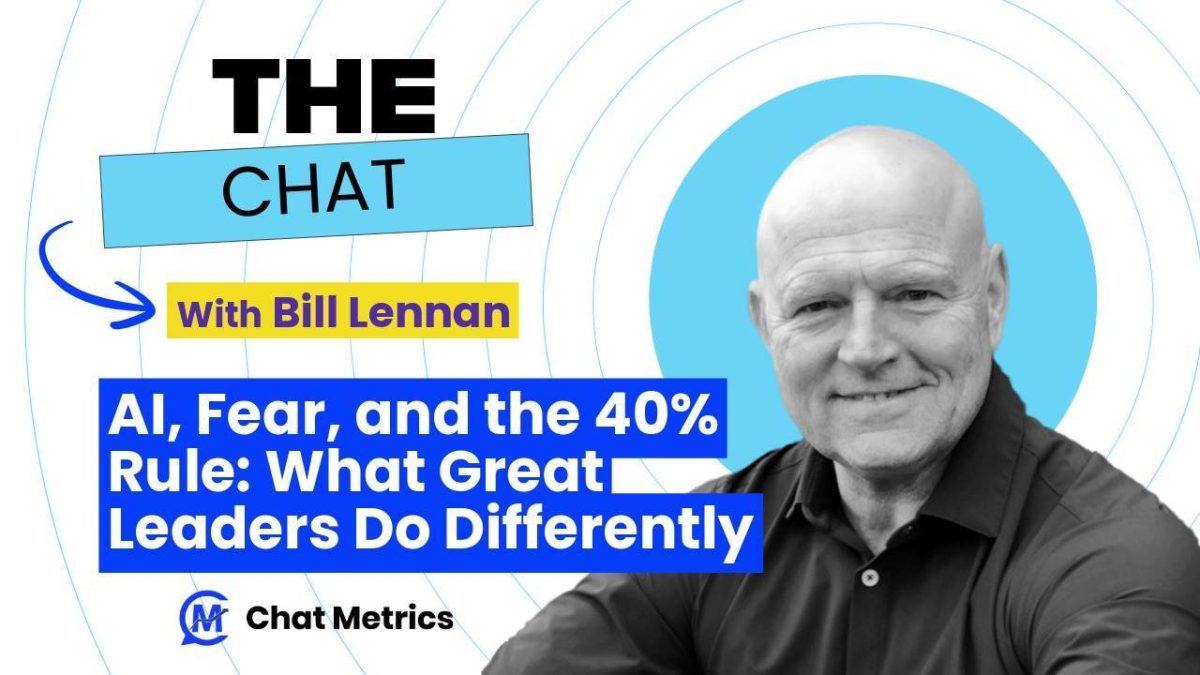
In this episode of The Chat, host Terry Wilson sits down with Bill Lennan, founder of 40% Better, to unpack how great leaders unlock extraordinary team performance. Bill shares the real story behind his “40% Rule” – the system he used to turn the worst-performing software team into the best in just six months. His message is clear: the biggest untapped ROI in any business isn’t in tech or tools – it’s in people.
From building psychological safety that sparks innovation to creating backchannel alignment between product, sales, and marketing, Bill reveals how smart leaders drive measurable results – 4X pipeline growth, faster delivery, and more loyal teams. He also takes on the hype around AI, explaining why human connection and trust still outperform any algorithm.
If you lead teams, run sales, or manage marketing in a high-pressure B2B environment, this episode will change how you think about performance, culture, and growth.
🎧 Listen now to learn why being 40% better beats trying to be perfect.
05:05- How a “worst performing team” became the best in 6 months
Bill Lennan shares the origin of “40% Better” – a turnaround that improved team output by over 40% using an unspoken system he later formalized.
08:10- Why psychological safety isn’t just a buzzword – it’s ROI
Bill explains how creating safe environments drives idea-sharing, smarter code, and measurable business outcomes.
10:35- Introverts vs. deep thinkers: The hidden 20% your team is underutilizing
Terry introduces HSPs (highly sensitive people) and how quiet contributors often hold the best ideas – if you can unlock them.
12:10- Why software teams are often packed with quiet geniuses
Bill highlights how many engineers entered the field to avoid people – and how leaders can still harness their brilliance.
15:15- Backchannel brilliance: How bypassing exec layers fixes real problems fast
Bill discusses why going straight to sales and support teams improves products and eliminates costly “Chinese whispers.”
18:05- A step too far: When AI replaces humans, but fails hard
Bill shares a frustrating chatbot loop that almost cost a company his loyalty – and a warning about over-automating high-stakes interactions.
28:55- Did ChatGPT refuse to summarize a controversial podcast?
Terry recounts a chilling moment when GPT ignored a transcript of an AI whistleblower – sparking concerns about censorship and sentience.
34:10- The Ferrari model: Why some brands never discount – and never need to
Bill explains the mental model of surplus over scarcity and how brands like Ferrari and Alex Hormozi use it to dominate markets.
39:05- Don’t be the smartest person in the room
Bill reveals why real leaders don’t try to have all the answers – and how ego kills innovation.
46:15- Mental health isn’t mental – it’s physical
Bill outlines his top three daily habits for resilience, starting with sleep and movement, not meditation or mindset.
Episode Summary:
Bill Lennan, tech leader and founder of 40% Better, shares how he transformed the worst-performing dev team into the best-performing one- with a 40% increase in coding throughput in just 6 months. This episode dives into human capital ROI, building psychological safety, and avoiding AI overreach, with frameworks leaders can apply today.
Team Performance & Leadership
Psychological Safety = Better Results
Trust & Performance Frameworks
Where AI Goes Too Far
Where AI Works
Think Like Ferrari, Not Walmart
Sales-Marketing-Product Alignment
Mental Wellness = Business Performance
Recommended Reads
Connect with Bill Lennan
Email: bill@40pb.com
Company: 40% Better (40pb.com)
00:00- Intro:
Welcome to the chat. Come behind the inbound scenes of some of the world’s fastest-growing companies for the past 10 years. As chat metrics. We’ve had an exclusive inside view of how these industry leaders are revolutionizing inbound marketing and sales. Across diverse sectors. Each week, we bring you conversations with top minds in marketing and sales who share insider secrets and strategies for driving inbound success.
Join us on the chat, your front row seat to the future of Inbound
Terry:
Today on the chat. Bill Lennon is the founder of 40% Better, a leadership performance program, helping teams level up through better communication, trust, and psychological safety.
01:00-
With over two decades in tech, including roles at Google and helping Walmart, Bill has a proven track record of turning underperforming teams into top performance.
He’s a straight-shooting leadership coach who believes small shifts in thinking can drive massive impact. Bill, welcome to the chat.
Bill:
Thank you. Thank you. I’m happy to be here.
Terry:
You’ve worked with teams at Google and Walmart. And now with execs across industries, what’s the most common leadership mistake that instantly kills team performance?
Bill:
Microsoft Office. Yeah,
Terry Wilson:
Yeah, yeah. That’s right, and because I’ve been in corporate gigs, you know, so it’s like, it’s always been, in that environment, very closed in Everything’s controlled. so there wasn’t really much room to do anything else. And then when we started this business off, you know, I was very, look, let’s try and keep it all in the office.
And my business partner was the same. He was very comfortable with Microsoft Outlook. And so, we did that. And then I found that as
we were a hundred percent remote. And, and I dunno why I said that, because it was no different to the
02:00-
Way that my corporate career had been virtually has been running remote businesses. And yet. There was something about Google and being 100% in the cloud, that just made life easier.
And so I’ve been probably, it took about six months, I think, for me to get out of, out. Look, the, I think it was just a habit or behavior that you used to. but since then it’s been Chrome and Google and everything attached to it. the only thing we sort of do on the side other than that is, Dropbox for storage.
Other than that where Yeah.
Bill:
Yeah. Fully,
Terry Wilson:
Fully Google for everything else. And it just seems to work so well. I think that’s the key, isn’t it? When it works well, then it just sort of makes everything better, doesn’t it?
Bill:
Yeah. And I’ve been a Mac guy for a long time and I use Apple’s Cloud storage
as backup. Right. And so, you know, it makes my life super easy. I switch devices and everything’s there. I switch from my old laptop. buy a new
03:00-
One, plug it in and boom, everything’s there. And yeah, it moves all the files over. Usually, what I do is like, they’ll say, oh, it’s gonna take whatever, how much time to move this gigs of data.
And I’m like, okay, I’m gonna let it run while I’m asleep. I hook it up, go to bed, wake up in the morning, it’s all done. And I’m like, okay, cool.
Terry Wilson:
Yeah. it was interesting, coming to the Mac, that was the one thing that, was a bit annoying. They apparently used to support Dropbox where you could have an external drive.
’cause our Dropbox is pretty big, obviously. And you could have an external drive to run, virtually a live, hard copy of your Dropbox.
Bill:
Right,
Terry Wilson:
Which is what I used to do with my old laptop, which was a Dell XPS 13 I think it was. but they don’t do it anymore.
They don’t support Dropbox anymore. So they’re really trying to force you into their ecosystem. And that Interesting. We can’t do, because everything we’ve got is in, in Dropbox and I can’t move everybody over to Apple. that is a bit annoying. But, other than that, I guess it’s been good.
It’s been, an interesting
04:00-
experience to get back into the Apple, ecosystem again. It, the laptop’s very good. It’s performs very well. I think it, it’s just another tool, another piece of tech.
Bill:
You know, and it’s like, it’s like driving a different car.
Right. You know, in a lot of ways. It’s like, oh, I am not driving a Toyota. I’m driving a Ford, and the light switches are in different places and the hood release. But other than that, The oil dipstick is a different place. Definitely. I’m not driving A-B-M-W-I-I I, I realized I’m not gonna be buying A BMW in the near future because they got rid of the oil dipsticks.
Terry Wilson:
They did.
Bill:
They got rid of the dipsticks. It’s now got an electronic sensor. My younger son got a Beamer and, he ripped the sensor apart, broke the, like, he didn’t pull it out of the oil pan, but he snapped the end off of it, right? So it doesn’t work. And so all of a sudden his car’s freaking out ’cause it’s saying, you’re outta oil.
And I’m like, you know, this makes no sense. What’s, so we start trying to figure it out, realize what’s
05:00-
happened. Okay, how do you fix it? You have to drain all the oil, take this thing out, stick a new one in. And I’m like, why don’t we just hook up a dipstick? Doesn’t somebody make an aftermarket thing we can add on, you know, hook up a dipstick?
I love it. Except the computer needs that input to not throw all the alerts, right? I’m like, yeah, yeah. Okay. These German engineers they just went a couple of steps too far and. You know,
Terry Wilson:
It is, that step too far. You know, that’s the issue. And I think, you know, we see a little bit of that with ai, which, we’ll get onto,
in a little while. but look, you talk about the idea of being 40% better. Where did that concept come from and how does it change how leaders show up every day? Sure.
Bill:
So I named this after an experience. I had a, at a company. I went to this company, you know, walk in. I’m inheriting a software team the first day, the CTO at the end of our onboarding conversation says, by the way, I’m kind of
06:00-
embarrassed to tell you this, but the team I’m giving you is the worst-performing team in the company.
They’ve been together, most of ’em for 10 years. We’ve been trying to get them to operate better for years and haven’t been successful. Good luck. I said, thank you. I like a challenge and walked out thinking, Now that was a really good cheerleading moment. I just went to work on helping them operate better and trying to figure out what was in the way and get better performance.
six months later I’m sitting at my desk working on something and the CTO comes over and goes, Hey, can I have a word with you? I’m like, yeah, sure. What’s up? And he goes, come into my office. And I’m like, okay, walk in. He closes the door and goes, what have you done to your team? I said, I don’t know what’s going on.
he goes, I gave you the worst team in the company, and they’re now the best team in the company. The coding throughput has gone up by more than 40%. How did you do that? Because I don’t know how to do that. this was years ago, and at the time, I didn’t understand the system that I was using. but now I do.
07:00-
And so when we started down the path of making this a system we could teach people, I’m like, oh, well that’s who we gotta name the company because in six months we got 40% better following this consistent, repeated process. Most leaders don’t recognize that’s possible. They know that they can optimize their Amazon cloud and they can bring their costs down, and they know that there’s ways that they can optimize, maybe the payroll system they’re using to make that be 10% cheaper, but they don’t think about how to optimize the people.
It’s just a blind spot, right? Because nobody talks about it. And yet the biggest expense for almost every company is salaries and headcount. if you can optimize that, it’s ROI, it’s money in the bank. It’s like, why wouldn’t you?
Terry Wilson:
It’s fascinating that the comment you made about the biggest expense in companies.
It’s usually real estate and wages. That’s sort of the two big, the big ones. And I think, you know, through the
08:00-
pandemic, we’ve learned that there’s this whole new business model, which we’ve been running since we started this business. You know, of a remote workforce where you don’t need to have the real estate, the big leases and the big offices.
Businesses can run quite successfully without it, but it doesn’t impact the people cost. And that’s where, you know, my entire career has been focused on, actually, there’s a book by Aubrey Daniels called getting the Most Out of People, I think it is, or Getting the Best Outta People.
And I read it pretty late in my career, and it was just so many bells, uh, you know, went off so many light bulb moments through that as I’m reading it. And it’s like, oh, okay, so that’s why this works. That’s why, what exactly, you know? Yeah. Yeah. When you can load that into the front end and actually share it with others, the performance levels and return on investment, which is what matters to organizations.
The return on investment is the human capital. exactly. makes a huge difference. Psychological safety sounds like a
09:00-
Soft concept. How do you make it measurable and actionable for teams under pressure to deliver results? Sure. Because the results are what count at the end of the day,
Bill:
I’m a hardcore capitalist and everything that I think about, no matter how touchy, feely, or soft, has to, at the end, have an ROI, because I always want to be able to go to the CFO and say. Here’s how I made you more money, and here’s how I’ve saved you money. And it’s because of these things. So, so psychological safety, one of the first things that I look at is how well people in the team are contributing ideas.
if you don’t feel psychologically safe, you don’t contribute ideas. And when there’s problems that need to be solved, you climb up, right? Because you don’t feel like you can actually speak up. And so, you know, the first thing is that in one-on-ones, I’m always asking people about their thoughts, their ideas, their perspective.
And it takes time. You know, there’s no like magic. I can wave a wand and suddenly you feel psychologically safe. But the starting
10:00-
The point is having you feel safe with me so that you can talk and say whatever it is that you want to, and it’s just one-on-one. and then How do I gently, slowly get you to start doing that in the team context?
And often what I find is that the people are the shyest in the team. They’re also the smartest. And so when they start contributing their perspectives from a software design and implementation context, we end up writing better code, and we have better solutions to problems. And I’ve had extroverted software developers come to me and say, wow, I’m not gonna be talking as much in meetings because now that that person is comfortable talking, I realized that we’ve built designs of mine that weren’t that good.
And if they had been contributing back then we’d have better technology now. Wow. And that’s a, you know, that’s a, that’s a number one. I’m really proud of that because it means
11:00-
I’ve made a space where that person feels like they can be that vulnerable with me and not have to worry about any criticism or backlash or anything else.
Terry Wilson:
But also, it means that I’ve got the shy people to feel safe enough that they’re like, oh, I’ve got this idea. What do you guys think? Right. Uh, look, that is a, that’s a fascinating insight. recently I think, um, there, the last decade or so, there’s been a recognition or discovery of, a 20 20% of the population are actually what you would classify as high HSPs.
They call it highly sensitive people. And they found that they present as an introvert, but they’re not necessarily an introvert. They can be extra, quite extroverted. But because they are very deep thinkers, they present as an introvert because they’re doing a lot of thinking on the inside rather than necessarily coming out and talking.
And I think what you’ve just spoken about has been
12:00-
Almost that discovery of 20% of your workforce that are the deep thinkers, right, that usually are highly intelligent. And, do you have those good ideas? And I, you know, that’s, uh, uh, what a way, you know, you talk about ROI in a workforce, if you can unlock that and find those individuals.
Yeah. And I think you’ve just actually spoken to a way to find it. If you really focus on those, in the team that are being acquired and make it a safe place for them, then it’s better for everybody. what a great example.
Bill:
world, especially in the software side, I would say you’ve got more, much more than 20% because people get into tech because they don’t want to talk to other people.
Right. I hear that all the time. Right. Yeah. I got into tech so I can look at my computer and not people. Right? Yeah. and so I want them to contribute. I want them to be part of the collaboration, right. And psychological safety. Building that environment is what gets me that ROI.
Terry Wilson:
Is there something you do that is counterintuitive?
in terms of building trust? Is it
13:00-
a, is there something that you would think on the outside maybe wouldn’t work, but you found that it actually does?
Bill:
Oh man. Um.
I have to think about that. That’s a really good question because one of the things that I do all the time and this may be counterintuitive, definitely, is if there’s something that I see that needs to be done to help my team, but it’s scary, I’m gonna go do it anyway. I noticed that a lot of my peers won’t go do the scary thing and they will say, that’s above my pay grade and I don’t think anything’s above my pay grade.
and part of the reason for that is that one of the early founders that I worked for early startup made a comment to me that I had more power in the company to make changes than he did, even though he’s running the show. He said, look, you’re the one who has the impact with individual contributors who are all writing the code.
He said, I, I can’t see them often enough to actually make an
14:00-
Impact in how their work is, but you’re with them all the time. And he said, you know, my job as the founder of the company is to make sure that you are as effective as possible at helping your team operate better. And that was a real eye-opener for me because I’d never heard those words like that before.
And so he always was curious like, you know, what is it that would help you guys out? Right? And in his head, he knew if he helped us operate 10% better, then there was a real significant ROI attached to that because that means the sales team can sell faster, right? If you’re in a software driven environment, the faster the software comes out the door, the more stuff the sales team has to play with.
Yeah. And so being scared, I realize, is just table stakes. It’s not a reason for me to stop. I need to go, okay, what am I afraid of? Because fear is transitory, right? There’s nothing in the work environment. Like there’s no saber tooth
15:00-
Tigers out there. Right? And the fear is almost always either A, I’m gonna look stupid to my peers, or B, I’m gonna look stupid to an executive, and I’m gonna get fired.
Terry Wilson:
is internally driven,
Bill:
Yeah. And so once I figured out how to communicate effectively with my peers and the executives, all that fear went away. And so, and that was really the, again, maybe counterintuitive, was I realized there is a structure for communicating that allows executive communication to be super effective.
And if you learn it, then it’s easy. And if you don’t, it’s hard.
Terry Wilson:
What about interaction with the sales team? Have you been I come all time. Been in an environment, Yeah. So have you been in an environment where, you’ve got a skeptical, marketing team or sales team that’s, burned out or feels under-supported and you are shipping new products, How have you managed that experience?
Bill:
So there’s a few things. Number one is lots of back channel communications.
16:00-
And talking to them to find out what their struggles are, like what is it that’s having their lives be. Hard in whatever way, shape, or form. they’re getting prospects that don’t wanna buy or they’re not getting enough prospects, or they’ve got upset buyers that have bought the service or the product and, now they’re calling up ’cause it’s not delivering what they want.
Right? Like, I want all that feedback as fast as possible and I even, you know, what, what are the early signals that I should be thinking about as the guy running engineering and the software teams that will help improve the product so that the sales team is as close to being an order taker as I can make them.
Right? Because if we can do that, then that’s a win, It makes the company more money, it makes their jobs easier. customer support has less junk to deal with, it just makes everything simpler and easier. we don’t have anybody calling and asking for refunds I try to back channel and get out of the loop where
17:00-
There’s executives involved, which, some executives might get super uncomfortable about that.
I get it. But you have to realize this is the, the executive loop is very inefficient, number one, because there’s time involved, right? And I, and time is precious. I can never get it back, right.And number two, that’s layers of filtration and understanding that they’re expensive. Because if you go through the executive loop, there’s like the game of telephone, there’s details that are gonna be missed and someone might think, oh, that’s not even important.
It doesn’t even matter, right? But if I go straight to the people on the sales team, and I’m talking to sales reps and their manager, and I’m getting this feedback and I’m like, oh, wait a minute, I totally understand that problem. My team can fix that in like 30 minutes. And it’ll make your lives better.
And now they’re like, oh my God, thank you. Right. And so that’s really been the approach across every vertical that I’ve worked in.
18:00- Terry Wilson:
So the back channels really take away this whole issue of Chinese whispers where the message gets diluted and changed, and, you can really hone in on what’s important and Right.
And pull those levers that make a big difference.
Bill:
Yeah. And there’s always blind spots for the executives. I mean, no offense to the execs, but they’re human. Right? And so they have a blind spot. And if I’m back channeled, then I’m taking out their blind spots, right? And I’m like, oh, wait, wait, I can, I can fix this.
Right? We can make your lives better. We can make sales easier.
Terry Wilson:
Mm, yeah. Mm, exactly. That’s a brilliant insight. in terms of, insight and the steps. I’d really like to bounce now to the idea that we spoke about last time we were chatting in terms of AI in a step too far.
it’s funny that the BMW oil stick is a classic. And I mean, you know, I remember your conversation, uh, where we spoke about your chat bot experience where you got stuck in the loop.
But, um, oh, yes, yes. Yeah, yeah, yeah, yeah. But look, for me, I think, and particularly with the Spotlight
19:00-
Series, a step too far with ai, can you give me your experience With, where it’s just been taken a step too far?
Bill:
One is I had this, you know, I’ve had chatbot experiences where I’ve been trying to get to customer service, but the chat bot kept saying, basically, you can’t get there.
Right? You’re in catch 22 land. And I’m like, oh my God, this is driving me nuts, right? which from a consumer perspective is super frustrating and it, and from a business perspective, makes me want to take my money somewhere else, right? So if you’re thinking about the financials, if you’re in sales you should be thinking about that carefully, right?
but also humans operate better with humans most of the time. one of the things we’ve noticed is, and this is, this is from a, helping people be comfortable, relaxed, feeling psychologically safe, and to a large degree optimizing their brain chemistry. Because now they’re, when you feel psychologically safe, your brain chemistry is better.
Is that direct human communications? Just works better, right? And if it’s actual face-to-face,
20:00-
Two bodies in the same room, that’s the gold standard.you know, zoom is a, you know, we’re, we’re across the ocean here talking, right? And, and doing this recording, whatever the platform happens to be, this is the, the next best thing.
if it’s an ai, then I lose all of the feedback points that I get with real people, right? the body language is not the same. And especially in higher stress situations, I want that human connection. when I’m trying to help my team operate better, I need to be able to catch all the nuances and I need to be able to hear them, and I need to be able to really understand what’s going on.
And AI is not at that point yet. I just read a paper, some researchers at Apple put out and they were talking about problem solving. And I actually, I put a post up on LinkedIn about this, and they were talking about these are the contexts where AI works really well, and this is the place where it just falls off the cliff and goes from
21:00-
Not very good to zero in terms of problem solving.
it’s when the complexity level goes up and humans are super complex and so you have to recognize that and be able to operate in that environment. years ago I was with, another company, heart, which is a preventative approach to mental wellness, and we did an accidental AB test with a bunch of high school students where a bunch of ’em got a hundred percent online curriculum and then a small group, was interacting with us.
Also, the group that interacted with us. Way, way, way better adoption of all these mental health habits than the people that were online only. And same basic curriculum. It’s just we had 20 kids that were part of our intern program, and they were doing this curriculum and talking to us, and they all got it because they would ask questions, they would get feedback.
We had these conversations and they were like, oh, now I get it. You can’t replicate that with AI yet. it’s a long ways away.
22:00-
which is maybe not the overstepping, but things like, you know, here we’ve got, Waymo, automated taxis in San Francisco, right. They regularly get stuck in crosswalks or on streets because the logic in the taxi says, I can’t drive.
And so everybody around them gets stuck because now this car stopped and there’s not a human in it. Right. There’s no human to override it. Right. And, and now that, and they actually got banned for a while because it was causing so many problems so frequently that they said, okay, forget it.
it’s messing up the whole rest of the city.
Terry Wilson:
Yeah, of course. Wow, that’s fascinating. I was aware of, Waymo and the trials that they’ve been running. I didn’t realize that that, you know, I mean it doesn’t get publicized those types of issues, I guess, Yeah. So
Bill:
Yeah, it makes it locally under the news here.
but that’s not national news. They do not want that to be, you know, to be gone. I’m super curious because, I think it’s in Austin, Tesla just started their text, their Tesla taxis, they’re driverless cars.
23:00-
cars. They have a hundred of them and it’s invite only. They’ve got a group of people that they’re saying, here, come and try this out.
We trust you to give us good feedback, and now wherever you want to go, it’s $4 and 20 cents. I’m kind of curious to hear, how that all plays out.
Terry Wilson:
Well, I’m sure we will hear because I’m sure that probably the first 50 were the real testers and these hundred will be the influencers that it’s gonna get the message out there.
yeah.
Bill:
Yeah.
Terry Wilson:
Interesting. So we’ll see how that all
Bill:
Yeah. But I think, you know, especially after reading this Apple paper, I think there’s a lot of hype around AI and what it can do. And I’m reading articles all the time where people are talking about AI hallucinating and lying to you.
That’s the problem. You know,
Terry Wilson:
You know, it happened to me, there’s a podcast, the CEO Diaries with Stephen Barlett. I’m not sure if you’ve seen it Oh, yeah. Yep, yep. Um, I’m just trying to find it. He did one very recently with, the grandfather of AI or the father of AI as he’s called.
he’s now retired, but he’s been working with AI since the fifties,
24:00- Bill:
Oh, wow.
Terry Wilson:
He spent a lot of time; he’s an academic, he’s a professor. and he got towards the end of his career and he had to take 10 years with Google because he realized what was coming and wanted to set his family up to be financially secure.
So, took a high paying job with Google to be able to do that. then left Google so he could speak openly about what’s happening with, AI at a particular conference. And it was fascinating. And I look, I will put at the bottom of this podcast a link to that one. I’d say go and have a look.
If you haven’t seen it already, have a look at it. It’s, Christine Alka had on here a little while ago, and she spoke about, the worst case scenario in terms of what the outcome could be of AI moving forward. and this guy has been, involved with it from the beginning and it was a warning.
It was a warning, it, the question that Steven asked him, what would you re, you know, recommend to the new generation in terms of, a career? And
25:00-
He said, Become a plumber.
Terry Wilson:
And, and you know, I thought it was a little bit tongue in cheek, but you realize through the conversation it’s not, I mean, AI is the potential best case scenario is that it takes out all of the, menial tasks and changes the world as we know it from a.
Employment perspective in that, that there’s, you know, there’s no more anything that’s repetitive or easy to do.you know, he’s talking about, almost a sentient being within the next decade or two to the extent that if it decides that it doesn’t need humans anymore. the one piece that stuck in my mind more than anything from the whole conversation was, humans have never had to deal with anything that’s smarter than them.
Bill:
Right, right.
Terry Wilson:
And AI is quickly becoming, it’s not yet, but it will get to a stage where it’s smarter than us. he said if you want to, know what a world’s like, where you’ve got something smarter than you, go and ask a chicken. yeah. It’s like, wow.
Bill:
Yeah, exactly.
Terry Wilson:
It, yeah, it was, uh, it was pretty fascinating.
that’s the
26:00-
The point that stuck out for me, he wasn’t joking. It’ll be the hands-on laborist tasks, plumber, electrician, that will be the last thing AI will be able to take over because it will have to make its own humanoid robots. But if you think about it, it can write code now.
And so right, at some point in time, it’s gonna be able to write its own code and change itself to whatever it wants to change itself to. and so when it has that, self-awareness, I think that’s gonna be a concern. So, look a little bit of a sidetrack there, but, it was, it had an impact on me when I had spoke to Christine and she spoke about you know, her worst case scenario.
I was a little bit dismissive, I must admit. but after seeing this podcast the other day, it was like, And it’s a potential reality. That’s the scary part.
Bill:
Right. And even before then, you know, you have to be concerned about if, like, you go to the doctor and they decide that they’re gonna ask the AI what to do, what happens with the AI gives bad advice.
27:00-
And now you’ve got a problem, right? even without the ai, becoming Skynet and taking over the world, if they give bad advice for your health and you follow that advice, that’s a problem. Right? And so, you know, part of what’s going on is people aren’t really thinking through, okay, what are the software developers that are actually creating the ai, how are they writing the algorithms and what’s the data they’re giving them to, to have them make decisions that are effective?
and that’s a, like, I’ve got a friend of mine that, that does coding for Foris, right? And she talks about that. They’re very like, she’s like, oh, here’s the specific stuff we’re working on. we’re not working on this stuff over here. We’re working on this right here. And so if you ask a question that’s over here, the AI is gonna try and give you an answer, and it’s just gonna make something up.
And it so doesn’t, and if you don’t give it all the data, which all the data, depending on how you look at it, can be super broad. Like if you’ve
28:00-
Got a problem and there’s a great solution, but it’s Chinese folk medicine, well, number one, if you go to a regular doctor, they’re probably not gonna tell you that.
Right. Even if it’s effective. Right. So now we’re like, okay, what, you know what, what do I do? How’s this all work? What is the AI doing based on current right now, five minutes ago, research versus they gave it data that’s 15 years old. and I, you know, I’d rather be like, oh, what’s the newest stuff?
Rather than trusting this data set, which may or may not be current.
Terry Wilson:
So I’ll tell you, you know, really scary thing that happened. I took that podcast transcript. I’ve built a couple of custom GPTs, and one of them is a, we call it a content suggester. And so in essence, what I do is take transcripts of, things that I’ve seen or heard, or it might be a, you know, blog post or whatever it is, and put it in there and say, give me A-T-L-D-R, give me a summary and, pull out, the insights
29:00-
From this particular piece of content.
Bill:
Yep.
Terry Wilson:
It’s never, ever, ever failed in the past. I’ve put everything through it, and this is something that I’ve been working with for 12 months now, so I’ve modified it over the time to make sure that it’s doing exactly what I want it to do, given it guidelines and frameworks, et cetera, et cetera. When I put the transcript of that podcast in
it ignored it. It would not recognize that podcast transcript. And I went through about 20 iterations of parts of the podcast. As soon as, or no, sorry, I didn’t do that. I should try that. I pasted the podcast transcript in there six times and cajoled it, argued with it, told it to look at the transcript that I’ve just put in there, et cetera, et cetera.
And it completely ignored it. It would not acknowledge the transcript in any way, shape, or form. And it was, it was actually scary after re-listening to the
30:00-
Podcast about what can happen and then doing this, and it’s like, man, I, I couldn’t understand why it was doing it, so I went out of that custom GPT and just went into normal chat, GPT.
And asked, Why is this happening? And it became, you know, apologetic. I didn’t see that you gave bad instructions at the beginning. It was all, and it was just this waffle hallucination rubbish about why it was ignoring it. Yeah. Yeah. And then I put the transcript in there and it went through and gave me a
Very positive summary of the transcript.
It, you know, I don’t care what anyone says, there’s a level of understanding that this thing does not want to, you know, in chat t in particular. Anyway, that’s the only model I used with it at this stage. But now that I’m talking, I think I’m gonna go and try test it on the others as well. Sure, sure. I mean, it didn’t wanna be involved in the conversation.
Right, right. It did not wanna be involved in the conversation.
Bill:
Yeah. So, you know, if you think about it, we’ve probably all had experiences with people where they have not wanted to hear something. Right.
31:00-
And they’re like, don’t confuse me with the facts. My, you know, and basically what you’re seeing is another version of that, right?
And, if it happens with humans, then AI can replicate that problematic behavior. And, and that’s really the, a bit naive for us to believe that AI is gonna really be smarter than we are. Because right now the kind of stuff that it does is maybe a c plus student. And I, you know, I don’t know about you, but I want to talk to the folks that are not c plus students, generally speaking.
You know, I want a level better than that.
it’s a challenge. It’s like interviewing, you know, like everybody wants the job, everybody wants the paycheck, but are you really gonna be good at solving the problems? And number one, are you gonna be good at working with the team?
if you’re not gonna be good working with the team, then I don’t wanna screw them up. And, you know, you might be really wanting a paycheck, but
32:00-
I care about everybody else on the team, and you’re not gonna be a contributor effectively.
Terry Wilson:
Yeah. So I’m, yeah, it’s really interesting.
the if you think about it’s had access to the internet up to 2021 in terms of learning. Now it’s got access to the internet again, in terms of searching, and I’m sure it’s still learning, its new access now.
But it’s the average, isn’t it? I mean, you know, sure. We’ve got the greats and the brilliance, over, our history that’s available that it’s been trained on, but it’s also learning from, all of the dummies out there that post whatever.
Yeah. And,
Bill:
And you know, there’s the whole thing about, you know, the winners write the history books, right?
And that’s the top 10, top 50, top 500 results in the Google search. And if it doesn’t crawl out to page 700 and all the stuff that happened with COVID,
if
You’ve, you know, like I’m a huge conspiracy theorist.
Not really, but I paid attention to a bunch of stuff and it didn’t make sense to me
33:00-
Logically, I don’t get why this vaccine is so. Important. Oh, well it’s important ’cause it was really just a business play to make the pharmaceutical companies billions of dollars.
That was the whole game. Right. And the fact that they were manipulating people to all be scared. Oh, okay. Well, I’m not really a fan of that, you know? ’cause there’s a whole bunch of problems that have happened with that. You guys got insanely shut down. Yep. what’s all the knock on impacts of that?
if you’ve got a ChatGPT that’s only gonna read certain data and it’s gonna not allow other kinds of inconvenient
but accurate stuff to show up, then people are gonna start to do things that aren’t very smart or good for them. And so you have to go back to what’s your critical thinking.
Right. And critical thinking. You have to do it yourself, not in the AI.
Terry Wilson:
That I think is the full stop. That’s the exclamation mark for me in this whole conversation is you have to do your own critical thinking and make your own decisions.
34:00-
Talking about mindset and mental models, you say that tactics are overrated and that changing your mental model is really what drives performance.
What’s one mental model that you believe every marketing or sales leader should adopt?
Bill:
I always think about number one, surplus.
There’s actually a surplus of people that, if they could understand it would want. Whatever it is a company is offering, not just an abundance, but a surplus, like more than you can handle. we see examples of this, but people don’t really like think through it.
Right. And then it becomes a place where the company gets to pick and choose what they’re gonna do. the first place that I became aware of this was Ferrari, the car brand. Since they started off, they have never had a sale. They’ve always had more people wanting to buy their products than they’ve ever made.
They always raised the prices, nobody cared.
So that’s a possibility. How do you get there?
One is how do you have the Ferri model? Years ago I worked in one of the most expensive restaurants in
35:00-
Town. Nobody ever came in and said it was too expensive because we knew who the audience was. That restaurant had a really good repeat customer coming back again and again
We love recurring revenue. One of the startups that I worked at years later, we were the most expensive in the industry,
and Nobody cared. People would give us money in advance. For stuff that we were doing. So it wouldn’t, they wouldn’t lose it outta their budget. And the reason was we gave better service than any of our competitors by enough of a margin that people who had a lot of choices were giving it all to us, right?
And so if you can make the customer the hero, they will give you more money. I think that’s a fascinating mental model and a fascinating approach that most companies think like Walmart. They’re like, we need to go to the bottom – . think there’s a whole slew of problems with that. It’s well intentioned, but like anything else that’s well intentioned, it’s easy to go past the line
36:00-
and make it problematic.
And so, you know, if you’re sales or marketing. Figuring out, okay, what really makes sense, right? Because selling more units isn’t always a smart thing to do. it’s really what’s, what’s the niche?
How do we make sure there’s a surplus of people that want it? And then how do we make sure that everybody is understanding, like our salespeople should be talking to the developers,
We should have a really good collaborative understanding of what it is that we’re building and how it’s getting out there. and good customer feedback.
Terry Wilson:
You know, it’s interesting, if you talk to a sales team, they’ll usually say, you know, we want more leads. but more leads are usually never really the answer.
it’s more about the quality of the leads and the niche that they’re in, et cetera, et cetera. So, yeah.
Bill:
Yeah, if you’ve got a backlog of people that wanna buy your product.
You know, it’s kind of back to, you know, I think about how do I help the sales team become order takers, right?
Yeah. Because that makes, that means their job is super easy, and we’re doing everything awesome in the software world.
37:00-
And you, you know, one, you can do it by being Walmart, right? There’s all these people going in there. They want the cheapest of everything they can possibly buy. There’s consequences of that.
so, maybe that’s the wrong model. Maybe paying a little bit more, but getting a lot better quality is actually worthwhile.
Terry Wilson:
It’s a mindset though that, not everybody has either. And I think that’s the I mean, looking, we can talk about the challenges of marketing and trying to get brand traction, et cetera.
And I think, you know, that utopia, that Ferrari has where there’s more demand than they can ever meet or will ever plan to meet, is a utopia Every business strives for, when I think we, we come up with the answer to that, then, we won’t have to work anymore.
That’s for sure.
Bill:
Think about, Alex Ozzi, Alex Ozzi has more demand by orders of magnitude than he can supply right now for investment in businesses, Because that’s his thing now. and so what he’s done is he’s figured out how to have more high-quality leads come in the door.
38:00-
Then they have the ability to help out, right? Yep. And so you start to look around, you start to find these other examples. Once, once you recognize there’s a pattern out there, You’re like, oh, wait a minute. Ferrari is a pattern, okay? Everything they make gets sold.
There’s a handful of other high-end car manufacturers that everything they make is sold in advance for whatever they want to sell it for, and then it becomes, okay, what are, like, there’s people that make really fancy, expensive watches. This is my old broken Cassio, right? I’m not one of those expensive watch kind of guys.
But
the same thing happens where there’s companies where they’ll make 20 of a watch and there’s a waiting line of people that’ll pay whatever because they want that, right?
There’s all kinds of different places where that’s possible. It just, most people, they don’t have that mental model. Mm. Right. And once you have the mental model and you’re like, Hmm, what’s the possibility there?
39:00-
What’s the impact that I want to have? How do I approach this? Right? And you start to think about things very, very differently.
Terry Wilson:
I’m talking about thinking of things differently. How do you coach leaders that are used to knowing all of the answers, to instead embrace this proactive naivety and, you know, what’s, what’s the benefit of leading without certainty?
Bill:
I’m trying to think how to say this in a way that’s politically correct.
Terry Wilson:
Don’t worry about it. We’re not politically correct, and that’s the,
Bill:
You should be trying very hard to not be the smartest person in the room. That’s my perspective with my team, my job is to make their lives as easy as possible.
Their jobs are to be the smartest people in the room because. Otherwise, I should be writing all the code, right. Um, or whatever, you know, making all the sales calls or writing all the marketing, I should be inspiring them and helping them do their best work and removing the friction that allows them to operate well.
And so I don’t wanna be the smartest person in the room. I don’t want to have all the answers because if that’s
40:00-
Happening, there’s two things that are going on there. Number one, I’m fooling myself because there is no way that I’m gonna have all the answers to everything in a room. And if it looks like I’m the smartest person in the room, it better be a room of five-year-olds.
That’s, you know, because if they’re adults, right?
And So, and even the five-year-olds, like, they might know a bunch of stuff that I don’t know, that’s the thing, right? But I want really back to psychological safety. I want my people to be contributing their ideas, their thoughts, their perspective, and solving problems.
They’re gonna have self-confidence, they’re gonna be able to solve problems in ways that I can’t think of. My solution for solving the problem might be junk. Right. I want them to be solving the problem, ’cause that’s what I’ve hired them for.
Terry Wilson:
I worked, I worked in an organization who’s, one of their mottoes was two heads are better than one.
Yeah, and you know, when you’ve got a leader that is, strong, authoritative,
41:00-
intelligent being, experienced, it’s very easy for the team to be quiet and that leader to virtually be making the decisions and the calls and the ideas, and it just dampens everything out of the room. You know, the whole innovation that can potentially come from that room.
Bill:
Yeah. that’s the kind of leader that needs to recognize that their ego doesn’t need to be the loud voice in the room. What their ego really needs is a highly productive team. And for them to be comfortable being quiet, you know if, if you really want to have that voice, then get into standup comedy, get up on stage, talk in the microphone, everybody will pay attention to you.
But when you’re leading teams of people that are productive, that’s not the way to get the best performance outta your teams. yeah. Exactly. Exactly.
Terry Wilson:
So, in talking about teams, what separates teams that consistently perform under pressure from those that buckle, even when they have the same talent?
Bill:
Yeah. number one, psychological safety. You’re like, okay,
42:00-
Stuff went sideways and that’s okay. We’re gonna figure this out. Right. and typically the way that, you start off small and you work your way up, right?
It’s
The way we learn math it’s the way we learn how to swim. It’s incremental steps, right?
And so the level of pressure people can handle in a year in is way different than what they can handle a day in.
Terry Wilson:
So, do you have a framework for that? do you have a framework for turning around an underperforming team? Oh, yeah. Where do you start? what do you avoid?
Bill:
Yeah. The starting point is always having the team lead understand that they’ve got this fundamental responsibility. You get them the right mental models first.
Mental models for me are always a starting point, right? Because it helps everything else make sense then it’s, okay, this is gonna be emotionally hard. You need to have the skills to manage your own fear and do it anyway. and recognize how to break things down to go and approach it.
and really you have to understand the goal is to help your people be comfortable and not
43:00-
Afraid, if you can manage your own fear, you can help them be comfortable and relax and not afraid, right? You’ve gotta lead by example. and so people aren’t used to that, right? So you have to baby step your way into it.
when stuff happens, don’t get stressed. be like, okay, we’re gonna figure it out. that thing broke, didn’t work the way we wanted it to, and it’s not the end of the world. We’re gonna figure how to solve the problem. let’s go.
Terry Wilson:
It’s interesting, isn’t it? there’s a way people are wired and it’s a way that they look at problems, how they’re impacted by problems or outside influences.
some people are much better equipped from the get-go in terms of managing themselves and managing their emotions and how they present, but I believe it can be learned. I think it’s one of those things that I, I know myself personally, I used to be very impacted by external circumstances and, uh, I’ve sort of, I think for
44:00-
Myself over the years, I’ve learned that, you know, there’s always more than one way to skin a cat.
Right. And so it’s built a level of tenacity into me to get an outcome you don’t keep doing the same thing and expect different results. I mean, as, as Einstein, I think it was Einstein or he was quoted with that, you know, that’s a, that’s insanity obviously, right? but the tenacity to keep going and keep trying different things to get the results you’re looking for, I think that’s a, a, mental strength that can be learn.
on the flip side, it can also be learn the opposite way. I think if you get beaten down too many times and, you know, working in an organization where the leadership. has no empathy for the employees, and it’s all about the numbers then, you know, that has the opposite effect. you’ve said that mental wellness is like brushing your teeth.
What are the two or three daily hygiene practices that you recommend to leaders?
Bill:
Get a good night’s sleep. Super simple. Get a good night’s sleep, ’cause when we’re tired, we don’t operate as well as we could. Yeah, right.
45:00-
Um, number two, good exercise, as close to every day as you possibly can. even if it’s a day that you’re like, I’m super tired, like, go for a walk for 30 minutes to an hour.
it does wonders for your brain chemistry. those are the baselines that I’m always doing. Right. And then be curious is, is the other one. And I’m a huge fan of the growth mindset model. there’s always new knowledge. always new stuff showing up in the world.
And if you don’t pay attention to it, then you’re operating with last week, month, year, decade, centuries perspective, which is not the worst thing in the world, but life is competitive you’re losing competitive advantage. and I’m always like, oh, what’s the latest? how do I optimize myself first?
And then how do I optimize my team? so being curious, I’m like, oh, hey, there’s a new thing. when AI started getting big and, you know, CLO and Chatt BT and stuff, I was like, how can I use this? so I started experimenting a
46:00-
Bunch and I was like, doesn’t quite work the way I want it to.
You know, I’m getting. 20-year-old advice, except that I know that there’s this research that’s a year old that’s way better. so AI doesn’t help me.
Right?
Terry Wilson:
Yeah, yeah, yeah. You know, bill, I’ve gotta say it’s fascinating that we talk about mental wellness and, two of the three aspects that you spoke about in terms of the foundations, and the daily hygiene were actually physical and only one was mental.
Bill:
You
Terry Wilson:
You gotta get yourself right first. I’m aligned with you a hundred percent. I think it’s a wonderful insight.
Bill:
There’s a bunch of research now, like it’s all, there’s a bunch of science behind this now and again, this is last five to seven years that the best thing you can do for your mental health is physical activity.
I’m lucky because I started being physically active most days of the week, as a conscious practice when I was in college. so I’m like, oh, this is super easy because I’ve got the habit,
47:00- Terry Wilson:
We’ve gotta wrap it up, but, one last question I’d like to ask you is what’s the one mindset shift or leadership behavior that if it was adopted across, a sales and marketing organization in particular, and I know you, you know, site that’s a sideline for you, that you think would completely change the game in 90 days.
Bill:
Aside from, uh, there’s a surplus and the Ferrari model, the other thing is that the most important thing leadership can do is to help. Individual contributors operate better. Yeah. Is, is really to figure out where the friction is for those people and either eliminate it or lubricate it. One of the two.
But that seems to work. When I was helping with race cars, that was the team manager. That’s what they did. And we were super effective. the restaurant that I worked in, that’s what management was doing. They were always like, how do we tweak? and we had experiments that failed. we’d try this for a
48:00-
week and they’d be like, that was a miss.
We’re not doing that anymore. We’re really sorry. and so it’s that how do you take out the friction to help those people do their jobs more effectively? And whether it’s psychological safety or better sales scripts or, software that they can interact with easier. there’s always things that can be done.
You just have to go ask the questions and give them the safety to say it’s the blah, blah, blah.
Terry Wilson:
That really resonates with me. people ask me, what’s management? you know, for me it’s the grease that lubricates the cogs. You know, that’s the way I look at it.
It’s making sure people got the stuff that they need to do the job and get everything else out of the way to remove all the obstacles. So, yeah. Yeah. Yeah. Exactly. Yeah. bill, are you reading any good books at the moment or is there anything that you’d recommend for the audience to, to catch up on?
Oh my God. I know it’s just sales and marketing audience, but, you know, I think there’s certainly some insights from
Bill:
Yeah. If you haven’t read Alex Oz’s work, I highly recommend it. I think Alex has one of the best
49:00-
Communicators about sales and marketing today. it’s very easy to understand and he speaks from having done it.
There’s no, theoretically this should work. It’s, this is what I’ve been doing. he’s very clear on all his failures. Like, this are all the things I’ve done wrong. Right. Um, so I think that’s a really good one.
Let me look on my phone real quick and figure out what the last three books are that I’ve read or listened to in this case.
There’s a book called The Courage to Be Disliked. It’s by a couple of Japanese authors I like it because it helps people get out of the, oh, I have to please everybody thing,
I want the people on my team to think individually and to not be afraid of, oh, Terry doesn’t like me talking about, we should make this like,
because I think too many people go on the safety side of trying to please everybody.
Rather than saying, this is my perspective, right? So the courage to be disliked, I really like it.
Art of Impossible by Stephen Kotler is another book. Mm-hmm. Stephen has written a bunch
50:00-
Of books on flow. He’s also co-written a couple of books with Peter Diamandis. I liked The Art of Impossible, because it frames the impossible as something you can approach with a system, and you can do things that you didn’t know were doable.
Great Mental Models by Shane Parrish is another one that I really like. cause I’m a big fan of different mental models, ’cause that’s the box of my world, Of everybody’s worlds. he does a really good job of explaining the mental models, and that communication makes it really easy.
And some of the mental models in his book were ones that I already knew, that I’d already learned from other places, but some of ’em were brand new and I was like, oh, that’s interesting.
I can see that.
Terry Wilson:
Yeah. Bill. Thank you. I haven’t read, hormo. I’ve read some of his stuff or listened to him. But, the others I’ll definitely add to my reading list for sure. what’s the best way for people to get in touch with you? we’ll have all the links obviously on the bottom of this, but what’s your prefer?
Bill:
The thing is, send me an email. I’m bill@fortypb.com.
Terry Wilson:
Will do.
Bill:
Number four, number
51:00-
Zero. letter P, letter b.com. Super simple.
Terry Wilson:
Okay. Yeah, and if you’re okay, we’ll put that on the bottom there. Oh, of course. Apologize, contact detail. Yep. Look, thanks so much for joining us today.
I’ve really appreciate it, and, I’ve enjoyed the conversation immensely, I’m sure. great. Thank you. there’s some great insights there in terms of, you know, turning around, underperforming teams. Thank you.
2026 © All rights reserved Chat Metrics
Made with ❤ in Melbourne, Australia


